Keep getting booted offline in GTA 6? Learn how to fix infinite loading screens, stop DDoS attacks, and mask your IP from modders with our ultimate network guide.
With the arrival of Grand Theft Auto 6 (GTA 6) Online, players around the world are exploring Vice City. However, the game’s hybrid networking architecture exposes players to significant risks, including IP leaks, targeted DDoS attacks (getting booted offline), and frequent disconnects.
To help you secure your network and stay in the game, we have compiled this comprehensive, verified connection and security guide based on the latest Rockstar Support networking standards. Learn how to mask your IP, optimize your NAT type, and protect yourself from malicious players.
⏳ How to Stay Safe in GTA 6 Online
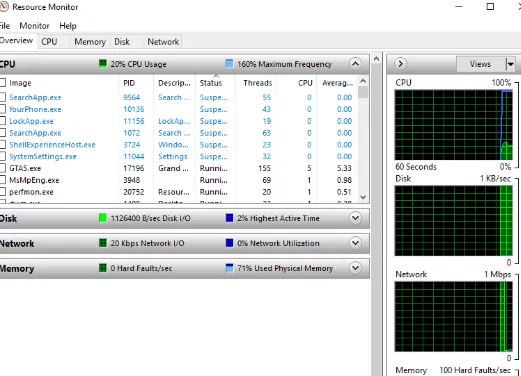
Modders can easily grab your IP address because GTA 6 uses Peer-to-Peer (P2P) networking. To prevent being DDoS'd or tracked, you must route your connection through a VPN with DDoS mitigation. Additionally, for PC players, using Resource Monitor to suspend GTA6.exe for 10 seconds remains the easiest way to create a safe, solo public lobby for cargo runs.
GTA 6 Online Security & Connection Quick Reference
|
Defense Vector |
Threat & Pain Point |
Actionable Solution |
Platforms |
Recommendation |
|
IP Protection |
IP exposed to location tracking. |
Use VPN (DDoS-protected); set Social Club to private. |
PC & Consoles |
⭐⭐⭐⭐⭐ (Essential) |
|
DDoS Defense |
Traffic flood knocks router offline. |
Power cycle hardware or use mobile hotspot. |
PC & Consoles |
⭐⭐⭐⭐⭐ (Emergency) |
|
PC Firewall |
Modders track sessions/force-crash games. |
Block UDP Port 6672; whitelist friends. |
PC Only |
⭐⭐⭐⭐ (Best for Co-op) |
|
Router Hardening |
Port scans and SYN floods. |
Disable UPnP; enable router firewall. |
PC & Consoles |
⭐⭐⭐⭐ (Preventative) |
|
Safe Cargo Runs |
Griefers destroy business cargo. |
Suspend game process for a solo public lobby. |
PC & Consoles |
⭐⭐⭐⭐⭐ (Recommended) |
|
Fixing Loading |
Infinite loading / NAT connection drops. |
Configure Port Forwarding or DMZ. |
PC & Consoles |
⭐⭐⭐⭐⭐ (NAT Fix) |
Why GTA 6 Online Has Security Risks (P2P Explained)?
To sync physics, traffic, and player actions in real time, GTA 6 Online uses a hybrid Peer-to-Peer (P2P) networking model. Instead of routing all gameplay traffic through secure Rockstar servers, players connect and exchange data directly with one another.
This decentralized architecture introduces three critical vulnerabilities:
1. Exposed IP Addresses (The Root Vulnerability)
-
How it works: To establish a P2P connection, your device must exchange its public IP address with every other player in the lobby.
-
The Risk: Anyone in your session using basic packet sniffers (like Wireshark) or mod menus can instantly harvest your public IP, approximate physical location, and ISP details.
2. DDoS Attacks (Getting Booted Offline)
-
How it works: Once malicious players grab your public IP, they target it using cheap booter services or custom botnets.
-
The Risk: Your router is flooded with massive UDP packet spam, saturating your bandwidth and knocking your entire home internet offline.
3. Peer Host Dependency (Session Instability)
-
How it works: P2P lobbies select one player's system to act as the "Host" to sync global events, NPCs, and weather.
-
The Risk: If the host has high latency or disconnects, the lobby splits, causing lag or infinite loading screens. Attackers can also send corrupted "Sync Crash" packets directly to your IP to force-close your game.
Which VPN is Best for GTA 6 Online?
Not all VPNs can handle the intense UDP traffic required for seamless P2P gaming. Based on our extensive testing, here are the top two choices for GTA 6 players:
-
Top Choice for Speed & Anti-DDoS: NordVPN. With its proprietary NordLynx protocol and massive 10Gbps servers, it masks your IP without causing input lag or rubberbanding during firefights. Read our full breakdown in the [NordVPN Review: Speed & Security Test].
-
Best Value for Console Players: Surfshark. If you play on a PS5 or Xbox and need to install a VPN directly on your gaming router, Surfshark is the most cost-effective option, allowing unlimited device connections. Check out our [Surfshark VPN Review] to see why it's the best budget choice.
How to Prevent IP Leaks (Three-Tier Defense)
Mask your public IP and secure your connection using this streamlined multi-tier defense:
Tier 1: Use a Secure VPN or Gaming Accelerator
Route your traffic through secure intermediate nodes using a VPN with DDoS mitigation or TAP mode to hide your residential IP:
-
PC Players: Choose reputable VPN providers with anti-DDoS features. Avoid unsecured free VPNs.
-
Console Players (PS5 / Xbox Series X|S): Install a VPN at the router level or use a gaming router with built-in VPN client features.
-
If you are configuring a VPN manually on your mobile hotspot or a compatible console router, we highly recommend using the IKEv2 protocol. It is specifically designed to handle network switches without dropping your session. Learn more in our [IKEv2/IPsec Explained: The Mobile-First Protocol] guide.
Tier 2: Harden Your Router's Security Settings
Adjust these router settings to secure your gateway against external scans and exploits:
-
Disable UPnP (Universal Plug and Play): Blocks malicious scripts from scanning and opening ports on your local network. Use manual port forwarding instead.
-
Ignore WAN Ping Requests: Enable "Ignore Ping from WAN" or "Disable WAN ICMP Response" to prevent attackers from finding your active network.
-
Enable Flood Protection: Turn on built-in firewall protections (SYN/UDP/ICMP Flood filters) to limit incoming packet rates.
Tier 3: Create a Solo Public Session via Resource Monitor (PC Only)
Force an isolated solo public lobby to safely complete business runs without player interference:
-
Launch GTA 6 Online and join any public session.
-
Press Ctrl + Shift + Esc to open Task Manager.
-
Go to the Performance tab and click Open Resource Monitor at the bottom.
-
In the CPU tab, locate GTA6.exe.
-
Right-click GTA6.exe and select Suspend Process.
-
Wait 8 to 10 seconds (do not exceed 15 seconds).
-
Right-click GTA6.exe again and select Resume Process.
Tier 4: Avoid Social Engineering & Phishing
Minimize external tracking risks with simple security hygiene:
-
Do Not Click Unknown Links: Avoid chat or Discord links to prevent IP-grabbing scripts.
-
Set Social Club Visibility to Private: In your Rockstar Social Club profile, set "Profile Visibility," "Game Stats," and "Friends List" to "Friends Only" or "Me Only" to block session tracking.
How to Handle and Survive DDoS Attacks
If your network behaves abnormally, use these steps to identify, mitigate, and recover from an ongoing attack.
1. Identifying an Active DDoS Attack
Confirm whether you are being targeted by checking these signs:
-
In-Game: You experience sudden, severe lag, a "Connection Lost" or "Saving Failed" prompt, followed by a disconnect to Story Mode or a game crash.
-
Local Network: All connected devices in your home (smartphones, TVs, computers) lose internet access simultaneously.
-
Modem/Router Hardware: The WAN/Internet light on your modem flashes frantically or stays solidly lit, and the device feels hot to the touch due to CPU overload.
2. Emergency Recovery Steps
If you are under attack, follow this escalation protocol to change your public IP address and stop the traffic flood:
Method A: Physical Power Cycle (95% Success Rate)
-
Locate your modem and router.
-
Unplug the power cords for both devices.
-
Leave them unplugged for 5 to 10 minutes (this cools the hardware and signals your ISP's system to release your current IP lease).
-
Plug the devices back in and turn them on. Result: Your ISP will assign a new dynamic public IP address. The attack traffic will continue to flood your old, inactive IP address, restoring your home network.
Method B: Release/Renew IP via Router Dashboard If your router is difficult to reach physically
-
Open a browser and type your router's gateway IP (usually 192.168.1.1 or 192.168.0.1) and log in.
-
Navigate to WAN Settings or Internet Settings.
-
Click Release to drop your current IP address.
-
Click Renew to request a new IP address from your ISP.
Method C: Contact Your ISP (For Persistent Attacks or Static IPs)
-
If your network remains offline or you have a static IP address, call your ISP’s technical support line and state: "My network is currently experiencing a high-volume UDP DDoS flood attack, causing a total network outage. Please manually release and change my public IP address or route my connection to a clean subnet."
💡Emergency Fallback: Mobile Hotspot
-
If your home broadband is down and you need to stay online, turn off your router and connect your PC or console to your phone’s mobile hotspot. Mobile carrier networks use high-rotation shared IPs, making it virtually impossible for modders to target your cellular connection with a localized DDoS attack.
Restricting UDP Traffic via Windows Firewall (PC Only)
PC players can configure Windows Firewall to block unknown P2P traffic and set up a secure, friends-only whitelist.
Part 1: Block All Incoming Connections on the Game Port
-
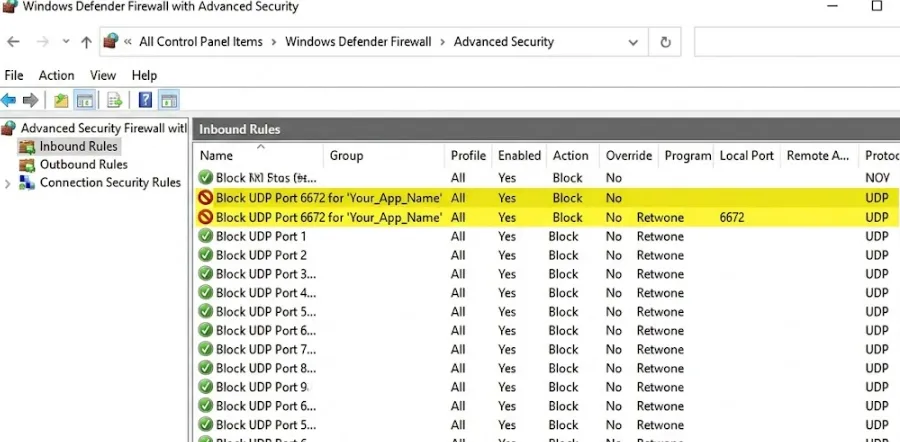
Press Win + R, type wf.msc, and press Enter to open Windows Defender Firewall with Advanced Security.
-
Click Inbound Rules in the left sidebar, then click New Rule in the right sidebar.
-
Select Port and click Next.
-
Select UDP and choose Specific local ports. Enter 6672 (the core GTA P2P port). If you use a gaming VPN, add its custom port separated by a comma (e.g., 6672, 61455-61458). Click Next.
-
Select Block the connection and click Next.
-
Ensure all profiles (Domain, Private, Public) are checked, then click Next.
-
Name the rule GTA6_DDoS_Block and click Finish.
Note: Your game's multiplayer port is now completely blocked. No random players will be able to establish a P2P connection with you.
Part 2: Create a Friends-Only Whitelist
To play with your friends while keeping the block active for everyone else:
-
In the Inbound Rules list, double-click your new GTA6_DDoS_Block rule.
-
Go to the Scope tab.
-
Under the Remote IP address section, change the selection from "Any IP address" to These IP addresses.
-
Click Add and enter your trusted friends' current public IP addresses.
-
Click Apply and OK.
Result: Windows Defender Firewall will block incoming traffic on port 6672 from all IP addresses except the whitelisted IPs of your trusted friends.
Optimizing NAT Types and Fixing Load Screens
To fix loading loops and connection errors, configure your NAT (Network Address Translation) to Open or Moderate.
1. NAT Type Compatibility Matrix
-
NAT 1 / Open (Full Cone): Device directly exposed to the internet, or perfect 1-to-1 port mapping. Guaranteed seamless connections with everyone.
-
NAT 2 / Moderate (Restricted Cone): Behind a firewall, but allows outgoing traffic to open response channels. Perfect balance of safety and normal matchmaking.
-
NAT 3 / Strict (Symmetric): Worst state. Your ports shift dynamically and the firewall rejects unknown incoming data. Expect constant disconnects and empty lobbies.
|
Your NAT Type |
Partner: Open (NAT 1) |
Partner: Moderate (NAT 2) |
Partner: Strict (NAT 3) |
|
Open (NAT 1) |
🟢 Perfect Connection |
🟢 Smooth Connection |
🟡 Unstable Connection |
|
Moderate (NAT 2) |
🟢 Smooth Connection |
🟡 Stable (occasional lag) |
🔴 Connection Failed / Drops |
|
Strict (NAT 3) |
🟡 Unstable Connection |
🔴 Connection Failed / Drops |
🔴 Completely Blocked (100% fail) |
If you have a Strict NAT (NAT 3), you will be unable to connect with most players, resulting in empty sessions or infinite black loading screens.
2. How to Change Your NAT Type to Open
Follow these steps to upgrade your NAT status:
Step 1: Confirm You Have a Public IP Address
Many ISPs put customers behind Carrier-Grade NAT (CGNAT), which forces your network into a Strict NAT state.
-
How to test: Log into your router's status page and look at your WAN IP. Next, visit an external site like whatsmyip.org. If the two IP addresses match, you have a true public IP. If the WAN IP starts with 10.x.x.x, 100.x.x.x, or 172.x.x.x, you are behind a CGNAT.
-
The Fix: Call your ISP customer service and say: "I need to access my home security cameras and NAS storage remotely. Please change my internet connection from a private/CGNAT IP to a dynamic public IPv4 address."
Step 2: Assign a Static Local IP to Your Gaming Device
Before altering router settings, make sure your PC or console's local IP address does not change when rebooted:
-
Windows: Open Control Panel > Network and Sharing Center > click your connection. Select Properties > double-click Internet Protocol Version 4 (TCP/IPv4). Switch from "Obtain automatically" to "Use the following IP address." Assign an IP (e.g., 192.168.1.150), set Subnet to 255.255.255.0, and Gateway to your router’s login IP (192.168.1.1). Set DNS to 8.8.8.8 and 1.1.1.1.
-
Consoles (PS5 / Xbox): Go to Network Settings > Set Up Internet Connection > Choose Manual. Set a static IP using the same parameters (e.g., 192.168.1.160).
Step 3: Configure DMZ Host (Easiest Method)
A DMZ (Demilitarized Zone) bypasses all router firewall rules for a single designated device, instantly opening your NAT:
-
Log into your router’s admin page.
-
Find the DMZ Host setting (usually under Advanced Security or WAN Settings).
-
Enable DMZ and enter the static IP of your gaming device (e.g., 192.168.1.150 for PC or 192.168.1.160 for Console).
-
Save the changes and restart your router. Safety Warning: A DMZ exposes your device directly to the internet. If you are on PC, make sure your Windows Defender Firewall remains fully enabled.
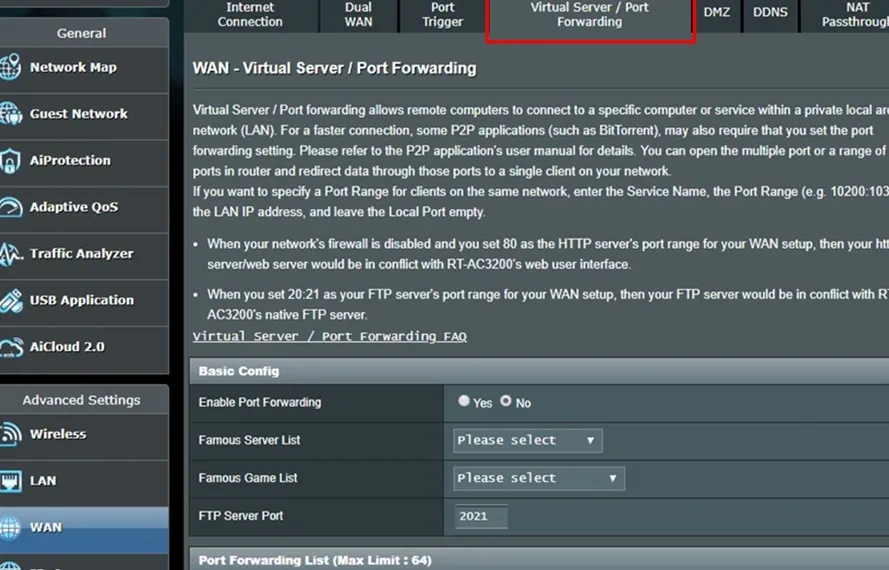
Step 4: Configure Manual Port Forwarding (More Secure)
If you prefer not to use DMZ, or have multiple devices playing GTA 6 on the same network, set up Port Forwarding:
-
Find Port Forwarding (sometimes called Virtual Server) in your router settings.
-
Create rules pointing the following ports to your device's static IP:
|
Platform |
Protocol |
External Port Range |
Internal Port |
Purpose |
|
PC |
UDP |
6672 |
6672 |
Core P2P Multiplayer |
|
PC |
UDP |
61455-61458 |
61455-61458 |
Rockstar Matchmaking Services |
|
PlayStation |
UDP |
3478-3479 |
3478-3479 |
PSN Connectivity |
|
PlayStation |
UDP |
3074 |
3074 |
Game Matchmaking |
|
Xbox |
UDP |
88 |
88 |
Xbox Live Authentication |
|
Xbox |
TCP & UDP |
3074 |
3074 |
Core Game Port |
Save the configuration and restart your router and game. Your NAT should now display as Open or Moderate.
3. Fixing the Infinite Black Loading Screen Loop
If you get stuck while entering properties or changing sessions:
-
Method 1 (PC): Suspend and resume the GTA6.exe process for 8-10 seconds using Resource Monitor as described above. This drops the connection with the conflicting host and forces you into your own session instantly, ending the loading loop.
-
Method 2 (Consoles): Manually set your console's MTU (Maximum Transmission Unit) to 1473 or 1450 in network settings to reduce packet fragmentation, resolving handshake errors during session switches.
Best Networking Habits for Daily Play
Establish these proactive connection habits to secure your daily multiplayer experience:
-
Use Invite-Only or Friends Sessions for Solo Grinding
-
Why: Running business deliveries and cargo sales in private lobbies completely blocks external hackers and prevents random IP scanning.
-
Switch Lobbies Instantly Upon Suspicion
-
Why: If you spot chat spammers, spawned assets, or strange lobby sync issues, find a new session before modders can target your connection or trigger game crashes.
-
Prioritize Wired Ethernet Over Wi-Fi Connections
-
Why: P2P networks cannot tolerate jitter; even a 1-second packet drop on Wi-Fi will instantly break host handshakes, causing split sessions and endless black screens.
-
Completely Disable In-Game Voice Chat
-
Why: In-game voice streams open dynamic peer connections that broadcast network signatures. Disable in-game voice and use secure, external Discord servers.
-
Cap Frame Rates to Prevent Network Packet Lag
-
Why: Running uncapped FPS causes sudden 100% CPU spikes, which delays the system's ability to process critical incoming network packets and results in connection drops.
-
Run Regular DNS Flushes on PC
-
Why: Run ipconfig /flushdns in CMD to clear stale routing nodes, forcing your computer to use the fastest, direct paths to Rockstar servers.
-
Optimize MTU Values Manually on Consoles
-
Why: Reduce packet fragmentation on PS5/Xbox by lowering MTU settings to 1473 or 1450 to improve packet recovery on busy, congested connections.
-
Close Bandwidth-Heavy Background Applications
-
Why: High-volume downloads, streaming apps, or cloud sync drives consuming upload bandwidth will cause immediate latency spikes and P2P connection failure.
Conclusion: Secure Your Network, Rule Vice City
In GTA 6 Online, raw gameplay skill is only half the battle. Your operational tactics will get you through the streets, but a hardened network security shield is what secures your legacy.
The Dual-Layer Defense Strategy
-
The Tactic (Virtual Shielding): Use a DDoS-protected VPN or accelerator to mask your residential IP. Keep malicious actors blind to your real-world location.
-
The Strategy (Physical Gateway Hardening): Configure port forwarding, fine-tune your firewall, and optimize your NAT. Build an impenetrable wall that repels unsolicited P2P packets.
Claim Your Throne Untouchable
-
Never Bottleneck Your Empire: Don't let a bad NAT lock you out of lobby hosting, and never let a DDoS attack wipe out millions in high-stakes cargo deliveries.
-
10 Minutes to Absolute Immunity: Take the time to apply these router and system-level hardenings today. Rule Vice City with the ultimate peace of mind.
Frequently Asked Questions (FAQ)
Q1: Will I get banned by Rockstar for using Resource Monitor to suspend the process?
A: No, absolutely not. Suspending the process utilizes standard Windows system management tools to pause the game's network activity. It does not modify game memory, inject files, or use illegal cheat software. The game simply registers this as a temporary network timeout and safely moves you into an isolated session.
Q2: Why can't I join missions or matchmake with others after setting up the Windows Firewall block?
A: Because you have blocked incoming UDP traffic on port 6672, preventing matchmaking servers from connecting you with other players. When you want to play heist missions or join public matchmaking, open your firewall settings (wf.msc), find your GTA6_DDoS_Block rule, right-click it, and select Disable Rule.
Q3: If DMZ sets my NAT to Open, why should I use Port Forwarding?
A: While DMZ is simple and highly effective, Port Forwarding offers two main benefits:
-
Security: DMZ completely exposes your target device to the internet. Port Forwarding only opens specific ports required for the game, keeping other pathways secure.
-
Multiple Devices: A router can only assign a DMZ to a single local IP. If you have two PCs or consoles playing the game on the same network, you must use Port Forwarding to direct the traffic to separate IPs.
Q4: I changed my console's MTU to 1450/1473 and now I cannot connect to the internet. What should I do?
A: Some ISPs use strict packet-filtering policies that block non-standard MTU sizes. If you lose internet access after changing your MTU, change the console's network configuration back to "Automatic" to restore the default 1500 MTU. Rely on secure VPN nodes or solo public lobbies to avoid loading loops instead.
Q5: I configured Port Forwarding, but my NAT type is still "Strict." Why?
A: This indicates your connection does not have a true public IP address and is likely behind a Carrier-Grade NAT (CGNAT) managed by your ISP. You must contact your internet service provider and request a dynamic public IPv4 address for Port Forwarding to function correctly.
Q6: Does using a VPN's "DDoS Protection" node increase my ping?
A: Typically, no. Premium gaming VPN networks use high-bandwidth optimized routes. While routing your traffic through an extra node adds a tiny amount of physical distance, the optimized routes and mitigation servers often offset this delay, resulting in a stable connection with little to no noticeable ping increase.