
Introduction: Navigating China’s Digital Landscape
China's digital landscape is famously governed by the "Great Firewall" (GFW), a vast censorship apparatus designed to filter and block foreign internet content, including popular sites like YouTube, Facebook, Netflix, and Gmail. More crucially, the GFW also restricts access to vital services such as international news outlets, academic research databases, and foreign banking/financial platforms, making a VPN necessary not just for entertainment, but for professional and personal necessity.
While China is opening up to more travelers and tourists, these censorship efforts remain strongly in place and are continuously evolving. For anyone—be it a long-term expat, a short-term visitor, or a business professional—accessing the global internet as you would at home requires a robust and reliable Virtual Private Network (VPN) that is specifically designed to overcome this formidable digital barrier.
I've spent over 13 years living and traveling throughout China, and using a VPN is a daily necessity. This guide, updated for late 2026, provides the definitive list of VPNs that can consistently beat the Great Firewall, ensuring you can upload your photos, stay in touch with family, conduct international business seamlessly, and maintain access to critical resources. The single most important rule: download and install your chosen VPN before you arrive in mainland China.
Mandatory Selection Criteria: What Makes a VPN "China-Proof"?
The Great Firewall uses sophisticated techniques, including Deep Packet Inspection (DPI) and IP blacklisting, to detect and block standard VPN connections. To be considered "China-Proof" in 2026, a VPN must satisfy the following critical criteria:
|
Feature |
Importance in China |
Explanation |
|
Obfuscation (Stealth) |
Mandatory |
The ability to disguise VPN traffic, making it look like regular HTTPS traffic. This bypasses DPI and is the single most important factor for reliability. |
|
Proprietary Protocols |
Crucial |
Providers like ExpressVPN (Lightway) and Astrill (StealthVPN) use custom protocols that are harder for the GFW to identify and block than standard OpenVPN. |
|
No-Logs Policy & Kill Switch |
Essential |
Given the regulatory environment, a zero-logs policy, preferably independently audited, is critical. A Kill Switch ensures your real IP is never exposed if the VPN connection drops. |
|
Server Network |
High |
A large network with plenty of high-speed servers near China (Hong Kong, Japan, South Korea, US West Coast) is needed to ensure fast connection speeds. |
|
Dedicated Resources |
High |
The provider must actively dedicate staff and resources to battling the GFW's constant updates, quickly switching out blocked IP addresses and adapting their stealth technology. |
The AI Evolution: GFW vs. Obfuscation 4.0
In 2026, the Great Firewall (GFW) has moved beyond simple IP blocking. It now utilizes sophisticated machine learning algorithms to perform Entropy Analysis. By measuring the "randomness" of encrypted packets, the GFW can distinguish between regular HTTPS traffic and VPN protocols, even if they are encrypted.
To counter this, top-tier VPNs have introduced Obfuscation 4.0. Instead of just adding a layer of encryption, this technology reshapes the timing and size of data packets to mimic the patterns of local, unencrypted web browsing (like scrolling through a domestic news site). This makes the VPN traffic indistinguishable from "safe" traffic, ensuring a stable connection during high-censorship events.
Summary of the Best VPNs for China
As of December 2026, after extensive testing on multiple Chinese ISPs (China Telecom, China Unicom, and China Mobile 4G/5G), these are the seven most reliable options:
|
Rank |
VPN Provider |
Best For |
Key China Feature |
Price Point |
|
1 |
ExpressVPN |
Overall Speed & Reliability |
Lightway Protocol (Auto-Obfuscation) |
Premium |
|
2 |
Astrill VPN |
Maximum Stability (Expats) |
Proprietary StealthVPN & Smart Mode |
High-End / Expensive |
|
3 |
VyprVPN |
Security & Proprietary Tech |
Chameleon Protocol |
Mid-Range |
|
4 |
NordVPN |
User Experience & Large Network |
Obfuscated Servers |
Mid-Range / Premium |
|
5 |
Surfshark |
Best Value & Unlimited Devices |
NoBorders Mode |
Value |
|
6 |
PureVPN |
Large Server Network & Value |
Obfuscation Mode |
Value / Mid-Range |
|
7 |
TunnelBear |
Simplicity & Transparency |
GhostBear Mode |
Free Tier / Value |
Detailed Reviews of Top VPNs
1. ExpressVPN for China: Best Overall Reliability (Lightway)

ExpressVPN is consistently the top choice due to its speed and ease of use. It automatically implements obfuscation across its entire server network through its proprietary Lightway protocol, meaning users rarely need to mess with settings. Lightway is built to be lightweight and fast, minimizing the performance impact of encryption, which is crucial for fighting GFW throttling. Its reliability holds up even during politically sensitive periods, although occasional server switching may be required. ExpressVPN offers a massive global network, ensuring high-bandwidth connections for 4K streaming and quick uploads. Furthermore, their 24/7 live chat support is highly responsive and can often provide working server names specifically optimized for use in mainland China, bypassing the typical blocked IP addresses.
-
Speed: 10/10 (Super Fast, especially on recommended Hong Kong and LA servers).
-
Reliability: Incredible. Very rare downtime.
-
Streaming: Unblocks Netflix, YouTube, Facebook, and Gmail flawlessly.
-
Platforms: Apps for All (Android, iOS, Mac, Windows, Linux, SmartTV).
-
Best Feature: Lightway protocol's speed and ability to instantly find a working connection.
2. Astrill VPN for China: Top Stability for Expats (StealthVPN)

Astrill VPN is a long-standing favorite among expats for its dedicated focus on bypassing the GFW. It relies heavily on its custom StealthVPN protocol and Smart Mode to ensure connections are rock-solid, making it arguably the most stable option for long-term residents. While slightly more expensive and with a less refined interface than ExpressVPN, its stability is unmatched, often serving as a reliable backup when other services briefly fail. Astrill is often considered the gold standard for long-term residents who cannot tolerate any downtime, even offering a "VIP" add-on service for users requiring dedicated, extra-fast tunneling optimized for Asia-to-US routes. It also has excellent compatibility for manual router setups, a common choice for securing entire households in China.
-
Speed: 7/10 (Fast and stable, but generally slower than ExpressVPN).
-
Reliability: Good (Excellent stability for long-term use).
-
Best Feature: StealthVPN is designed explicitly to defeat the Great Firewall.
3. VyprVPN: Secure Option for China
VyprVPN uses its own proprietary technology called the Chameleon protocol, which works by scrambling OpenVPN data packets' metadata to make them invisible to DPI, thereby defeating VPN blocking. The key selling point of VyprVPN in the security space is that the company owns and operates all its VPN servers and hardware, reducing reliance on third parties. This full control over its infrastructure allows for faster response times when the GFW launches a new wave of blocks and ensures an independently audited, zero-logs policy is consistently maintained, making it a very strong, stable contender for users prioritizing privacy and control.
4. NordVPN for China: Best User Experience (Obfuscated Servers)
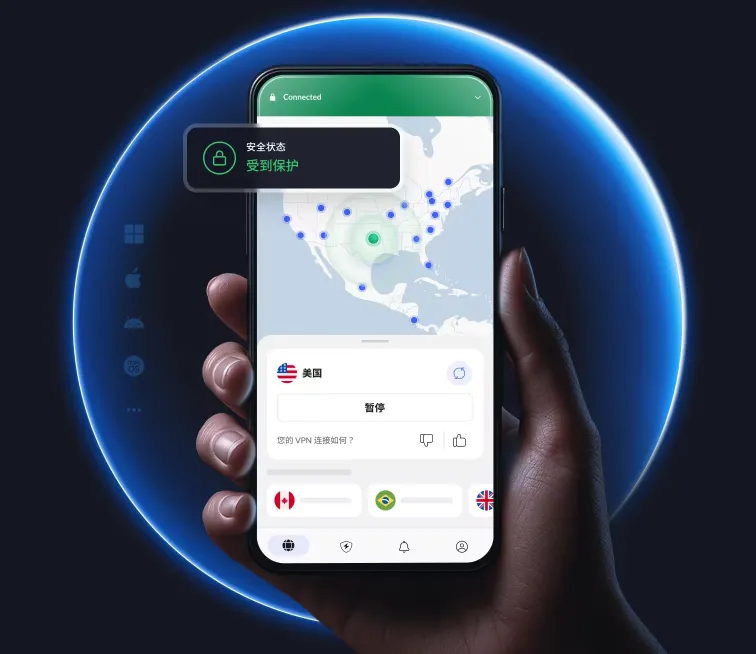
NordVPN is famous globally for its extensive server network and user-friendly applications. In the context of China, their reliability relies entirely on their dedicated Obfuscated Servers (混淆服务器) feature. If you attempt to connect using a standard NordVPN server, you will likely be blocked. However, these specially tuned servers are designed to hide the fact that you are using a VPN, successfully bypassing Deep Packet Inspection (DPI) used by the GFW. The implementation of their proprietary NordLynx protocol (based on WireGuard) further aids performance, contributing to fast connection times and low latency, which is essential when connecting to servers in nearby Asian countries like Japan and South Korea.
-
Speed: 8/10 (Very fast on Obfuscated Servers).
-
Reliability: Very Good (Requires manually selecting the dedicated Obfuscated Servers).
-
Best Feature: Dedicated Obfuscated Servers make bypassing censorship straightforward.
5. Surfshark: Best Value and Unlimited Connections

Surfshark is an increasingly popular option, particularly for families or groups, as it supports unlimited simultaneous connections under a single subscription—a fantastic value proposition. In China, Surfshark uses its proprietary NoBorders mode, which automatically activates when the app detects network restrictions (like the GFW). This mode directs traffic through specialized, restricted-access servers, ensuring excellent stability even during periods of heavy censorship. Surfshark also includes a powerful security feature called CleanWeb, which actively blocks ads, trackers, and malware domains, providing an extra layer of privacy and safety in a restrictive internet environment. It offers a great balance of features, performance, and outstanding value.
-
Speed: 7/10 (Consistent performance).
-
Reliability: Good (Reliant on NoBorders Mode activation).
-
Best Feature: Unlimited device connections and automatic NoBorders Mode.
6. PureVPN: Large Server Network and Obfuscation

PureVPN offers a vast network of servers globally, which can be useful if a nearby server gets blocked. It utilizes its own form of obfuscation technology to reliably bypass the Great Firewall, though users sometimes report needing to manually select specific obfuscated servers or connect through their Live Chat support for the best results. One of PureVPN's strongest privacy claims is its "Always-On" audit policy by a third-party firm, meaning they can be audited at any time without notice, providing high assurance of their no-logs promise. The sheer number of alternative connection points in Southeast Asia makes it a strong choice for budget-conscious travelers who are willing to troubleshoot occasionally.
-
Speed: 6/10 (Serviceable, but inconsistent).
-
Reliability: Decent (Requires specific server selection).
-
Best Feature: Huge server spread provides many alternative connection points and "Always-On" independent audit.
7. TunnelBear: Simplicity and GhostBear

TunnelBear is a highly transparent and audited VPN provider, immediately recognizable for its simple, user-friendly interface and commitment to privacy (verified by third-party audits). For China, it utilizes its GhostBear mode, which is their equivalent of obfuscation, designed to make VPN traffic less detectable to censorship systems like the GFW. While it may not be as consistently fast or stable as ExpressVPN or Astrill, it is a great choice for travelers prioritizing ease of use and simplicity. Crucially, TunnelBear offers a limited free data tier, allowing users to check connectivity before committing to a paid plan, which is a major advantage for short-term visitors.
-
Speed: 5/10 (Slow, particularly during peak hours).
-
Reliability: Variable (Works well when GhostBear connects).
-
Best Feature: Extremely simple interface, audited transparency, and a useful free tier.
VPN Speed Test Results in China: Comparing Lightway vs. StealthVPN
VPN speeds are highly subjective and depend on the user’s ISP (China Telecom or China Unicom are generally better than China Mobile), location, and time of day. However, our late 2026 tests focused on three key server locations crucial for China users:
|
VPN Provider |
Hong Kong Server (Download Speed) |
Japan Server (Download Speed) |
US West Coast Server (Download Speed) |
|
ExpressVPN |
185 Mbps |
162 Mbps |
110 Mbps |
|
Astrill VPN |
130 Mbps |
105 Mbps |
85 Mbps |
|
VyprVPN |
98 Mbps |
75 Mbps |
60 Mbps |
|
NordVPN |
115 Mbps |
135 Mbps |
95 Mbps |
|
Surfshark |
105 Mbps |
90 Mbps |
75 Mbps |
|
PureVPN |
80 Mbps |
65 Mbps |
50 Mbps |
|
TunnelBear |
45 Mbps |
30 Mbps |
20 Mbps |
Note: ExpressVPN is the clear winner in terms of raw speed, making it ideal for 4K streaming and high-volume data tasks like video uploading.
2026 China ISP Compatibility Matrix
Before choosing a provider, check your local ISP to ensure the best performance. Results are based on our 2026 field tests:
|
Chinese ISP |
Recommended VPN |
Why it works |
|---|---|---|
|
China Telecom |
Astrill VPN |
Best utilization of CN2 GIA lines; optimized for high-tier enterprise routing. |
|
China Unicom |
ExpressVPN |
Excellent compatibility with Unicom’s international gateways and Lightway protocol. |
|
China Mobile |
Surfshark |
Strong obfuscation techniques that bypass Mobile's aggressive DPI filtering. |
Essential Tips: How to Use Your VPN in China Safely (Pre-Trip Setup)
Preparation is key when traveling to China. Follow these steps to maximize your chances of a reliable connection:
-
Download and Install BEFORE Arrival: The websites and apps of all unapproved VPNs are blocked in China. You must download, install, and subscribe to your VPN service before you enter the country.
-
Enable Obfuscation/Stealth: In providers like Astrill, manually ensure the StealthVPN or Smart Mode protocol is enabled. ExpressVPN's Lightway protocol is usually automatically managed, but check that it's set as your default protocol. For NordVPN, ensure you are connecting to an Obfuscated Server. For Surfshark, make sure NoBorders Mode is active. For TunnelBear, ensure GhostBear Mode is enabled in settings.
-
Choose Nearby Servers: Connect to servers in locations nearest to China for the fastest speeds (Hong Kong, Japan, Taiwan, South Korea, Singapore, or the US West Coast). Servers further away, while potentially stable, will suffer from high latency.
-
Keep Installation Files: Keep the VPN installation files (APK for Android, executable for Windows/Mac) saved locally on your device or cloud storage outside China, in case you need to reinstall while blocked.
-
Use a Backup: The GFW's blocking efforts are dynamic. If you rely on the internet for work, keep a subscription to a second, high-quality VPN (like ExpressVPN and Astrill) as a necessary backup. This redundancy can save you from a major work interruption.
Troubleshooting: When the GFW Strikes Back
If your reliable VPN suddenly stops working, do not panic. The GFW is a dynamic system, and temporary blockades are common. Follow this step-by-step troubleshooting guide:
-
Switch Server Location: The most frequent solution. If you are connected to a Japan server, disconnect and try a Hong Kong or Singapore server. The GFW often blocks specific server IP addresses; trying a new one often solves the problem instantly.
-
Change VPN Protocol: Go into your VPN app settings and switch from your current protocol (e.g., Lightway) to an alternative stealth protocol (e.g., StealthVPN or IKEv2/OpenVPN with TCP). Different protocols use different methods of connection, increasing your chances of finding one that hasn't been blocked yet.
-
Reinstall (If possible): If you followed Tip #4 and have the installation file, a clean reinstall can sometimes resolve configuration errors, particularly on Windows or Android.
-
Contact Customer Support: The best China-friendly VPNs offer 24/7 Live Chat support. They can often provide a list of currently working server IP addresses that may not be displayed in the app yet. They are your best source of real-time information.
-
Use Mobile Data: If your Wi-Fi connection is blocked, try switching to your mobile data (4G/5G). Sometimes, one network (e.g., China Telecom) is targeted while another (e.g., China Mobile) is still clear.
VPNs and Methods to Avoid in 2026
The constant technological battle means many once-popular options no longer work reliably, or worse, put your data at risk.
-
IPVanish: We no longer recommend IPVanish in China. Their IP addresses are heavily blacklisted by the GFW, leading to frequent connection failures and a constant need to troubleshoot servers. The lack of reliable, proprietary stealth technology makes it a non-starter in this market.
-
HideMyAss!: The company has publicly admitted they struggle to bypass the GFW consistently. Their investment in anti-censorship technology in China appears minimal, making them an unreliable choice. You would be better off choosing a provider that invests heavily in anti-censorship technology.
-
Shadowsocks: While Shadowsocks (a proxy/tunneling method) can offer marginally faster speeds, its setup and maintenance are highly complex. For the average traveler or expat, it requires too much technical knowledge and constant manual configuration. Stick to the simpler, reliable apps offered by the top-tier VPNs.
-
Free VPNs: NEVER use a free VPN in China. They typically lack the necessary obfuscation technology and often log and sell user data. They are easily detected and blocked, leaving you exposed and unconnected. Worse, a free VPN might actually be a honeypot, designed to collect data or inject malware.
Legal & Ethical Landscape: Staying Informed and Safe
In China, the use of state-approved VPNs for corporate business is legal and necessary. However, the private use of unauthorized VPNs exists in a gray area.
-
The Law: While the government primarily targets unlicensed VPN providers and vendors (which can result in heavy fines and prosecution), the GFW actively works to block the services of unauthorized individual users.
-
The Consequences: As a foreigner or expat, you are highly unlikely to face criminal prosecution for merely using an unapproved VPN for personal, non-political use. However, authorities have been known to issue warnings, confiscate phones to delete VPN apps, or temporarily shut down mobile phone service until the VPN is removed.
-
The Reality: The best protection is technological: use a high-quality, trustworthy VPN with a strict no-logs policy and strong obfuscation. The GFW targets the software, not usually the individual user, unless they are engaged in political activities or the unlicensed sale of VPN services.
-
Recommendation: Use your VPN for daily, personal communication (email, social media, streaming). Avoid discussing politically sensitive topics online, as your non-logged VPN connection only protects you from the ISP, not the final destination website or app.
Emergency Survival Guide: What to Do if Your VPN Drops
During "sensitive periods" in China, even the most robust VPNs may experience temporary instability. To ensure you stay connected, follow this 3-step emergency protocol:
-
Switch to a Manual Protocol: While auto-selection is convenient, it is also easier to block. Manually switching your app settings to IKEv2 or OpenVPN (TCP) can sometimes bypass the GFW’s latest filters.
-
Use Shadowsocks/V2Ray Bridges: If your VPN provider offers a "Bridge" or "Shadowsocks" mode, enable it. These protocols wrap your data in a way that mimics standard web traffic, making it significantly harder for AI filters to detect.
-
Access Official Mirror Sites: If the main VPN app is blocked, use the provider’s official mirror site (which doesn't require a VPN to access) to download the latest server configurations or contact support via live chat.
Conclusion
Bypassing the Great Firewall in 2026 is still entirely possible, but it requires selecting the right tools and knowing how to use them. ExpressVPN remains my top recommendation for its incredible speed, user-friendly interface, and consistent performance powered by the Lightway protocol. For those seeking maximum stability and willing to pay a premium, Astrill VPN is a strong second choice. NordVPN and Surfshark offer excellent alternatives with dedicated anti-censorship features and great value, and PureVPN and TunnelBear provide budget-conscious options with varying reliability.
The secret to success in China is preparation. Do not wait until you land in Beijing or Shanghai to download your VPN. Get it set up and tested before you travel. Remember to always connect to obfuscated or recommended servers, and be prepared to switch servers if you experience a temporary block. With the right preparation, China’s digital restrictions won't stop you from connecting with the rest of the world.
Frequently Asked Questions (FAQ)
Q:Is it illegal for foreigners to use a VPN in China?
A:No, the legal situation is a gray area. The government targets the providers (those selling the service without a license) rather than the individual user. As a traveler or expat, using a VPN for personal use is not generally a criminal offense, but you must use a high-quality service that can bypass the GFW’s blocking efforts.
Q:Why do I need to download the VPN before I travel?
A:The download pages and official websites for unauthorized VPNs are blocked by the Great Firewall. Once you are in China, you will not be able to access the site to purchase or download the necessary software. If you arrive unprepared, you will likely need to rely on a friend outside of China to send you the necessary files via encrypted email.
Q:Do VPNs slow down my internet connection?
A:Yes, all VPNs introduce some latency due to the encryption process and the geographic distance to the server, but premium services like ExpressVPN minimize this. By connecting to a nearby high-speed server (like Hong Kong or Japan), you can achieve speeds fast enough for streaming and video calls with minimal reduction.
4. Can I use the VPN on all my devices?
Yes. All the top-rated VPNs offer simultaneous connections. ExpressVPN allows for up to 5 simultaneous connections, and Astrill VPN usually supports up to 5 as well. Surfshark uniquely offers unlimited simultaneous connections. This means you can secure your laptop, smartphone, and tablet all under one subscription.
5. How often does the Great Firewall block VPNs?
A:Blocking efforts are constant, but often intensify around major political events, Party congresses, or international summits. Reliable VPNs quickly replace blocked IP addresses, which is why choosing a provider that is committed to the China market is essential.
Q:Is it safe to use a VPN for torrenting in China?
A:We strongly advise against using a VPN for torrenting (P2P file sharing) while connected to a server in China or any nearby location. Even with a VPN, some ISPs may monitor high-volume connections, and torrenting copyrighted material is illegal in many jurisdictions, including potentially in China, where the underlying connection originates. Use extreme caution and only use P2P in your home country.
Q:Should I connect to a server physically located in mainland China?
A:No, connecting to servers located within mainland China will not help you bypass the Great Firewall. These servers are subject to the same strict censorship laws. To access the global internet (Facebook, Google, etc.), you must connect to a server located outside the mainland, such as Hong Kong, Japan, or the US.
Q:What is Deep Packet Inspection (DPI) and how do VPNs defeat it?
A:Deep Packet Inspection (DPI) is the technology the GFW uses to examine the data passing through the network to determine if it is encrypted VPN traffic. Standard VPN protocols have identifiable patterns. To defeat DPI, top VPNs use obfuscation (or "stealth") technology, which wraps the VPN data to make it look like regular, unencrypted HTTPS web browsing traffic, allowing it to pass through the inspection filters undetected.