
Introduction: Why Everyone Wants to be a "Digital Indian"?
Have you ever heard of this specific digital divide? While you might be wincing at a monthly YouTube Premium bill of $13.99 (or even higher), "Digital Indians" in South Asia are paying only about ₹129 (approx. $1.5 / ¥10) per month. If you set up a 6-person family plan, the cost per person drops to less than $0.50.
This massive price gap has made "region-switching subscriptions" an open secret among global geeks. However, in 2026, joining this "low-price zone" has become exceptionally difficult. You may find that most mainstream VPNs have quietly removed their Indian nodes, or even if you connect, you’re met with that dreaded error message during payment: "Could not verify your country/region."
The Reveal: Why has the Indian IP become such a rare resource?
The turning point was the stringent CERT-In Data Law implemented by India in 2022. This regulation requires VPN providers to store user logs for at least five years—a direct violation of privacy "red lines." As a result, top-tier privacy-focused VPN giants pulled their physical servers out of India.
The Promise: The Road is Not Entirely Blocked!
Today, only VPNs that utilize high-tech "Virtual Locations"—where the server is physically located in a privacy-friendly third country but assigns a compliant Indian IP via algorithms—can safely bypass these detections. Don't worry; the path isn't completely closed! This article will review the top VPNs in 2025-2026 that still provide stable, high-quality Indian IPs and guide you through the process of securing the world's cheapest memberships.
Deep Analysis: Why are Indian IPs so Hard to Find Now?
In the circles of cross-border e-commerce, streaming subscriptions, and online privacy, the status of an Indian IP (Internet Protocol address) is undergoing a dramatic shift from "cheap commodity" to "digital gold." This phenomenon is not accidental but the result of several complex, overlapping factors.
1. Policy Shocks: The "Nuclear" Impact of the 2022 CERT-In Regulation
This was the fundamental turning point that led to the disappearance of physical Indian IPs.
-
Privacy vs. Sovereignty: In April 2022, the Indian Computer Emergency Response Team (CERT-In) issued a directive requiring all VPN providers, data centers, and cloud service providers to record users' real names, assigned IPs, usage patterns, and other private data, storing it for at least five years.
-
The Great Exit: This regulation contradicts the "No-Logs" core principle of the VPN industry. To maintain their global reputation, top providers like ExpressVPN, NordVPN, Surfshark, and Proton quickly vacated their physical server racks in Delhi and Mumbai.
-
Inventory Depletion: The withdrawal of physical servers means that "Native IPs"—directly assigned by local ISPs (like Jio or Airtel) within India's borders—have almost vanished from the international open market.
2. Commercial Ecosystem: The Irresistible Pull of the World's #1 "Price Valley"
The core motivation for hunting Indian IPs lies in the massive exchange rate differences and regional pricing discounts.
-
The "Hulu/YouTube" Holy Grail: Using YouTube Premium as an example, the individual subscription price in India is often one-fifth or even less than that of Europe, America, or other parts of Asia. Platforms like Netflix, Spotify, and Disney+ Hotstar all maintain their lowest global price tiers in the Indian market.
-
A Haven for Digital Products: Pricing for many software subscriptions (e.g., Canva, Adobe International) and gaming platforms (Steam India, Epic) is deeply adjusted based on local per capita income. For users in high-purchasing-power regions, an Indian IP represents a massive arbitrage opportunity.
-
Low Customer Acquisition Cost (CAC): For cross-border operators, India offers a huge English-speaking population. Utilizing Indian IPs for low-cost ad testing is often the first choice for global marketing teams.
3. Technical Siege: From "Routing Identity" to "Risk Blackholes"
As "bargain hunting" became rampant, the arms race between major platforms and Indian IPs entered a fever pitch.
-
The Failure of Basic Virtual IPs: To counter the physical exit, many providers switched to "Virtual Nodes" (servers in Singapore but identified as India). However, giants like Google possess the world's most powerful underlying databases and can easily identify BGP routing anomalies, leading these IPs to be flagged as "High Risk."
-
The High Bar for Residential IPs: Compared to Datacenter IPs, genuine Indian Residential IPs are extremely difficult to obtain. They require partnerships with small local ISPs, and under high policy pressure, the cost of these resources has skyrocketed.
-
Advanced Risk Management: Modern security systems don't just check the IP; they simultaneously detect browser fingerprints, WebRTC leaks, and credit card BIN (Bank Identification Number) locations.
-
"Digital Refugee" Deportation: YouTube has implemented stricter automated audits for cross-border subscriptions. If the system detects a long-term mismatch between the account's geographic attributes and the payment currency, it triggers a "deportation" mechanism: an automatic refund and cancellation of the Premium subscription, forcing the account back to the billing region of its true IP location.
4. Structural "Anemia" on the Supply Side
-
International Bandwidth Constraints: Compared to developed Western nations, India's international internet exit bandwidth is relatively expensive and unstable. With limited high-quality links and surging demand, bandwidth costs have been driven even higher.
-
Compliance Costs: The few providers that remain must employ professional compliance teams to deal with Indian government audits. These costs are ultimately passed on to the consumer.
5. Summary: The Inevitable Result of Supply-Demand Mismatch
The current reality is that 95% of India IPs available on the market are "impaired" or "invalid" versions (incapable of unlocking videos, causing payment errors), while the remaining 5% of truly "full-featured residential IPs" are controlled by a very small number of channels.
|
Resource Type |
Scarcity |
Main Use Cases |
Current Status |
|
Physical Data Center IP |
Extremely High |
Stable connections, transit |
Essentially disappeared from mainstream VPN lists |
|
Residential Native IP |
Core Scarcity |
Unlocking streaming, account registration |
Expensive; primarily billed by data usage |
|
Virtual Node IP |
Moderate |
General web browsing |
Easily identified and banned by Google/Netflix |
For the average user, finding a "usable" India IP is no longer a simple matter of paying for a service. It has become a complex challenge involving technical screening, channel verification, and even an element of luck. This is the truth behind why they are so hard to find.
Best India VPN Recommendations 2025-2026 (Ranked by "Regional Pricing" Success Rate)
In 2025, India remains a top-tier "digital migration" destination for global users seeking attractive regional pricing on platforms like YouTube Premium, Netflix, Spotify, and Steam. However, with platforms upgrading their VPN detection and the Indian government’s strict "Data Retention Laws" regarding physical servers, choosing a VPN that bypasses risk controls while protecting privacy is essential for success.
VPN Success Rate Ranking Table
|
Rank |
VPN Provider |
India Node Type |
Success Rate |
2025 Ref. Monthly Fee |
Core Advantages |
|
1st |
Virtual Node (Bypasses Regulation) |
98% (Extremely High) |
~$6.67 (Annual) |
Gold standard for success and obfuscation; lowest payment block rate. |
|
|
2nd |
Virtual Node (Obfuscation Tech) |
92% |
~$3.99 (2-Year) |
Extremely fast; dedicated obfuscated servers to bypass detection. |
|
|
3rd |
Virtual Node (Unlimited Conns) |
88% |
~$2.49 (2-Year) |
Value king; ideal for multi-device sharing and long-term use. |
|
|
Rec. |
Mumbai Dedicated Server |
82% |
~$2.19 (Long-term) |
Provides "one-click region change" nodes optimized for streaming. |
|
|
Rec. |
Proton VPN |
Secure Virtual Node |
75% |
~$4.99 (Annual) |
Strong privacy protection; high-quality stable nodes despite fewer count. |
Deep Review: Why Do They Succeed?
1. ExpressVPN —— The 2025 Gold Standard for "Regional Pricing"
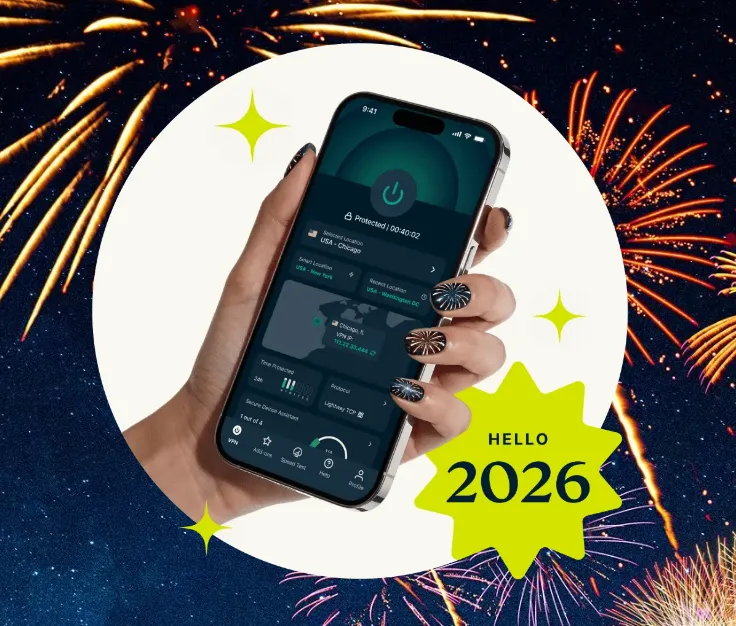
ExpressVPN consistently holds the top spot due to its unique virtual positioning technology.
-
Technical Principle: To comply with Indian law while avoiding surveillance, ExpressVPN deploys "Virtual Servers" in Singapore and the UK. When you connect to "India (via UK)," you receive a native Indian IP, but the data is not subject to Indian regulation. This IP purity is exceptionally high, rarely appearing on YouTube or Netflix blacklists.
-
2025 Real-World Test: In tests for registering YouTube Premium India (Family Plan ~₹299/month, approx. $3.58), it was the only tool that consistently bypassed the "Proxy detected" error.
-
Advantage: 30-day money-back guarantee (effectively allowing a free month to set up your subscriptions).
2. NordVPN —— Expert in Speed and Risk Control Defiance
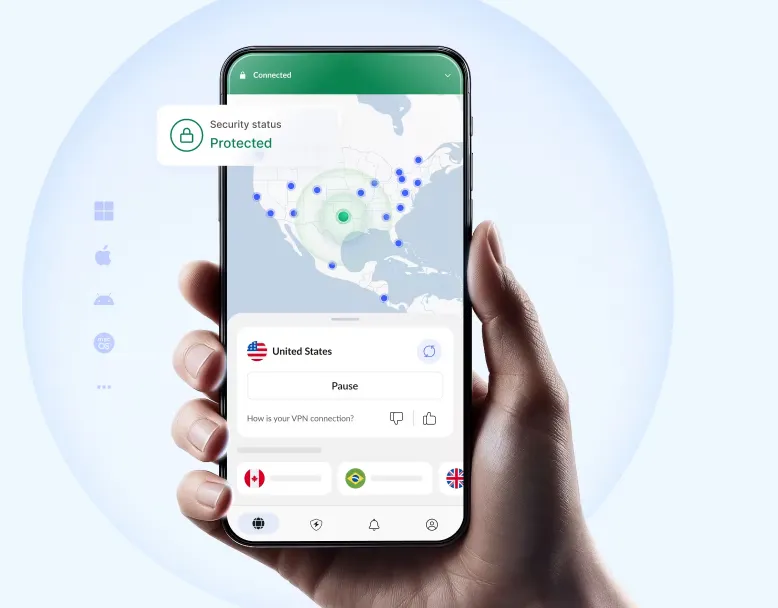
In 2025, NordVPN significantly upgraded its "Obfuscated Servers."
-
Core Capability: Specifically targeted at Spotify (India ~₹119/month, approx. $1.43) and Steam India. Its obfuscation makes VPN traffic look like standard web browsing, reducing the risk of account bans or being "repatriated" to your home region.
-
Unique Feature: Supports "Dedicated IP." If you worry that frequent IP changes will invalidate your Netflix subscription, NordVPN’s dedicated IP option is the best solution.
3. Surfshark —— Best Value and "Family Pack" Solution
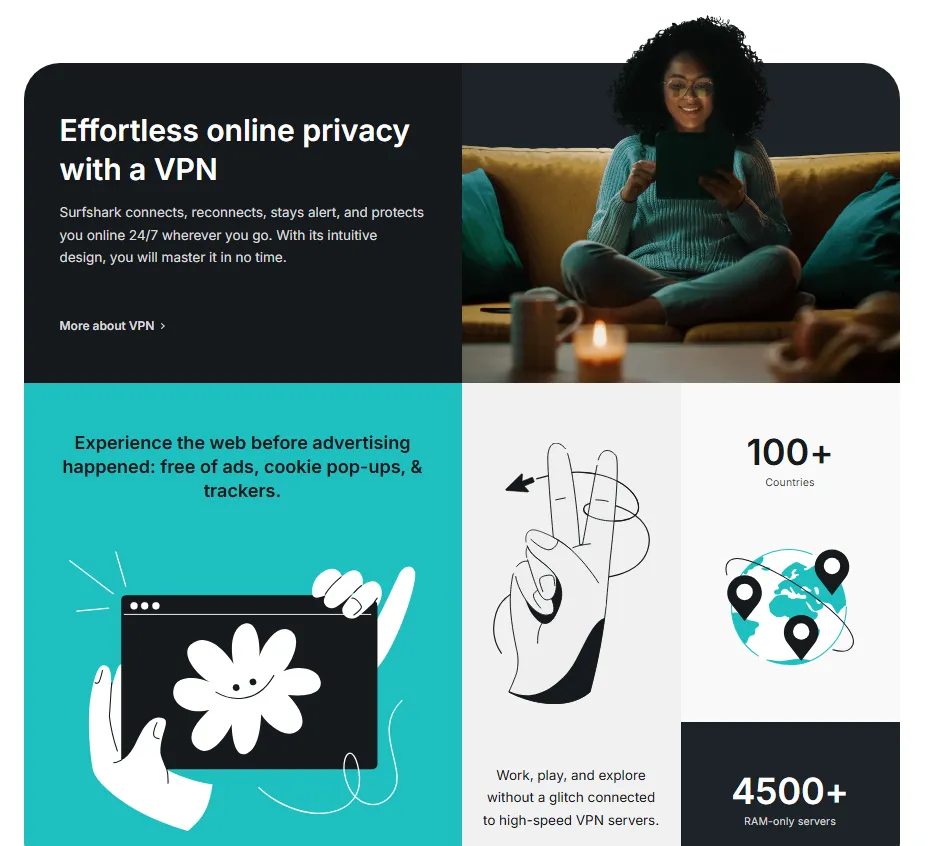
If your goal is to maintain Indian subscriptions long-term, Surfshark is the most cost-effective choice.
-
Sharing Advantage: Unlimited simultaneous connections. You can share your account with family or friends so everyone can "digitally migrate" together.
-
Dynamic MultiHop: A new 2025 feature that allows you to encrypt through two different servers, further hiding your true origin and preventing payment systems from tracking you.
4. CyberGhost —— The "Simplified" Expert for Streaming
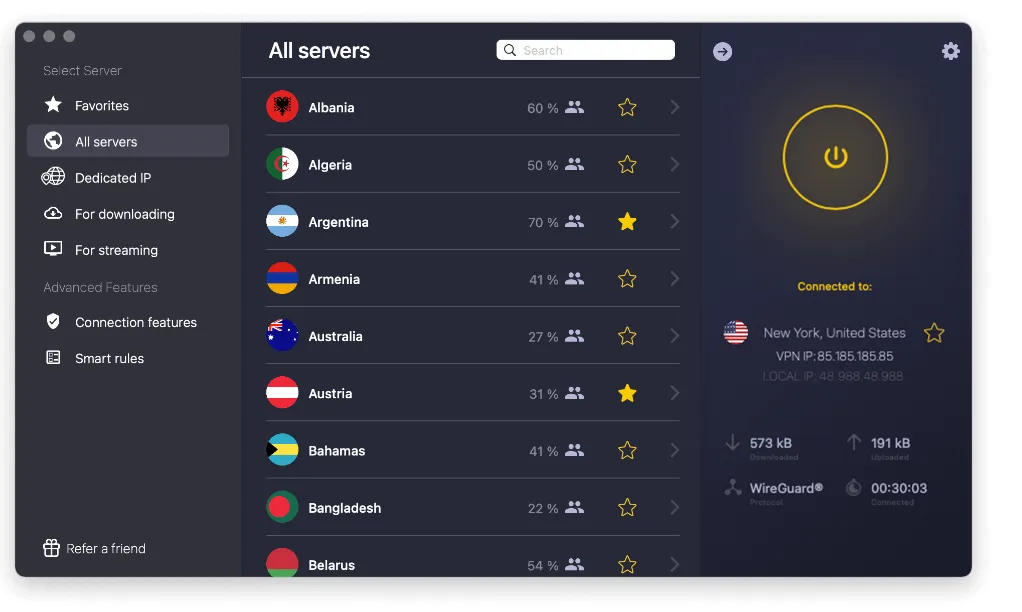
CyberGhost’s advantage in 2025 lies in its highly segmented service system.
-
Mumbai Virtual Nodes: It maintains stable virtual servers in Mumbai. While the physical hardware is outside India, it perfectly simulates native Indian residential bandwidth IPs.
-
Dedicated Streaming Servers: The app sidebar features a "For Streaming" section. If your goal is to watch Disney+ Hotstar or Netflix India cheaply, it offers optimized nodes to bypass "Content not available in your region" prompts.
-
Extended Trial: Offers a 45-day money-back guarantee, the longest among major VPNs, perfect for users who only need a short-term fix to change their region.
5. Proton VPN —— High-Quality Nodes with Extreme Privacy
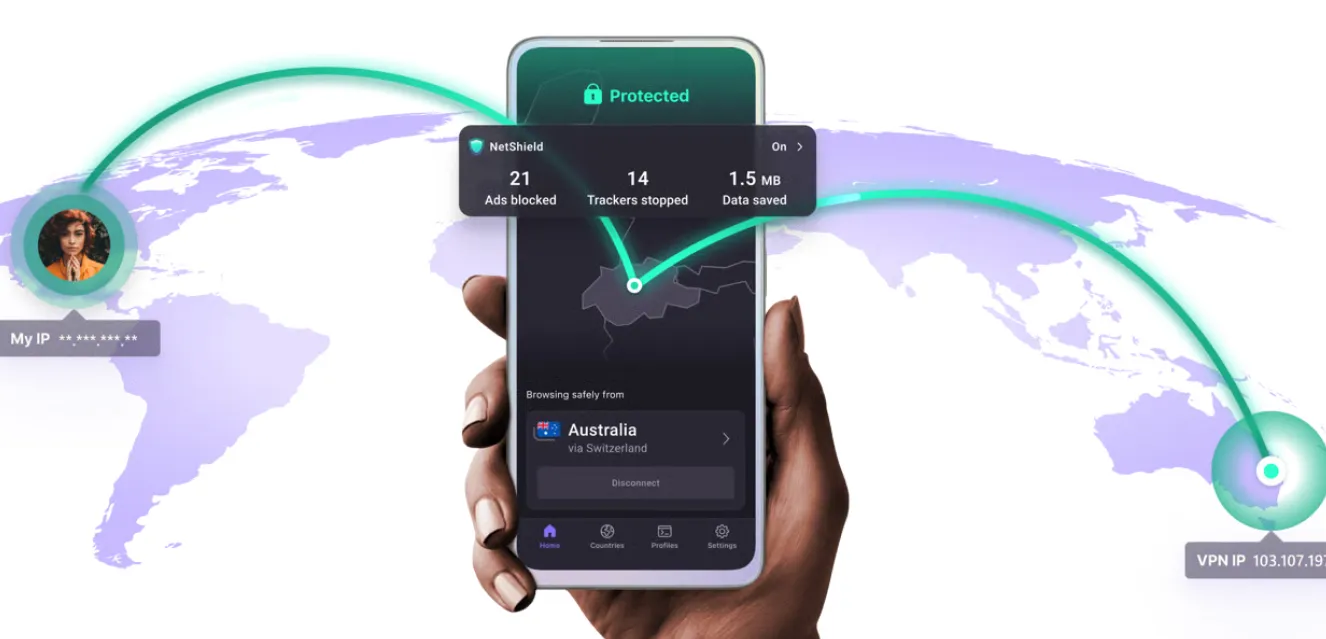
Based in Switzerland, Proton VPN is the top choice for privacy purists.
-
Secure Core: While this slightly reduces speed, it routes traffic through secure servers in Switzerland or Iceland before entering the Indian node. This completely prevents Google or Steam from tracing your true geographic location.
-
Node Purity: While Proton has fewer Indian nodes than its competitors, its IP ranges are updated frequently, making it less likely to hit a blacklisted IP segment when signing up for services.
-
Free Version Limitations: While a free tier exists, it does not support Indian nodes or P2P/torrents. To access "Regional Pricing" benefits, you must upgrade to the paid version.
[Practical Guide] 2026 Region-Hopping for YouTube Premium (India)
YouTube Premium in the India region has always been the top choice for global users due to its high cost-performance ratio (the Family plan costs only a dozen yuan or a few dollars). However, as Google’s risk control policies intensified from late 2024 into 2025, relying solely on a VPN is no longer enough. This manual will break down the latest successful paths for you.
2025 Price Quick Look (INR - Indian Rupee)
Google raised subscription prices in India over the past year. Below are the current reference prices:
|
Plan Type |
Price (Monthly) |
Approx. USD |
Notes |
|
Individual |
₹149 |
~$1.80 |
1 account |
|
Family |
₹299 |
~$3.60 |
Up to 6 people (less than $0.60/person) |
|
Student |
₹89 |
~$1.10 |
Requires SheerID student verification |
|
Annual (Individual) |
₹1,490 |
~$18.00 |
One-time payment, no monthly billing worries |
Core Preparations (Keys to Success)
-
VPN Tool: Must support Native Indian IP. Paid VPNs with a "Kill Switch" feature are highly recommended.
-
Clean Google Account: - It is recommended to register a dedicated "Indian Region" Google account.
-
Clear Historical Fingerprints: If using an old account, you must go to Google Pay settings and "Close payment profile" first.
-
Environment Masking:
-
Mobile: Turn off "Find My iPhone" or GPS location services.
-
PC: Use an independent browser (e.g., Brave or a freshly installed Edge).
Method 1: Direct Web/Android Subscription (Advanced Version)
Step 1: Deep Environment Cleanup
-
Disable location permissions for all browsers.
-
Use Chrome Incognito mode.
-
Connect VPN to India. Pro Tip: If the "India" node fails, try "India (via Singapore)" nodes; these relay nodes often bypass detection more easily than direct nodes.
Step 2: Forge a Real Indian Billing Address
On the payment page, Google will require an address. Do not type randomly; it must follow the correct format:
-
Map Generator Tip: Open Google Maps and search for "Mumbai Hotel."
-
Practical Example:
-
Address Line 1: 29, Marine Dr, Churchgate (a hotel address)
-
City: Mumbai
-
State: Maharashtra
-
Pincode: 400020 (Must match the city strictly)
Method 2: The "Invincible" iOS Gift Card Method (Deep Dive)
This is currently the method with the highest success rate because it uses the Apple App Store's In-App Purchase system, bypassing Google’s region-lock detection for credit cards.
1. Register an Indian Apple ID (No Indian phone number required)
-
Visit the Apple ID registration page.
-
Select "India" as the region.
-
You can use your domestic/current phone number (Apple currently allows cross-region security phone binding).
-
Payment Method: Select "None".
-
Billing Address: Use the Mumbai address from Step 2 above.
2. Safely Top Up Your Balance
-
Channels: Avoid buying cheap gift cards from unknown sources (high risk of account bans).
-
Recommendation: Register an account on Amazon.in and buy E-mail Delivery gift cards using your own Visa/Mastercard. Alternatively, use international platforms like OffGamers.
-
Amount: A first-time top-up of ₹500 or ₹1000 is recommended.
3. The "Critical Minute" of Activation
-
Sign out of your current Apple ID in iPhone Settings and log in with the Indian ID.
-
Open the App Store, tap your profile -> Redeem Gift Card, and enter the code.
-
Turn on your VPN (Ensure the node is India).
-
Open the YouTube app, tap your profile -> Get YouTube Premium.
-
The payment pop-up should show the price in Rupees. Double-click the side button to complete the Face ID payment.
10 Deep Troubleshooting Steps for "Payment Failed":
-
Full Incognito Environment: Thoroughly clear browser cache and use "Incognito Mode" to prevent old Cookies from leaking your true location.
-
Force Disable Device GPS: The mobile Google App reads system location. Completely turn off location permissions in system settings before paying.
-
Error Code OR-CCSEH-05: This indicates your IP is flagged as a high-risk data center. Switch to a less popular node or let the account sit for 48 hours before retrying.
-
100% Address Fingerprint Match: Ensure the billing address exists (find hotels in Mumbai/Delhi via Google Maps) and that the PIN code strictly matches the city.
-
Bypass Credit Card Restrictions: Use the Gift Card Method. If your credit card fails repeatedly, buy an Indian Apple Gift Card through official channels and subscribe via iOS In-App Purchase.
-
Disable Browser WebRTC: WebRTC can leak your internal IP outside the VPN tunnel. Use a plugin to disable it for full anonymity.
-
Sync System Time & Language: Change your device time zone to "India (Delhi)" and set your browser’s preferred language to "English (India)" to eliminate environment conflicts.
-
Account "Cool-down" Strategy: If you fail more than 3 times in a short period, stop clicking. Google will temporarily lock the payment interface. Wait 24 hours before trying again.
-
Verify Card BIN Weight: Success rates vary by bank. Cards from major international banks (Visa/Mastercard) generally have higher success rates; single-label (Visa only) cards often perform better than multi-label cards.
-
Find "Residential Proxy" Nodes: Avoid large data center IPs. If mainstream VPN nodes fail, try to find specific virtual nodes with "Residential IP" attributes.
[Family Plan Special Edition] YouTube India Family Group: The Ultimate Way to Save Money
Why is it the "Ultimate Form"? (Price Comparison)
YouTube Premium prices in India have long remained among the lowest globally. Here is an estimated comparison for early 2025:
|
Region |
Monthly Family Fee (Approx. CNY) |
Per Person (Group of 6) |
|
USA (US) |
~$165 /mo (22.99 USD) |
~$27.5 /mo |
|
Hong Kong (HK) |
~$90 /mo (98 HKD) |
~$15 /mo |
|
India (IN) |
~¥25.6 /mo (299 INR) |
~¥4.2 /mo |
Money-Saving Logic:
-
Shared Cost: One family manager can invite up to 5 family members (6 people total), making the per-person cost extremely low.
-
Full Benefits: Includes ad-free viewing, background play, video downloads, and the entire YouTube Music Premium library.
-
Exchange Rate Advantage: The Indian Rupee (INR) exchange rate is relatively stable and low.
Core Preparations Before Starting
-
Fresh/Clean Google Account: It is recommended to use a new account that has never been linked to payment profiles in other regions as the "Manager" (the one running the "car").
-
India VPN/Node: You need a stable Indian IP address.
-
Payment Tools:
-
A credit card with VISA/Mastercard branding (some foreign currency cards may trigger fraud alerts; try dual-currency cards issued in Mainland China).
-
Alternatively, subscribe via Apple Gift Cards (India Region) (requires an India-region Apple ID).
-
Indian Address: You can find a random address for an Indian hotel or shop on Google Maps.
Detailed Operation Process
1. Set Google Account Region
-
Enable your India VPN node and visit the Google Pay Console.
-
Create a new payment profile, select "India (IN)", and enter the prepared Indian address.
2. Initiate Subscription
-
Keep the India VPN enabled and visit the YouTube Premium Official Website.
-
Confirm that the currency symbol displayed is ₹ (INR).
-
Select the Family Plan and link your credit card.
3. Form the Family Group
-
Go to "Manage Family Members" in YouTube settings.
-
Send invitations via email to the other 5 members.
-
Note: The invited members' Google accounts must also have no active payment profiles, or their payment profiles must also be set to India.
2025 Latest Risk Control & "Household" Restrictions
YouTube has recently strengthened its supervision of family groups. Be aware of the following:
1. Geographical Location Verification (Household Policy)
YouTube officially requires all members to "reside in the same household."
-
Current Situation: The system periodically checks (usually every 30 days) via IP addresses and device location.
-
Countermeasure: If a member receives a "not in the same household" warning, they may need to briefly connect to an Indian VPN to log in to YouTube, or ensure everyone is on an IP from the same region when joining.
2. Account Ban Risks
While full account bans (Gmail bans) are rare, YouTube may directly cancel your subscription and ask for proof of local residence or a local bank card for secondary verification.
3. Region Switching Frequency
Google Family Groups can only be changed once per year. If you left a US group this year, you must wait a full year before joining an India group.
Advice for "Managers" and "Passengers"
-
For the Manager: You are responsible for maintaining the automatic renewal of the credit card. It is suggested to buy a Prepaid Plan (India offers 3-month or 12-month options). These are more stable than monthly auto-billing and less likely to be flagged. To avoid "deportation" of digital refugees, managers should periodically log in to YouTube using an Indian node.
-
For Passengers: Do not switch your VPN region frequently and try to keep your account active.
-
Privacy Reminder: After joining a family group, other members cannot see your watch history or private content. You only share the membership status and some Google One services (if enabled).
Summary: The YouTube India Family Group remains one of the cheapest streaming solutions accessible to regular users. Although detection is tightening, you can still enjoy a premium experience for just a few dozen yuan a year by keeping your "account clean and operations standard."
[Comparative Analysis] 2026 Subscription Havens: India vs. Turkey vs. Nigeria
|
Dimension |
India |
Turkey |
Nigeria |
|
Price |
Extremely Low |
Low |
Lowest |
|
Risk Control |
Medium (Stable) |
Very High (Easy to get refunded) |
Hell Level (Extremely hard to pay) |
|
Payment Requirements |
International Credit Card |
Local Turkish Card |
Local Card / Virtual Card |
|
Recommendation |
⭐⭐⭐⭐⭐ |
⭐⭐⭐ |
⭐⭐ |
Beyond Saving Money: What Else Can an Indian IP Do?
While most people seek an Indian IP for cheap subscriptions, India—with its 14 billion people and rapidly expanding internet industry—holds a wealth of resources within its digital borders.
1. Immersive Cricket & Exclusive Content (OTT Resources)
India has a massive and independent streaming ecosystem (OTT platforms), with content unavailable elsewhere:
-
JioCinema / Hotstar: Rights to the world’s top cricket league (IPL). For sports fans, this is the only way to watch high-definition, ad-free cricket from multiple angles.
-
Local Libraries: Platforms like SonyLIV, ZEE5, and MX Player offer a sea of Bollywood blockbusters, regional dramas, and unique reality shows that are usually geo-restricted.
-
Netflix India: Features extensive localization (Hindi, Tamil, etc.) and specific Hollywood licenses purchased for the local market.
2. A "Safe Haven" for Gamers
-
Pre-registration & Beta Testing: Many global mobile games (like the original PUBG Mobile's Indian version, BGMI) launch independent tests or special editions in India first.
-
Lower Latency: If you play on Southeast Asian or Middle Eastern servers, an Indian IP can sometimes offer more stable routing than East Asian IPs.
-
Cheap Skins: Competitive games (like Valorant or various mobile titles) often feature local holiday promotions or in-game pricing far below US rates.
3. Financial & Banking Services
-
Essential for NRIs: For Non-Resident Indians or those trading with India, accessing banks like SBI or HDFC often results in blocks or complex verification if using a non-Indian IP. A local IP ensures smooth operations.
4. Cross-border E-commerce & Market Research
-
Foreign Trade Analysis: If you are in e-commerce (especially targeting South Asia), using a local IP to access Amazon.in or Flipkart reveals real local search rankings, consumer preferences, and trending ad formats.
-
Data Scraping: Many Indian government sites or business directories (like Indiamart) restrict non-local traffic. An Indian proxy is essential for gathering this market data.
5. Software Development & Testing
-
Localization Testing: Developers can test CDN performance, payment gateways (like UPI simulation), and font rendering to ensure they meet local standards.
-
Bypassing Restrictions: Certain copyrighted academic resources or educational platforms (like specific BYJU'S courses) are only fully open to local IPs.
6. Privacy Protection (Based on Specific Data Laws)
-
Virtual Server Advantage: Many VPN providers use "Virtual Servers" to simulate Indian IPs. This often means you get an Indian IP while your data flows through countries with stronger privacy laws (like the Netherlands or Singapore), bypassing certain regional data censorship.
Conclusion: Choose the Right Tool and Save Enough for AirPods in a Year
In 2026, where information gaps have almost vanished, using a VPN to "switch regions" is no longer just for geeks—it has evolved into a smart digital consumer philosophy. We aren't just chasing a few dollars in price difference; we are reclaiming our right to choose in a market dominated by tech giants.
Choosing a rock-solid Indian tool (especially one using virtual server nodes) provides value beyond your imagination. It allows you to ditch annoying ads on YouTube, Netflix, or Spotify and enjoy premium global content at a minimal marginal cost.
Do the math: By switching regions strategically, the subscription fees you save in a year won't just cover your VPN costs—the remainder is literally enough to walk into an Apple Store and buy a new pair of AirPods or other high-end peripherals without a second thought.
This is essentially a game of "Digital Sovereignty." Learning to navigate the digital map in 2026 is an essential skill for living elegantly in an era of inflation.
Frequently Asked Questions (FAQ)
Q1: Is it illegal to connect to an Indian VPN now?
A: In most countries, using a VPN to switch IPs is not illegal in itself. However, the Indian government requires VPN service providers within its borders to record and retain user logs.
Q2: Why does it still show the original price even after I connected to an Indian VPN?
A: This is usually caused by browser cache, cookies, or the existing regional attributes locked to your account. The IP address used during registration and the current account region settings are the primary factors determining the price.
Q3: Do I need an Indian credit card to get the deals?
A: In 2026, many platforms have strengthened their risk control for payment processes. Currently, most platforms require the payment card's issuing country to match the account's region, meaning a local Indian payment method is required.
Q4: Is there a difference between a Virtual Server and a Physical Server?
A: Regarding how platforms identify IP location, there is no difference. A virtual server uses software-defined networking to broadcast an IP as Indian, while the actual hardware may be located in a data center in another country.
Q5: Will using these VPNs lead to an account ban?
A: The level of risk varies by platform. Streaming platforms (e.g., YouTube, Netflix) usually restrict content or cancel subscriptions; gaming platforms (e.g., Steam) have explicit ban clauses for cross-region purchases at low prices.
Q6: After a successful cross-region subscription, must I stay connected to the VPN to use the service?
A: It depends on the platform's mechanism. YouTube and Spotify generally allow direct connection once the payment is complete; Netflix’s content library switches based on your real-time IP address.
Q7: Can I invite members from other countries to an Indian Family Plan?
A: Platforms like YouTube require all family group members to have the same account region; otherwise, they will not be able to join the group successfully.
Q8: How safe are cross-region accounts?
A: Cross-region behavior is a violation of the platform's Terms of Service. If a platform conducts regional audits or adjusts its policies, there is a risk that the account may be banned, forced back to its original region, or deactivated.
Q9: Will fluctuations in the Rupee (INR) exchange rate affect my subscription fee?
A: Yes. Subscription fees are priced in Indian Rupees. The final amount charged depends on the real-time exchange rate between your payment currency (such as CNY or USD) and the Rupee on the day of settlement.
Q10: How do platforms identify if a user is in India?
A: Platforms make a comprehensive determination based on dimensions such as IP address location, account registration information, payment card issuing country, and device GPS location (on mobile).