As we progress through 2026, the Southeast Asian (SEA) digital economy has solidified its position as the world's most dynamic sandbox for cross-border e-commerce. Driven by an unprecedented surge in mobile-first consumerism, a rapidly expanding middle class, and localized logistics breakthroughs, platforms like Shopee, Lazada, and TikTok Shop are experiencing hockey-stick growth curves across core regional markets:
-
Vietnam (VN): Emergeing as a hyper-growth manufacturing and retail hub, fueled by highly digitized Gen-Z consumers.
-
Thailand (TH): Boasting massive basket sizes and a highly mature social commerce ecosystem.
-
The Philippines (PH): Driven by explosive remittance-backed consumption and heavy social media engagement.
-
Indonesia (ID): The heavyweight market where conversational commerce and live-selling have reshaped the retail landscape.
For ambitious cross-border merchants, the blueprint for scaling has fundamentally shifted. Relying on a single store is no longer a viable strategy; it introduces a single point of failure. To capture diverse consumer segments, dominate localized search algorithms, and mitigate niche-specific market fluctuations, successful sellers now deploy multi-store portfolios—running dozens, sometimes hundreds, of highly optimized localized shops across multiple regional platforms simultaneously.
Quick Summary (TL;DR): Safely Managing Multi-Stores
-
The Golden Rule: Use a "One Profile, One Dedicated IP, One Shop" architectural setup.
-
The Right Proxy Type: Only use Static Native Residential ISP Proxies (SOCKS5 protocol preferred).
-
The Software Stack: Route every unique IP through a distinct profile in an anti-detect browser like AdsPower or Multilogin.
-
Avoid: Standard data-center proxies or commercial shared pools, which act as instant account killers.
1. The Fatal Risk: The Multi-Store "Association Risk" & Platform Ban Hammer
While the multi-account strategy offers immense scalability, it introduces a highly volatile operational vulnerability: Account Correlation (Platform Association).
To protect their ecosystems from bad actors, syndicates, and fraudulent listings, platform giants like Shopee and Lazada have deployed highly sophisticated, AI-driven anti-fraud risk engines. These algorithms continuously analyze incoming traffic to detect if multiple independent stores are actually operated by the same underlying entity without explicit platform authorization.
If the algorithm detects a link between your accounts—a process known as correlation—the consequences are swift and devastating:
|
[Store A (Flagged IP)] ──(Correlation Engine)──> [Store B, C, & D Associated] │ ▼ [Cascading Permanent Bans] [Frozen Financial Payouts] [Confiscated Inventory] |
-
The Chain-Reaction Ban: If a single violation occurs on one store (e.g., a shipping delay, a customer dispute, or a minor policy infraction) and that store is correlated to your other accounts via shared IP signatures, all your interconnected stores will be permanently suspended overnight.
-
Liquidity Freezes: Platforms immediately freeze escrow accounts upon detection of correlation. Capital reserves and pending payouts—often worth tens of thousands of dollars—are locked indefinitely, crippling your business's cash flow.
-
Inventory Stranding: For sellers utilizing local warehousing or Shopee/Lazada fulfillment centers, a banned account means physical stock becomes inaccessible, resulting in massive operational write-offs.
2. The Solution: Moving Beyond "Account Killers" to Static Native Residential IPs
In an attempt to bypass these restrictions, many merchants make the fatal mistake of utilizing generic, low-cost commercial VPNs or shared datacenter proxies. In the modern e-commerce landscape, these solutions act as instant account killers.
Why Traditional VPNs and Datacenter Proxies Fail
-
"Dirty" IP Neighborhoods (The Bad Neighbor Effect): Datacenter IP ranges (e.g., blocks owned by AWS, DigitalOcean, or Linode) are heavily abused by scrapers, botnets, and spammers. When you route your shop manager through these subnets, your store is instantly flagged with a high risk score.
-
Shared Pool Contamination: Commercial VPNs route thousands of users through a single IP address. If another user in your shared pool violates a platform policy or gets banned, your store inherits their toxic digital footprint, leading to immediate collateral damage.
-
Lack of Geo-Location Stability: Standard VPNs dynamically rotate IP addresses. If you log in to your Hanoi-based store from a Ho Chi Minh City IP address, and then from a Bangkok IP address a few hours later, the platform's security engine triggers an automated lock for suspected account hijacking ("impossible travel").
The Gold Standard: Static Native Residential IPs
To scale safely, the modern cross-border seller must transition to Static Native Residential IPs.
-
True Native Alignment: A "native" IP ensures that the registered database location (Whois lookup) perfectly matches the physical server location in the target country (e.g., a Vietnamese IP routing through a physical telecom hub in Hanoi).
-
ISP-Backed Legitimacy: These IPs are issued directly by local Internet Service Providers (ISPs) like Viettel (Vietnam), True (Thailand), or PLDT (Philippines). To Shopee and Lazada’s risk engines, your traffic is indistinguishable from a legitimate local household shopper browsing on home broadband.
-
Dedicated, Immutable Footprint: A static residential IP belongs to you and you alone. It never changes, ensuring a stable, clean, and highly trusted digital identity that allows your multi-store portfolio to thrive without the threat of sudden correlation.
I. Platform Detection Mechanics: Why Standard VPNs Get You Banned Instantly
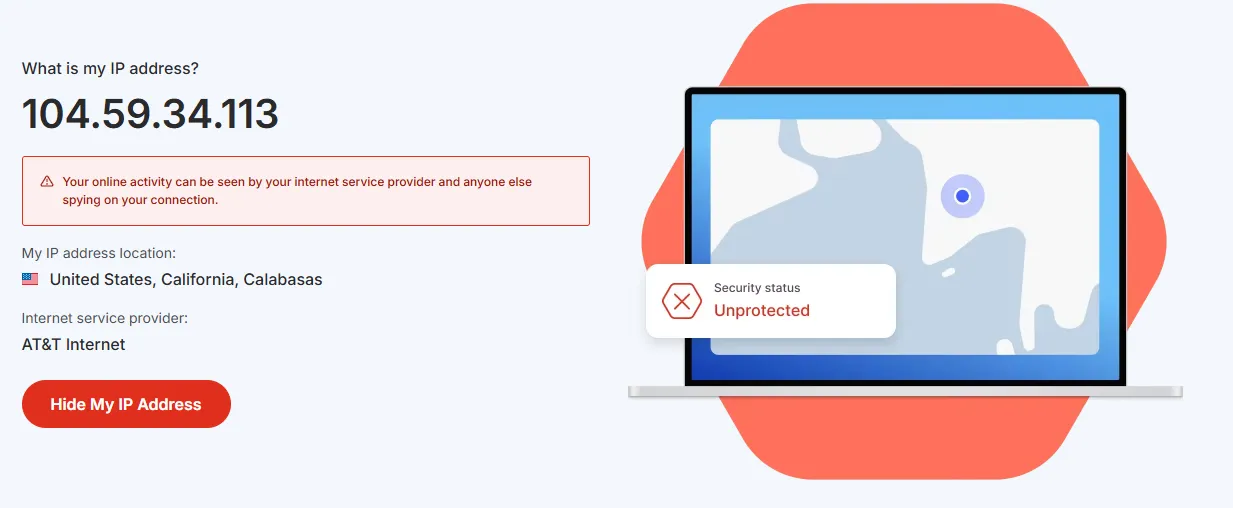
To safeguard their market integrity, Southeast Asian e-commerce platforms do not rely on basic IP checks. Instead, they run continuous, real-time behavioral and network diagnostics. Understanding how these risk engines process your connection data is crucial to protecting your digital storefronts from immediate termination.
1. The Datacenter IP Red Flag: Why Free Proxies Trigger Shopee Verification Loops
The single most common trigger for automated store bans is attempting to manage a merchant backend using a datacenter IP.
Most low-cost commercial VPNs and bulk proxy providers lease virtual servers from major cloud hosting giants such as Amazon Web Services (AWS), DigitalOcean, Linode, Vultr, or OVH. While these services are excellent for hosting web applications, they are fatal for e-commerce account management. Here is how platform risk engines instantly identify and flag these IPs:
The Mechanics of ASN (Autonomous System Number) Classification
Every IP address on the internet is grouped into an Autonomous System (AS) managed by a specific organization, identified by an ASN. Fraud prevention databases (such as IPinfo.io, MaxMind, and IP2Location) used by Shopee and Lazada classify ASNs into distinct usage categories:
-
isp: Residential broadband connections (e.g., Viettel, PLDT, True Corporation).
-
business: Commercial corporate networks.
-
hosting: Datacenter, cloud infrastructure, and VPS providers.
|
+---------------------------------------------------------------------------------+ | TRAFFIC SOURCE CLASSIFICATION | +---------------------------------------------------------------------------------+ | [Your VPN IP] ---> [Platform Gateway] ---> [Whois/ASN Threat Intel Database] | | | | * CASE A (ASN Type: "isp") -------> [Allowed] -> Trust Score: HIGH | | * CASE B (ASN Type: "hosting") ----> [BLOCKED / AUDIT] -> Trust Score: ZERO | +---------------------------------------------------------------------------------+
|
When you log in to your Shopee Vietnam or Lazada Philippines seller center, the platform's gateway queries these IP intelligence databases in milliseconds. If the lookup returns an ASN type of hosting (meaning the traffic originated from a cloud server facility rather than a domestic telecom network), the system immediately registers a critical security anomaly.
"Non-Human Traffic" (NHT) Heuristics & Immediate Security Audits
From an algorithmic standpoint, genuine merchant operations and local consumers never browse from within a cloud server datacenter. Real people use fiber-optic home connections or mobile LTE/5G towers.
When your connection is flagged as hosting traffic:
-
Instant Trust Score Demotion: Your IP Fraud Score instantly rises above the critical threshold.
-
Triggering the Audit Trapdoor: The risk engine classifies your connection as automated bot traffic or suspicious non-human activity.
-
Security Verification Overload: The platform immediately prompts your browser with aggressive Geetest/CAPTCHA challenges, forces secondary SMS OTP verification, or—in high-risk quarters—locks the merchant dashboard instantly under "suspected login compromise," requiring manual business license verification to unlock.
2. Geo-Location Velocity Shifts (Impossible Travel): The Spatial-Temporal Trap
A second fatal pitfall of standard commercial VPNs is their architectural reliance on dynamic IP rotation and opportunistic server routing. In the consumer VPN market, providers dynamically shift users between servers to optimize bandwidth and bypass localized congestion. However, for a merchant operating highly sensitive Shopee or Lazada seller accounts, this dynamic shifting triggers a critical anti-fraud alarm known as the "Impossible Travel" heuristic anomaly.
The Physics of Fraud: The Velocity Formula
Platform risk engines calculate the geographical distance and time elapsed between consecutive login events for any given account credentials. The core calculation determines the virtual velocity (Vtravel) required for a user to move between two locations:

Where:
-
Δd is the physical distance (geodesic distance computed via GPS coordinates or GeoIP databases) between Login Location A and Login Location B.
-
Δt is the precise time difference between the two login timestamps.
If the calculated velocity $Vtravel exceeds the speed threshold of commercial aviation (typically calibrated around 800 km/h to $900 km/h), the platform flags the transaction as physically impossible.
|
+-----------------------------------------------------------------------------------------+ | IMPOSSIBLE TRAVEL MECHANICS | +-----------------------------------------------------------------------------------------+ | [Login 1] Location: Hanoi (VN) -------------------------> Timestamp: 09:00 AM | | | | [Login 2] Location: Ho Chi Minh City (VN) --------------> Timestamp: 09:30 AM | | * Distance: ~1,130 km | Time Delta: 30 mins | | * Required Velocity: 2,260 km/h (Mach 1.8) -> [CRITICAL IMPOSSIBLE TRAVEL] | | | | [Login 3] Location: Bangkok (TH) -----------------------> Timestamp: 11:00 AM | | * Distance: ~800 km | Time Delta: 1.5 hours | | * Required Velocity: 533 km/h (Physically possible, but Cross-Border Alert) | +-----------------------------------------------------------------------------------------+ |
The Standard VPN Sequence of Failure
Consider a typical operational error when utilizing a standard, non-dedicated commercial VPN to manage a localized Vietnam store:
-
09:00 AM (Hanoi IP): You log in to your Hanoi-based Shopee seller center. Your VPN routes you through a local Hanoi gateway. The platform records your location coordinates and establishes an active, trusted session.
-
09:15 AM (Connection Drop / IP Shift): Your office Wi-Fi flickers, or the VPN server experiences minor packet loss. The VPN client automatically and silently reconnects to keep you protected. To optimize speed, it routes your new session through a server in Ho Chi Minh City (over 1,100km south).
-
09:30 AM (HCMC IP): You click a link in your dashboard, sending a new HTTPS request to Shopee. The risk engine processes the request and detects a geographical shift from Hanoi to HCMC in just 30 minutes. To traverse this distance naturally, you would have to travel at 2,200km/h (faster than a fighter jet).
-
11:00 AM (Bangkok IP): While troubleshooting, you toggle the VPN again, and the system dynamically connects you to a high-speed node in Bangkok, Thailand. Lazada or Shopee instantly registers a cross-border jump.
The Immediate Retaliation: Automated Account Freezes
When the velocity threshold is breached, the platform's response is automated and immediate. The risk engine assumes your Session Token has been hijacked or that you are using unauthorized proxy farms.
To protect the platform's financial integrity:
-
Token Invalidation: Your current login session is instantly terminated, forcing an abrupt logout.
-
Automated Account Freeze: The account status is moved to "Suspended" or "Locked under Security Audit."
-
The Verification Death-Loop: To reclaim the account, you are forced to submit matching local ID verification, utility bills corresponding to the store's registered address, or local business licenses—credentials that cross-border, non-native merchants rarely possess in perfect order, leading to a permanent loss of the store.
3. The Platform Correlation Risk Formula: The Multi-Dimensional Attribution Matrix
Anti-fraud algorithms deployed by Shopee and Lazada do not evaluate risks in isolation. Instead, they run continuous multi-dimensional matrices that aggregate diverse telemetry data points into a single mathematical risk quotient. If this quotient crosses the platform's risk tolerance threshold, the target accounts are flagged for instant, automated termination.
The cumulative risk can be modeled mathematically as the Account Correlation Risk Index (CR):

Where:
-
Si(a, b) is the similarity score between Account a and Account b across the i-th telemetry dimension, mapped to a scale of [0, 100].
-
wi represents the normalized weighting coefficient assigned to that specific telemetry vector ( Σwi = 1).
-
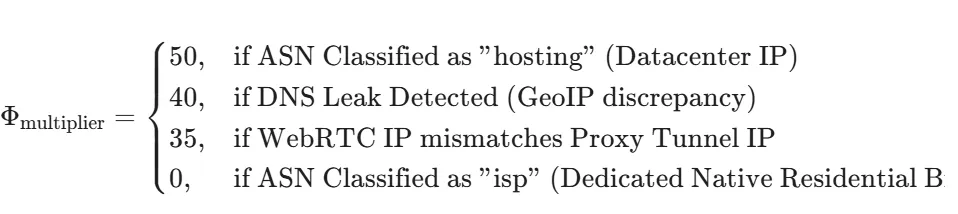
Φmultiplier represents systemic, high-gravity network triggers that immediately compound the risk exponentially.
The Core Telemetry Vectors and Weights
To calculate CR, the AI risk engine breaks down your operational footprint into four major weight-bearing categories:
-
Network Infrastructure Score (Snet, Weight w1 = 0.35): Evaluates ASN type, IP neighborhood pollution rates, WebRTC leaks, and DNS routing consistency.
-
Hardware & Fingerprint Similarity (Sfig, Weight w2 = 0.3): Measures Canvas rendering footprints, WebGL shaders, AudioContext entropy, system fonts, and browser profile cookies.
-
Operational Behavior Pattern (Sbeh, Weight w3 = 0.15): Analyzes listing upload intervals, product description template similarity, keystroke cadence, and inventory syncing frequency.
-
Entity Metadata Association (Smeta, Weight w4 = 0.20): Cross-references registered withdrawal bank accounts, localized phone numbers, localized warehouse pick-up addresses, and business license registration files.
The Catastrophic Infrastructure Multiplier (Φmultiplier)
If a seller makes the fatal mistake of utilizing shared hosting IPs or cheap VPN tunnels, the network multiplier behaves as an active compounding agent rather than a passive adder:
Threat Level Outcomes of the Formula
|
[CR Risk Score] ──────> [0 to 39: GREEN ZONE] ─────────> Account Safe (Dedicated Residential ISP) ──────> [40 to 69: YELLOW ZONE] ───────> Trigger CAPTCHAs, Mobile OTP Audits ──────> [70 to 100: RED ZONE] ─────────> Instant Permanent Store Terminations |
-
Green Zone (CR < 40): Low Risk. This status is only achievable when using clean, dedicated Static Native Residential IPs where Snet and Φmultiplier are near0. Even if there is minor operational overlap (Sbeh) , the overall risk score remains comfortably below the platform threshold.
-
Yellow Zone (40 ≤ 69 ): Warning State. Typically triggered by minor browser fingerprint leaks or using shared business broadband. Platforms will restrict account actions, block listing edits, and trigger continuous security challenges.
-
Red Zone (CR < 40)
-
(CR ≥ 70): Instant Termination. If a seller logs in via an AWS datacenter IP, the calculation guarantees a red zone flag:
 Even with completely pristine browser profiles, the mathematical baseline established by the hosting ASN class and datacenter IP signatures immediately pushes the account past the permanent suspension threshold.
II. Decoding the Terminology: What is a "True Native" Southeast Asian IP?
To navigate the market of residential connectivity, merchants must learn to decipher the marketing jargon used by proxy and VPN vendors. Not all "residential" IPs are created equal. E-commerce platforms employ rigorous verification standards, making it essential to understand the technical anatomy of a True Native IP.
1. Native IP (Geographic Alignment): Demystifying 100% Physical and Database Synchronization
A Native IP is defined by absolute, uncompromised geographic alignment. It occurs when the registered location of an IP address in global registry databases matches its actual, physical server infrastructure deployment 100% of the time.
|
+-----------------------------------------------------------------------------------+ | TRUE GEOGRAPHIC ALIGNMENT CHECK | +-----------------------------------------------------------------------------------+ | [Incoming IP Request] ────> [Whois / GeoIP Database Lookup] ────> Vietnam (VN) | | ────> [Traceroute / Latency Diagnosis] ───> Hanoi Hub (VN) | | | | * Case A: Database (VN) == Physical Server (VN) ──────> [TRUE NATIVE - TRUSTED] | | * Case B: Database (VN) != Physical Server (SG) ──────> [BROADCAST - FLAGGED] | +-----------------------------------------------------------------------------------+ |
The Technical Discrepancy: Native vs. Broadcast IPs
Many low-grade proxy providers utilize a technique known as IP Broadcasting (or virtual location routing) to cut infrastructure costs. For example:
-
A provider purchases cheap server rack space physically located inside a datacenter in Singapore.
-
They license an unused block of IP addresses registered with VNNIC (Vietnam Internet Network Information Center).
-
They route the Singapore network traffic under the guise of the Vietnamese IP block.
To a basic browser-based IP checker, the user appears to be in Vietnam. However, to the enterprise-grade risk engines of Shopee or Lazada, this discrepancy is immediately flagged.
How E-Commerce Risk Engines Detect Non-Native Discrepancies
AI risk engines utilize dual-verification frameworks to audit geographic integrity:
-
Multi-Registry Whois Lookup Sync: Platforms cross-reference IP WHOIS, RADB, and regional RIR (Regional Internet Registry) data records—such as APNIC for the Southeast Asian region. If there is a delay in routing propagation, or if the Autonomous System (AS) registration shows an inconsistent parent company registration (e.g., a Vietnamese IP block leased by a Singaporean hosting corporation), the IP's trust rating is immediately downgraded.
-
Round-Trip Time (RTT) Latency Audits: Risk engines analyze packet travel speeds at the TCP handshake layer. If a seller claims to be connected via domestic broadband in Hanoi, the latency (RTT) to Shopee's Hanoi edge-server should be sub-15ms. If the actual latency profile registers at 80ms or 120ms—consistent with crossing international undersea cables to a Singaporean or Hong Kong datacenter—the system detects the proxy routing layer and triggers an automated authentication audit.
-
Traceroute Path Analysis: Platforms trace the intermediate hops of network packets. If a connection destined for a local domestic server hops through routing hubs outside the target country (e.g., bypassing local gateways to route through international backbones), it exposes the connection as a tunneled virtual IP rather than local home broadband, leading to instant association flagging.
2. Residential ISP IP (Home Broadband): The Gold Standard of IP Reputation
A Residential ISP IP represents the highest tier of security and reputational trust within the global IP ecosystem. Unlike commercial hosting networks or enterprise business subnets, these IPs are assigned exclusively by national and local telecommunications giants—referred to as Tier 1 and Tier 2 ISPs—directly to private residential households to power domestic home broadband connections (via FTTH, GPON, or copper DSL).
|
+-----------------------------------------------------------------------------------------+ | THE RESIDENTIAL ISP TRUST SANCTUARY | +-----------------------------------------------------------------------------------------+ | [IP Address] ──> Issued by Local Telecoms (Viettel / True / PLDT) | | ──> Database Classification: "type: isp" (Residential Broadband) | | | | * Platform Decision: | | "Banning this IP blocks a real household. Minimize false positives!" | | ───> [IMPLICIT ALGORITHMIC TRUST GRANTED] | +-----------------------------------------------------------------------------------------+ |
The Heavyweights: Dominant National ISPs in Southeast Asia
For e-commerce anti-fraud engines, IP reputation is inextricably linked to the reputation of the issuing ISP. The most highly trusted, native networks in core Southeast Asian markets include:
-
Vietnam (VN): Viettel Group (Military Petrochemical Joint Stock Company), FPT Telecom, and VNPT (Vietnam Posts and Telecommunications Group).
-
Thailand (TH): True Corporation (following its merger with DTAC) and AIS (Advanced Info Service).
-
The Philippines (PH): PLDT (Philippine Long Distance Telephone Company) and Globe Telecom.
When your connection utilizes IP blocks registered directly to these domestic operators, the risk engine categorizes your traffic as coming from a legitimate, paying local citizen browsing from their home network.
The Logic of Implicit Trust: The "Residential Sanctuary" Concept
E-commerce platforms are commercially driven to minimize friction for genuine buyers and local sellers. Banning a legitimate customer or partner causes immediate revenue loss and reputational damage. This operational constraint is the core reason why Residential ISP IPs are granted "implicit trust":
-
The Shared-IP Safeguard (CGNAT Dynamics): In Southeast Asia, due to the global exhaustion of IPv4 addresses, ISPs widely deploy Carrier-Grade NAT (CGNAT). This technology routes hundreds of independent households through a single public IP address. Platform risk engines are highly aware of this infrastructure constraint. If Shopee or Lazada blacklists a mainstream residential IP block from Viettel or PLDT, they risk blocking hundreds of legitimate shoppers simultaneously. To avoid high false-positive rates, platforms maintain extremely high block thresholds for domestic ISP pools.
-
Authentic User Behavioral Signatures: Genuine home internet traffic contains a highly diverse noise profile—smart TVs, mobile devices, family members browsing social media, and smart home appliances all sharing the same public IP. This naturally occurring, low-risk noise profile blends seamlessly with your store management activities, rendering your traffic indistinguishable from standard domestic consumer behavior.
The Technical Signature: Inside the IP Intelligence Metadata
When Shopee or Lazada's threat gateway queries an IP database (such as MaxMind GeoIP2 ISP or IPinfo API), a "True Native" Residential ISP IP returns an uncompromised JSON response profile:
|
{ "ip": "1.53.192.124", "hostname": "1.53.192.124.viettel.vn", "anycast": false, "city": "Hanoi", "region": "Hanoi", "country": "VN", "loc": "21.0245,105.8412", "org": "AS7552 Viettel Group", "postal": "10000", "timezone": "Asia/Ho_Chi_Minh", "asn": { "asn": "AS7552", "name": "Viettel Group", "domain": "viettel.com.vn", "route": "1.53.192.0/20", "type": "isp" }, "company": { "name": "Viettel Corporation", "domain": "viettel.com.vn", "type": "isp" }, "privacy": { "vpn": false, "proxy": false, "tor": false, "relay": false, "hosting": false, "service": "" } } |
Key points analyzed by the platform in this metadata payload:
-
The type Field is set to "isp": This is the ultimate trust seal. Databases classify the IP block as residential home broadband rather than commercial hosting networks.
-
The privacy Block returns false across all vectors: The IP shows absolutely no signs of tunneling, active VPN encapsulation, open proxies, or hosting infrastructure relays.
-
Cohesive Geo-Coordinates: The physical routing node and DNS resolvers are mapped strictly to domestic metropolitan areas (e.g., Hanoi, Ho Chi Minh, Bangkok, Metro Manila), perfectly aligning with local warehouse pick-up and drop-off coordinates.
The Merchant's Mandate: Static vs. Dynamic Residential IPs
While dynamic residential IPs (which rotate every few minutes) are useful for data scraping, they are highly dangerous for managing seller dashboards.
Managing a Shopee or Lazada account requires Static Native Residential IPs. A static ISP IP provides a stable, permanent lease. By using a static IP, you ensure that every time you log in to your store, the platform registers the exact same residential broadband node. This continuous consistency eliminates any risk of "impossible travel" alerts and establishes a highly trusted, multi-year relationship between your localized merchant storefront and the platform's security gateway.
3. Static vs. Dynamic Residential: The Absolute Operational Divide
To deploy multi-account assets safely, cross-border e-commerce operators must understand the fundamental architectural divergence between Static Residential IPs and Dynamic Residential IPs. While they both inherit the highly trusted isp classification tag, using them in the wrong context is a swift path to complete operational failure.
|
+───────────────────────────────────────────────────+ │ RESIDENTIAL ISP IP BRANCHES │ +───────────────────────────────────────────────────+ │ ┌──────────────────────┴──────────────────────┐ ▼ ▼ [STATIC RESIDENTIAL IPs] [DYNAMIC RESIDENTIAL IPs] - Dedicated leases (VLAN Isolation) - Rotating backconnect pools - Immutable anchor: Session-stable - Variable-length port rotation - Mandatory for: Store Management - Mandatory for: Web Scraping |
The Architectural Blueprint: Dedicated Leases vs. Backconnect Pools
-
Static Residential IPs (Dedicated Leases): These proxies are provisioned through direct contracts with domestic ISPs, allocating a specific, dedicated broadband lease physically mapped to a secure localized gateway. Once assigned, this IP remains immutable (fixed). It functions exactly like a permanent home Wi-Fi broadband router in the target country. It features dedicated bandwidth, zero unexpected rotations, and complete physical lease isolation.
-
Dynamic Residential IPs (Rotating Backconnect Pools): These are sourced from peer-to-peer (P2P) SDK networks where residential users lease their home bandwidth in exchange for free apps or software. They operate on a backconnect proxy server architecture. When you connect to a dynamic node, you connect to an entry gateway port that automatically routes your session to a rotating pool of available real-user home connections. These connections are highly transient; they rotate based on a set timer (e.g., every 5 to 30 minutes) or upon every new HTTP request.
The Fatal Mechanics of Dynamic IPs in Merchant Account Management
While dynamic residential IPs are indispensable for competitive intelligence gathering and localized web scraping, they are highly hazardous when used to manage active seller backend portals. Utilizing them to log into your merchant centers triggers immediate security lockdowns due to two primary anti-fraud mechanisms:
Mechanism A: HTTP Session State Invalidation & Token Hijacking Alerts
E-commerce platforms maintain persistent, state-synchronized connections (using secure WebSockets or HTTP Keep-Alive headers) between your browser and their server backends. This session is authorized via a secure session cookie combined with local session storage tokens.
If you are using a rotating dynamic proxy:
-
The Rotation Event: Mid-session, the P2P node you are routing through drops offline or your rotation timer hits its limit. The backconnect proxy immediately switches your session to a new residential node in a different city or subnet.
-
IP-to-Token Mismatch: Your browser sends its next HTTPS package carrying the existing session cookie, but it originates from a completely different public IP address.
-
The Anti-Hijack Lock: Shopee or Lazada's application gateway immediately registers a potential Session Hijacking (Man-in-the-Middle) attack. Because security models are designed to assume that an active session cookie cannot travel between different networks in milliseconds, the engine instantly invalidates your session token, logs you out, and flags your merchant profile for "Unusual Login Activity," triggering immediate security audits.
Mechanism B: Rapid High-Entropy Subnet Hopping
Dynamic P2P residential pools contain millions of highly unstable consumer nodes. Over a typical 8-hour workday, a merchant manager using dynamic IPs would hop across dozens of distinct Class C subnets:

This extreme entropy profile is a core behavioral indicator of malicious automated bot activity or credential-stuffing software. A genuine human store administrator sitting in an office or home never hops across 20 different broadband networks in a single morning. The algorithm detects this unnatural connection pattern and instantly triggers a permanent risk suspension.
Deep Comparative Analysis: Static vs. Dynamic Allocation
To assist technical leads in setting up secure standard operating procedures (SOPs), refer to the comparative evaluation matrix below:
|
Architectural Metric |
Static Native Residential IP (Dedicated) |
Dynamic Residential IP (Rotating) |
|
Primary Use-Case |
Merchant Seller Center Management (Shopee, Lazada, TikTok Shop dashboard administration). |
Aggressive Competitor Scraping, localized price indexing, and ad verification. |
|
IP Persistence |
Infinite (Fixed). Session persists on the same ISP node indefinitely. |
Transient (Variable). Rotates every request, on a timer, or when peer drops offline. |
|
ASN Classification |
Immutable isp (Residential Broadband). |
Highly fluid isp or mobile (LTE/5G consumer pools). |
|
Bandwidth Allocation |
Dedicated, unmetered, high-throughput pipelines. |
Shared, metered (charged per Gigabyte of bandwidth used). |
|
Session Stability |
100% session persistence. Zero unexpected disconnects or forced logouts. |
High instability. Prone to mid-transaction connection interruptions. |
|
Anti-Correlation Safety |
Maximum. Your storefront is anchored to a unique, untainted digital address. |
Extreme Risk. High chance of rotating into an IP footprint recently blacklisted by another merchant. |
The Definitive Merchant Mandate
For the e-commerce portfolio administrator, the operational directive is clear:
-
Use Dynamic Residential Proxies only during the pre-market research phase to deploy localized scraping scripts to monitor competitor listing changes, map regional pricing schemas, and extract keyword indices.
-
Transition strictly to Dedicated Static Native Residential IPs the moment you register, access, or log into any live store dashboard. This ensures your multi-million dollar store portfolio is structurally isolated, securely anchored, and fully insulated against automated platform correlation algorithms.
III. Setup Blueprint: Building a 100% Isolated E-Commerce Environment
Deploying a pristine Static Native Residential IP is only fifty percent of the correlation-prevention equation. If you bind a clean regional residential IP to a standard, off-the-shelf browser (such as standard Google Chrome, Microsoft Edge, or Safari), platform risk engines will still easily cross-reference your accounts. Standard browsers continuously leak deep hardware fingerprints, system-level configurations, and shared cookie paths that allow algorithms to construct a cohesive hardware identity across different IP networks.
To build an impenetrable, structurally isolated workspace, you must encapsulate each static IP within a specialized container—achieved through professional Anti-Detect Browser Integration.
1. The Anti-Detect Browser (AdsPower / Multilogin) Integration: Creating Virtual Digital Sandboxes
An anti-detect browser is not merely a privacy-focused web browser. It is a highly sophisticated, Chromium- or Firefox-based virtualization engine designed to generate completely independent browser profiles. Each profile acts as a unique, self-contained digital sandbox that emulates a separate physical machine with customized hardware and operating system parameters.
By integrating software platforms like AdsPower or Multilogin into your localized multi-store SOP (Standard Operating Procedure), you break the physical links between your e-commerce dashboards.
|
+──────────────────────────────────────────────────────────────────────────────────────────+ | THE STRUCTURALLY ISOLATED WORKSPACE ARCHITECTURE | +──────────────────────────────────────────────────────────────────────────────────────────+ | [Physical Laptop / PC] | | │ | | ├──> [AdsPower Profile 1] ──> Emulated Hardware FP A ──> Native Static IP (VN) | | │ (Acts as a standalone Vietnam PC — manages Shopee Vietnam Store A) | | │ | | ├──> [AdsPower Profile 2] ──> Emulated Hardware FP B ──> Native Static IP (TH) | | │ (Acts as a standalone Thailand PC — manages Shopee Thailand Store B) | | │ | | └──> [AdsPower Profile 3] ──> Emulated Hardware FP C ──> Native Static IP (PH) | | (Acts as a standalone Philippines PC — manages Lazada Manila Store C) | +──────────────────────────────────────────────────────────────────────────────────────────+ |
The Deep Fingerprint Masking Mechanics
When an anti-detect browser executes a profile, it intercept-injects modified virtual variables into the browser's JavaScript environment, completely spoofing the critical hardware markers analyzed by Shopee and Lazada's correlation models:
-
Canvas & WebGL Identity Isolation: Platform trackers draw invisible 2D shapes and 3D textures on the fly. Because every device’s graphic driver and GPU hardware processes these instructions with minute physical variations, the resulting image hashes are highly unique. Anti-detect browsers isolate this by adding unique, non-repeating noise offsets to the HTML5 Canvas readback data (toDataURL()), rendering each profile's graphical rendering signature completely distinct.
-
AudioContext Entropy Differentiation: The browser's audio processing stack generates physical sound waves using the local computer's sound card hardware. The mathematical processing variances produce unique audio fingerprints. Anti-detect profiles inject unique acoustic noise models into the Audio Synthesis stream, preventing audio-stack hardware correlation.
-
WebRTC Leak Prevention & Local IP Masking: Standard WebRTC (Web Real-Time Communication) APIs query your local router to discover local private network IP addresses (e.g., 192.168.1.15). Under standard VPN configurations, WebRTC leaks this local LAN IP, exposing your physical office setup. Anti-detect browsers structurally bypass this by replacing the local WebRTC IP with a simulated, matching local IP range or completely disabling the WebRTC discovery protocol while permitting standard proxy transit.
-
Operating System and User-Agent Synchronization: If you are operating on a MacBook (macOS) but utilizing a Vietnam Static Residential IP, logging in with a Mac browser signature can occasionally trigger cross-border suspicion in regions where local merchants exclusively utilize Windows devices. Professional configurations allow you to generate native Windows profiles that emulate Windows-specific system fonts, screen resolutions, and CSS font metrics even while running the software on a physical Mac.
-
Cookie Jar & Storage Isolation: Each profile maintains a completely isolated local directory for browser caches, IndexedDB, LocalStorage, and Cookie jars. There is absolute zero cross-profile leakage, preventing shared tracking pixels (like Meta or Google pixels) from linking your store accounts in the background.
Operational Step-by-Step Configuration SOP
To guarantee zero-risk deployment when linking your Native Static Residential IPs with an anti-detect browser, execute the following technical protocol:
|
[Create Profile] ──> [Select Target OS Match] ──> [Configure Static Proxy] ──> [Lock WebRTC & DNS Sync] |
-
Profile Creation: Initialize a new profile inside AdsPower or Multilogin. Label the profile with the exact name of the localized store (e.g., Shopee-VN-District1-Store).
-
OS Matching Selection: If your physical computer is Windows-based, generate a Windows profile. If physical is macOS, generate macOS. Do not cross-spoof OS profiles unless using advanced fingerprint noise models, as modern browsers can detect mismatched system font callouts.
-
Dedicated Proxy Bind: Select Socks5 or HTTP protocol (Socks5 is highly recommended for lower packet overhead and better security). Input your dedicated Static Native Residential IP credentials (IP, Port, Username, and Password).
-
Geo-Location and Timezone Synchronization: Enable "Fill Timezone Based on IP" and "Fill Geolocation Based on IP". This ensures your profile's internal browser clock matches the local timezone (e.g., GMT+7 for Vietnam/Thailand, GMT+8 for the Philippines) and that the browser's HTML5 Geolocation API returns coordinates that match your local ISP routing hub.
-
WebRTC Configuration: Set WebRTC behavior to "Replace" or "Disabled". Setting it to "Replace" instructs the browser to generate a synthetic local IP that matches the subnet structure of your static residential proxy, providing maximum authenticity.
-
DNS Leak Prevention: Configure the profile to route DNS requests directly through the proxy network interface rather than your physical machine’s DNS gateway. This prevents local DNS leaks (e.g., your local ISP's DNS resolver in China or Taiwan resolving a Southeast Asian domain name, exposing your physical location).
-
Execution and Pre-flight Check: Launch the virtual profile. Before navigating to the Shopee or Lazada merchant dashboard, always navigate to a diagnostic endpoint such as Whoer.net or IPinfo.io to verify the environment's trust rating is 100% clean and perfectly aligned.
2. Binding Your Dedicated SOCKS5/HTTP Native IP: Sockets vs. Hypertext Layer Protocols
Once the anti-detect virtual environment is initialized, the technical focus shifts to the proxy integration layer. Connecting your virtual profile to a regional Static Native Residential IP requires selecting a transmission protocol. The two industry standards are SOCKS5 and HTTP (Secure HTTP/HTTPS). Understanding their architectural differences at the OSI model layers is critical for securing merchant operations.
|
+─────────────────────────────────────────────────────────────+ | OSI LAYER PROXY ENCAPSULATION PROFILE | +─────────────────────────────────────────────────────────────+ | OSI LAYER 7: [ Application (HTTPS, WebSockets) ] <-- HTTP Proxy | OSI LAYER 6: [ Presentation (SSL/TLS Layer) ] | OSI LAYER 5: [ Session Layer (TCP Handshake) ] <-- SOCKS5 Proxy | OSI LAYER 4: [ Transport (TCP / UDP Packets) ] +─────────────────────────────────────────────────────────────+ |
Protocol Deep Dive: HTTP vs. SOCKS5 Architecture
Option A: SOCKS5 Proxies (The Recommended Standard)
SOCKS5 (Socket Secure, Version 5) operates at the Session Layer (Layer 5) of the OSI model. It is completely protocol-agnostic. SOCKS5 does not interpret or alter the application-level data passing through it; it simply routes raw TCP/UDP packets through a secure tunnel to the destination node.
-
Support for UDP Traffic: SOCKS5 natively supports UDP (User Datagram Protocol) routing. This is vital for maintaining WebRTC operations (used by modern e-commerce chat modules) and bypassing real-time communication blocks.
-
Authentication Security: SOCKS5 supports robust password-based authentication protocols (RFC 1929), ensuring your leased IP cannot be hijacked or scanned by public open-proxy crawling bots.
-
Header Preservation (Zero Metadata Overhead): Because SOCKS5 operates beneath Layer 7, it does not modify the HTTP headers sent by the browser. There is zero risk of the proxy adding diagnostic tags like Via or X-Forwarded-For which disclose your physical IP location to platform security gateways.
Option B: HTTP/HTTPS Proxies
HTTP proxies operate at the Application Layer (Layer 7) of the OSI model. They are specifically designed to interpret and process web-based HTTP/HTTPS traffic.
-
Protocol Constraints: They cannot handle UDP packets, which disables native WebRTC encapsulation and causes WebRTC connection dropouts or fallback leaks.
-
Header Modification Risk: Cheap or improperly configured HTTP proxies can append system headers containing the proxy server's backend IP or even leak the client’s real source IP. While high-anonymity (Elite) HTTP proxies strip these headers, SOCKS5 remains structurally safer as it is physically incapable of manipulating Layer 7 data.
Structural Leak Mitigation: Hardening the Network Interface
When routing through a SOCKS5/HTTP tunnel, e-commerce risk engines scan for minor network anomalies to detect if a proxy layer is active. To prevent these leaks, you must implement the following proxy-binding hardening protocols:
-
DNS Routing Alignment (Preventing Geo-IP Discrepancies): A common vulnerability is DNS Leakage. If you bind a SOCKS5 proxy physically located in Hanoi, Vietnam, but your browser resolves DNS queries via your local router's ISP DNS resolver (e.g., in China or Singapore), the platform registers a Hanoi client IP querying Vietnamese servers via Chinese/Singaporean DNS nodes. This mismatch raises a critical anomaly flag. The configuration mandate: Force all DNS queries to resolve remotely through the SOCKS5 proxy gateway itself (SOCKS5 remote DNS resolution).
-
WebRTC Media Device Obfuscation: E-commerce risk engines query the navigator.mediaDevices.enumerateDevices() JS API to map local hardware configurations (microphones, webcams, audio drivers). Even if your IP is hidden, if multiple browser profiles return identical physical hardware IDs, the platform links the stores. Anti-detect SOCKS5 bindings must be set to "Spoof Media Device IDs", generating a randomized hardware array for each distinct virtual dashboard.
-
Active TCP/IP Fingerprinting (OS Mismatch Elimination): Advanced anti-fraud engines analyze the TCP Packet TTL (Time to Live) and Window Size values at the network packet layer to determine the OS of the sender. If your User-Agent claims you are on "Windows 11" but the TCP packet signature is native to "Linux" (the OS of the remote proxy server), the platform detects the proxy usage. Premium static residential providers solve this by implementing Passive OS Fingerprinting (MTU/TTL alignment) on their proxy nodes to match your profile's emulated operating system perfectly.
Secure Binding SOP Matrix
To ensure absolute network isolation when establishing a SOCKS5 native IP connection inside your browser profiles, refer to the technical verification flowchart:
|
[Proxy Credentials Entered] ──> [Remote DNS Resolution Enabled] ──> [TCP Handshake Layer Sync] │ ▼ [Whoer.net Diagnostic Run] │ ┌────────────────────┴────────────────────┐ ▼ ▼ [Threat Score > 0%] [Threat Score: 0%] - Review DNS Leak - Proceed to Login - Revise WebRTC MTU - Sandbox Secured! |
Ensure your operations team runs this structural audit on every new profile before navigating to Shopee or Lazada seller centers. By executing this configuration blueprint, your localized store portfolios are anchored to individual, isolated home-broadband endpoints, rendering your multi-account assets immune to platform correlation.
3. The "One Profile, One IP, One Shop" Rule: Implementing Absolute Physical Isolation
The ultimate operational doctrine of multi-account e-commerce management is defined by a simple, unyielding architectural mandate: The "One Profile, One IP, One Shop" Rule. In a highly competitive landscape where AI-driven risk engines act as judge, jury, and executioner, any deviation from this standard introduces systemic correlation vectors. No matter how clean your IP is or how advanced your anti-detect browser's fingerprint virtualization engine claims to be, grouping or nesting multiple active seller centers within a single network tunnel or shared browser state will eventually result in a total portfolio wipeout.
|
+──────────────────────────────────────────────────────────────────────────+ | THE "ONE PROFILE, ONE IP, ONE SHOP" GOLDEN RATIO | +──────────────────────────────────────────────────────────────────────────+ | | | [ Shop A (VN) ] <───> [ Dedicated IP A ] <───> [ Browser Profile A ]| | | | [ Shop B (TH) ] <───> [ Dedicated IP B ] <───> [ Browser Profile B ]| | | | [ Shop C (PH) ] <───> [ Dedicated IP C ] <───> [ Browser Profile C ]| | | | * MANDATE: Absolutely zero cross-connections or fallback routing. | +──────────────────────────────────────────────────────────────────────────+
|
The Science of Cross-Contamination: How a Single Leak Ruines the Portfolio
When managing multiple storefronts (e.g., three Shopee stores in Vietnam), many operators fall into the trap of convenience, thinking they can route them all through one premium native residential IP or access them within separate tabs of the same browser profile. This logic ignores how platform correlation engines track session overlaps:
-
Shared Local Storage & Cookie Intersect: Modern browsers keep shared persistent states (such as IndexedDB and WebSQL) across active tabs. If you open Store A and Store B in different tabs of the same browser profile, tracking scripts query these shared states. The platform reads the same tracking cookies, instantaneously correlating the stores.
-
IP Neighborhood Contamination (The Single-Thread Failure): If three of your shops route through a single Static Native IP, they share a single public IP anchor. If Store A is flagged for shipping delays or selling unauthorized products, the platform instantly blacklists the IP. Since Store B and Store C are actively communicating with the platform over the exact same IP, the correlation engine flags them within minutes, executing a cascading ban.
-
WebRTC Local Hostname Correlation: When multiple browser tabs communicate via WebRTC, they may leak identical local device names or internal network paths. If the platform detects that two supposedly distinct, localized shops are communicating from an identical internal hostname (e.g., LAPTOP-F890X), the accounts are flagged for manual verification.
The Structural Partitioning Matrix
To implement absolute isolation, you must partition your operations at three distinct logical layers:
-
The Network Layer (100% IP Separation): Every unique merchant dashboard must be assigned an exclusive, dedicated Static Native Residential IP. Under no circumstances should any secondary store utilize the same IP, even for quick check-ins.
-
The Device Layer (100% Fingerprint Separation): Each store must exist inside its own dedicated browser profile. Each profile must be configured with a randomized, immutable user-agent, localized system canvas signatures, localized WebGL hashes, and distinct hardware device mappings.
-
The Entity Layer (100% Business Metadata Separation): Do not link the same withdrawal bank account, phone number, business registration, or physical local returns warehouse address to multiple unassociated accounts. Even if your browser and network are perfectly isolated, metadata overlap in the database will cause retrospective account correlation.
Operational SOP for Large-Scale Store Portfolio Management
For professional cross-border e-commerce agencies managing dozens of stores across Shopee, Lazada, and TikTok Shop, this strict organizational protocol is mandatory:
-
Rigid Naming Conventions: Standardize the naming of your browser profiles to enforce operational accountability. Ensure each profile name contains the country code, platform, store name, and dedicated IP address.
-
Example Profile Name: [VN-SH] Bach_Hoa_Online_Hanoi - SOCKS5_1.53.192.124
-
Strictly Segregated Access Schedules: If human resources are shared, prevent the same operator from switching rapidly between different country profiles on the same workstation. Implement an operational pause (e.g., 5 minutes) when closing one profile before launching another, allowing localized platform sockets to close fully.
-
Dedicated Payment & Withdrawal Gateways: Match your store entities with regional corporate accounts or localized payment processors. Store A (Vietnam) must withdraw to its own local Vietnamese banking partner, completely separated from Store B (Thailand) and Store C (Philippines).
-
No Fallback Network Configurations: Ensure your anti-detect browser has global "kill switch" parameters. If the dedicated SOCKS5 proxy fails to connect, the profile must refuse to open. This prevents the browser from falling back to your local office Wi-Fi network, which would immediately leak your real, non-native IP address to the platform's security gateway.
IV. Best VPNs & Proxies for Shopee and Lazada (2026 Native IP Review)
With platform risk engines operating under highly localized, zero-tolerance attribution models, securing a premier network pipeline is the single most critical asset purchase for your operational infrastructure. While generic, bulk-rate proxy marketplaces often resell polluted hosting subnets, a select few tier-1 providers have engineered robust dedicated network assets tailored for enterprise localized e-commerce.
1. NordVPN: Strategic Routing, Singapore Transit Architecture, and Dedicated IP Integration
As we navigate the e-commerce landscape of 2026, NordVPN remains the premier industrial-grade commercial VPN option for merchants requiring bulletproof routing stability, high-speed regional backbones, and premium static infrastructure.
|
+──────────────────────────────────────────────────────────────────────────────────────────+ | NORDVPN ENTERPRISE SINGAPORE TRANSIT PIPELINE | +──────────────────────────────────────────────────────────────────────────────────────────+ | | | [Operator Terminal] ──(NordLynx Protocol)──> [Singapore Transit Hub (High Latency Cap)] | | │ | | ┌──────────────────────────────────────┴──────────────────────────────────┐ | ▼ ▼ ▼ | [Dedicated IP Hub: SG] [Obfuscated Nodes: VN] [Dedicated Nodes: TH] | - 100% Clean ASN tag - Obfuscated DPI Bypass - Localized Routing Node | | +──────────────────────────────────────────────────────────────────────────────────────────+ |
The Strategic Blueprint: The "Singapore Transit" Architecture
For many cross-border e-commerce operations managed out of East Asia or Europe, establishing a direct, stable socket connection to remote, localized consumer nodes in Vietnam, Thailand, or the Philippines can result in massive packet loss and latency spikes. NordVPN resolves this technical bottleneck through its specialized Singapore Transit Hub framework:
-
Peering Optimization: NordVPN's Singapore servers are directly peered with the primary regional Tier-1 telecom backbones (such as Singtel and Tata Communications).
-
The Regional Backhaul Loop: By routing your primary workspace tunnel through a high-bandwidth, ultra-low-latency Singapore transit node, your traffic leverages high-capacity undersea fiber-optic pathways (such as the APG and SJC cables) to bridge directly into secondary markets (e.g., Hanoi, Bangkok, Manila). This reduces jitter ($J < 2\text{ ms}$) and eliminates localized routing drops that trigger Shopee's "connection interrupted" security logs.
The Dedicated IP Protocol: Clean ASN Allocation
To bypass the "shared pool contamination" effect that plagues standard commercial VPN tunnels, NordVPN offers a robust Dedicated IP subscription model. This architecture provides you with a static, dedicated IP address that belongs strictly to your business entity.
-
Reputational Isolation: Because you do not share this IP with scrapers, bulk downloaders, or bad actors, the IP maintains a continuous, pristine trust score ($0\%$ Fraud Index) across IP lookup authorities.
-
Dedicated Singapore Hub Blocks: NordVPN maintains clean, highly trusted business broadband blocks in Singapore. Utilizing these dedicated IPs allows merchants to establish highly stable, semi-localized master parent accounts (e.g., Lazada Singapore or Shopee regional headquarters profiles) that act as the structural anchors for their localized country stores.
-
NordLynx (WireGuard) Protocol Integration: NordVPN's dedicated IP system runs natively on their proprietary NordLynx protocol. Built on the lightweight WireGuard architecture, NordLynx provides instantaneous cryptographic handshakes and ultra-low overhead, preventing browser session timeouts during heavy file uploads (such as bulk inventory CSV uploads or local listing video syncs).
Overcoming Geo-Blocks via Obfuscated Servers and Custom DNS Leak Protections
For operators running multi-account teams from countries with strict outbound internet controls or active Deep Packet Inspection (DPI) firewalls, standard VPN protocols are easily detected and throttled by local network regulators. NordVPN addresses these environments through two key features:
-
Obfuscated Servers (OpenVPN over SSL/TLS): This specialized server configuration strip-minimes WireGuard and standard OpenVPN packet signatures, packaging your network payload to look identical to standard HTTPS bank-level traffic. This prevents local network monitoring nodes from identifying your proxy tunnel, guaranteeing 100% uptime for your operational terminals.
-
Custom IPv6 & DNS Leak Shields: NordVPN’s desktop clients feature structural DNS hijacking blocks. When bound, the software disables native Windows/macOS Teredo IPv6 tunneling and forces all DNS resolutions directly through Nord’s private, zero-log regional DNS arrays (e.g., matching the Geo-IP location of your dedicated IP). This eliminates DNS mismatch flags, ensuring your platform similarity rating remains firmly in the Green Zone (CR < 40).
[How to Get NordVPN Free Trial for 7 & 30 Days] is recommended before you buy this VPN.
2. Surfshark: Infinite Hardware Scaling and Native Mobile GPS Spoofing
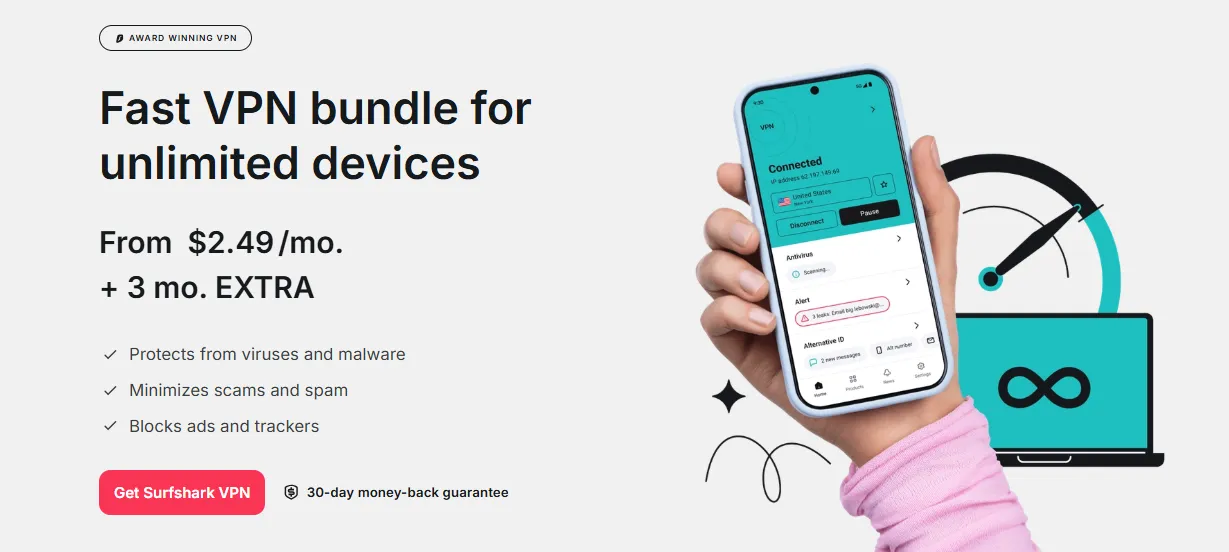
For cross-border e-commerce merchant teams managing large, highly concurrent account portfolios under strict operational budgets, Surfshark has emerged as an exceptionally high-utility VPN provider in 2026. While matching the security standards of other premium tier-1 VPN providers, Surfshark provides two highly specialized features that solve critical pain points for localized Southeast Asian store managers: unlimited hardware scale and physical mobile location virtualization.
|
+──────────────────────────────────────────────────────────────────────────────────────────+ | SURFSHARK MOBILE GPS SPOOFING & COORDINATE SYNCHRONY | +──────────────────────────────────────────────────────────────────────────────────────────+ | | | [Android Merchant App] | | │ | | ├──> Queries OS GPS API ───────────┐ | | │ ▼ | | │ [SURFSHARK client] | | │ * Dynamic Intercept & Rewrite | | │ * Matches SOCKS5 Proxy IP Lat/Long | | │ │ | | └──> Queries Network Gateway ─────┼─────────────────> Native Static IP (VN) | | ▼ | | [MATCHING TELEMETRY VERIFIED] | | | +──────────────────────────────────────────────────────────────────────────────────────────+ |
Unlimited Simultaneous Connections: Bypassing Team Hardware Constraints
Traditional commercial VPNs impose rigid connection limits (typically capping active sessions at 5 to 10 devices per account license). For cross-border agencies managing hundreds of localized stores using distributed virtual assistants, remote operators, and specialized customer service hubs, these device limits represent a massive operational bottleneck.
-
Uncapped Device Concurrency: Surfshark structurally bypasses this restriction by allowing unlimited simultaneous connections under a single active business subscription.
-
Team-Wide Profile Scaling: Your administrative, marketing, and order-fulfillment teams can run multiple active virtual profiles across entirely different physical locations, physical workstations, and virtualization servers simultaneously.
-
Seamless Static IP Distribution: When combined with Surfshark's static/dedicated IP add-on modules, your operational teams can bind independent dedicated endpoints directly within their AdsPower or Multilogin profiles, allowing unlimited parallel operations without triggering "subscription limit exceeded" connection drops that leak your core localized network environments.
The Mobile-First Anti-Fraud Defense: Hardware GPS Override Technology
Southeast Asian e-commerce consumers are highly mobile-centric. Correspondingly, platforms like Shopee, Lazada, and TikTok Shop have built highly aggressive mobile-only merchant applications (e.g., Shopee Partner / Seller Center Mobile) that offer premium visibility features, flash-sale scheduling, and conversational chat priority.
However, managing localized country shops from a mobile device presents a massive anti-fraud hurdle: Mobile apps do not rely solely on your network IP address; they directly query your device's physical GPS hardware.
If a seller logs into a Ho Chi Minh City Shopee merchant account via a clean Vietnamese IP, but the mobile device's physical GPS hardware returns location coordinates situated in Shenzhen or Taipei, the system instantly identifies the geolocation discrepancy and locks the shop under suspicion of unauthorized cross-border hosting operations.
Surfshark solves this fatal telemetry leak on Android mobile devices with its proprietary GPS Spoofing (Override) feature:
-
Hardware-Level API Mocking: The Surfshark Android client integrates directly with the OS developer options, registering itself as the primary mock location provider.
-
Autonomous Lat-Long Alignment: When you connect to a localized Surfshark static or dedicated server (e.g., Bangkok, Thailand or Manila, Philippines), the application dynamically extracts the precise geographic latitude and longitude coordinates of that server's physical telecom node.
-
Dynamic Coordinate Injection: The client then intercepts and rewrites all incoming OS-level GPS location requests from applications (such as the Shopee Seller app). To the platform's anti-fraud system, your physical device's physical GPS chip returns coordinates that perfectly align with your network IP.
-
Complete Telemetry Harmony: By achieving 100% synchronization between your mobile network routing and your simulated hardware GPS coordinates, your mobile-centric operations are granted maximum trust ratings, safely bypassing high-gravity mobile fraud filters.
High-Throughput WireGuard Pipelines for Bulk Asset Synchronization
Managing e-commerce portfolios at scale requires heavy file transfers, including bulk product listing image uploads, high-definition promotional video synchronization, and continuous inventory CSV imports. Standard OpenVPN tunnels often introduce severe throttling and packet degradation over long-distance undersea backhauls.
Surfshark addresses this bottleneck by deploying an enterprise-grade WireGuard protocol network. Operating directly inside the operating system's kernel space, Surfshark’s WireGuard pipelines minimize encryption overhead. This architecture provides sustained transfer speeds (>200 Mbps) and maintains incredibly low latency, preventing server-side socket timeout drops when bulk-updating active product listings across multiple localized country shops.
Surfshark VPN Review help you know this VPN totally. NordVPN vs Surfshark compares the two VPNs and help you make choice.
3. Enterprise-Grade Dedicated Residential Proxies: The Ultimate E-Commerce Safeguard
For power users, large-scale cross-border syndicates, and corporate e-commerce groups managing complex portfolio assets, standard consumer VPN applications—even with dedicated IP add-ons—occasionally present configuration challenges at scale. When your operations require hundreds of distinct geographical endpoints operating concurrently, the ultimate architecture shifts from client-based VPN configurations to Enterprise-Grade Dedicated Static Residential Proxies (via specialized providers like AstroProxy, IPRoyal, or regional private telecom IP brokers).
|
+──────────────────────────────────────────────────────────────────────────────────────────+ | ENTERPRISE SOCKS5 RESIDENTIAL TUNNEL INTEGRATION | +──────────────────────────────────────────────────────────────────────────────────────────+ | | | [AdsPower Sandboxed Profile] | | │ | | └──(Encapsulated SOCKS5 Session)──> [Dedicated VLAN Egress Router in SEA] | | │ | | ├──> Whois ASN: Viettel/PLDT/True | | ├──> IP Type: "isp" (Broadband) | | └──> Direct Domestic Peering | | │ | | ▼ | | [Shopee/Lazada Gateway] | | - Trust Score: 100% Perfect | | | +──────────────────────────────────────────────────────────────────────────────────────────+ |
Why Dedicated Residential Proxies Outperform Traditional VPNs
While premium VPNs establish encrypted tunnels, they are designed primarily as centralized "hub-and-spoke" networks. In contrast, enterprise SOCKS5 static residential proxies are native, highly distributed IP assets provisioned directly through localized telecommunications pipelines:
-
VLAN Physical Port Isolation: Enterprise residential providers contract directly with Southeast Asian local ISPs (such as Viettel in Vietnam, True in Thailand, and PLDT in the Philippines) to reserve physical, unused consumer broadband ports in regional offices. These ports are mapped directly to a dedicated Virtual Local Area Network (VLAN) interface assigned exclusively to your business. There is no shared bandwidth, no parent network overlap, and no routing trace leaks.
-
Absolute Absence of Client Software Footprint: VPN clients require installing kernel-level network adapters (TAP/TUN drivers) and run localized system services that e-commerce browser trackers can detect via deep system enumeration queries. Residential proxies require zero local client installation. Because the proxy settings are bound directly within the Chrome/Chromium browser profile sandbox at the SOCKS5 socket layer, there are no structural system-level background processes to expose your masking setup.
-
ISP-Grade Peer Autonomy: While VPN IPs are registered under business subnets or high-volume corporate leases, dedicated residential proxies inherit genuine, unmodified home subscriber metadata. They are classified with an absolute type: isp tag in global threat intelligence databases, enabling you to bypass strict fraud checks effortlessly.
Specialized Configuration Controls: IP Whitelisting and Egress Port Locking
When operating through professional proxy infrastructure like AstroProxy, operators are granted deep configuration permissions that standard VPN applications do not provide:
-
Rigid IP-Based Access Control (Whitelisting): Instead of logging into the proxy using standard username/password combinations (which are vulnerable to credential theft), you configure your provider's control panel to authorize access exclusively from your main office’s physical static IP (IP Whitelisting). If an operator attempts to access the proxy port from an unauthorized network, the socket refuses to bind.
-
Custom Egress Port Allocation: Dedicated SOCKS5 tunnels allocate a specific, high-numbered port (e.g., socks5://vn-isp.astroproxy.com:10284) mapped permanently to your leased residential node. This node is physically anchored in your target metropolitan district, eliminating unexpected routing changes and providing unmatched regional stability.
-
Dynamic Remote DNS Resolution: Professional proxy gateways resolve all target domains internally at the egress node in the destination country. When your Vietnamese store manager navigates to seller.vn.shopee.cn, the DNS lookup occurs directly in Hanoi or Ho Chi Minh City via local ISP DNS servers, rendering your operational traffic entirely local, authentic, and safe.
Operational Deployment Rules for Power Users
To implement this high-tier structural setup, agencies must enforce a strict network pipeline SOP:
-
Zero Shared Subnets: When leasing residential blocks, ensure your provider issues IPs from completely different Class C subnets (e.g., 1.53.192.* and 1.55.204.*). This prevents "subnet sweeping" bans where a platform correlates and suspends an entire sequential IP block.
-
Mandatory Proxy Port Audits: Implement weekly automated checks to query your proxy ports against Whois threat intelligence endpoints (such as IPinfo.io). If a lease experiences an ASN classification shift (e.g., from type: isp to type: business due to local telecom database updates), the port must be immediately retired and replaced before the next seller center session.
-
Strict SOCKS5 Protocol Enforcement: Disable HTTP proxy modes across all store dashboards. SOCKS5 remains the only approved transmission layer for active merchant store management due to its native UDP packet support and complete header preservation, guaranteeing absolute digital isolation for your global store portfolio.
V. Live Verification Checklist: Is Your SEA IP "True ISP Native"?

Acquiring your e-commerce connection infrastructure is only the first step. Before passing active merchant credentials into any browser profile sandboxed inside AdsPower or Multilogin, you must execute a structural verification protocol. Under no circumstances should you trust a proxy provider's dashboard claims blindly. You must verify the network payload dynamically on your sandbox terminal to guarantee platform-grade alignment.
1. Verifying via IPinfo.io: Checking the Autonomous System (ASN) and Company Type Signatures
The single most authoritative diagnostic check in your verification protocol is auditing your IP address's Autonomous System Number (ASN) classification database records. E-commerce anti-fraud risk engines (including Shopee, Lazada, and TikTok Shop) license real-time, high-priority threat intelligence feeds directly from IP metadata giants like IPinfo.io and MaxMind (GeoIP2).
To ensure your leased network endpoint is structurally secure, you must run an end-to-end payload diagnostic to analyze the core ASN block and privacy signatures.
|
+──────────────────────────────────────────────────────────────────────────────────────────+ | IPINFO METADATA DIAGNOSTIC ROUTE | +──────────────────────────────────────────────────────────────────────────────────────────+ | | | [Sandboxed Profile] ──(SOCKS5 Tunnel)──> [Proxy Exit Node] ──> [IPinfo.io Threat API] | | │ | | ┌─────────────────────────────────────────────────────────────┴───────────┐ | | ▼ (Query JSON Payload) ▼ | | * ASN Type: "hosting" ---------> [BLOCKED] -> Threat Score: 100% (Hosting Server) | | * ASN Type: "isp" / "business" -> [ALLOWED] -> Trust Score: 100% Perfect ISP-Native | | | +──────────────────────────────────────────────────────────────────────────────────────────+ |
The Terminal Query Protocol: Real-Time Verification SOP
To bypass local browser cache pollution during network audits, execute a clean remote query directly from inside your target anti-detect browser's profile tab, or run a sandboxed terminal query utilizing the following secure HTTP socket route:
|
curl [https://ipinfo.io/json?token=your_provided_api_token](https://ipinfo.io/json?token=your_provided_api_token) |
(Note: While professional proxy developers query these endpoints via specialized API headers, public diagnostic tools like Whoer.net or IPLeak.net execute the exact same queries in the background.)
Analyzing the Metadata Payload: The Three Structural ASN Columns
When reading your query result payload, navigate directly to the asn and company metadata objects. Platforms classify the network into three distinct categories, resulting in immediate algorithmic trust decisions:
Category A: The hosting Designation (The Fatal Trigger)
If the IPinfo query payload returns "type": "hosting" or matches hosting-provider Autonomous Systems (such as AS16509 Amazon.com Inc., AS14061 DigitalOcean LLC, or AS63949 Linode LLC):
|
"asn": { "asn": "AS14061", "name": "DigitalOcean, LLC", "domain": "digitalocean.com", "route": "104.248.0.0/16", "type": "hosting" } |
-
Risk Evaluation: CRITICAL FAULT. The IP is classified as a hosting server. Because genuine merchants and local households never run their broadband loops from inside a data warehouse facility, your store’s trust rating is instantly demoted (CR ≥ 75+). Attempting to access your merchant center via this IP will trigger immediate automated verification lockouts or permanent cascading store suspensions.
Category B: The isp Designation (The Gold Standard)
If the query returns "type": "isp" and maps directly to regional telecommunications operators (such as AS7552 Viettel Group in Vietnam, AS54245 PLDT in the Philippines, or AS17552 True Internet in Thailand):
|
"asn": { "asn": "AS7552", "name": "Viettel Group", "domain": "viettel.com.vn", "route": "1.53.192.0/20", "type": "isp" } |
-
Risk Evaluation: EXCELLENT / 100% SAFE. This designation indicates authentic, domestic home broadband. To e-commerce anti-fraud platforms, your incoming session is identical to a local consumer browsing on a household connection, granting you maximum algorithmic trust.
Category C: The business Designation (The Highly Trusted Enterprise E-Commerce Route)
In some scenarios, enterprise-grade dedicated residential leases or dedicated static IPs provided by localized telecom companies route through commercial business registries, returning "type": "business":
|
"asn": { "asn": "AS9256", "name": "PT Telekomunikasi Indonesia", "domain": "telkom.co.id", "route": "180.250.0.0/16", "type": "business" } |
-
Risk Evaluation: HIGHLY TRUSTED. Unlike raw hosting blocks, business broadband classes represent verified corporate entities, local office installations, local pick-up centers, and commercial retail malls in the destination country. Because local Southeast Asian merchants utilize these business-grade broadband connections inside their physical brick-and-mortar storefronts, platforms treat the business tag with a trust rating equivalent to residential isp profiles.
The Immutable Verification Mandate
Before entering active credentials, check your ASN metadata profile:
-
If the type field returns hosting, immediately discard the IP node.
-
Proceed only when the type field is confirmed as isp or business, backed by a verified regional ISP company name.
2. How to Test for DNS Leakage: Step-by-Step E-Commerce Sandbox Check
Even if your IP lookup returns a clean residential isp classification, your setup remains highly vulnerable to a subtle but catastrophic security flaw: DNS Leakage.
DNS leakage occurs when your primary web traffic is routed through your SOCKS5 proxy tunnel, but your browser’s Domain Name System (DNS) translation requests bypass the proxy and leak directly through your local physical network router. For cross-border merchants, this telemetry inconsistency is a fatal operational error.
|
+──────────────────────────────────────────────────────────────────────────────────────────+ | DNS LEAKAGE (UNSECURED VS. SECURED PIPELINE) | +──────────────────────────────────────────────────────────────────────────────────────────+ | | | * UNSECURED (LEAK DETECTED): | | [Browser Profile] ───(HTTPS Traffic via Proxy)───> [Vietnam IP (Viettel)] ────> OK | | [Browser Profile] ───(DNS Query via Office Router)─> [China/US DNS Resolver] ──> LEAK! | | | | * SECURED (NO LEAKS): | | [Browser Profile] ───(HTTPS Traffic via Proxy)───> [Vietnam IP (Viettel)] ────> OK | | [Browser Profile] ───(DNS Query via Proxy Socket)─> [Vietnam DNS Resolver] ──> SAFE! | | | +──────────────────────────────────────────────────────────────────────────────────────────+ |
The Core Threat: DNS Discrepancy Flagging ($C_R$ Escalation)
When you log in to your Shopee Vietnam storefront, the platform's security framework queries your client’s DNS resolver properties. If the gateway detects that your IP is registered to a residential broadband pool in Hanoi, Vietnam (AS7552 Viettel), but your browser resolves domain queries via DNS servers owned by China Telecom in Shenzhen or Comcast in the United States:
-
Geographic Inconsistency Alarm: The platform registers a critical Geo-IP mismatch between your connection IP and your resolving DNS server coordinates.
-
Correlation Multiplier Trigger: The infrastructure correlation threat score instantly compounds:

-
Automated Session Revocation: The risk engine assumes proxy emulation or active account hijacking, initiating session termination and freezing active merchant center access.
Standard Operating Procedure (SOP) for Real-Time DNS Leak Testing
To audit your sandbox environment's DNS integrity, execute this diagnostic protocol before opening any e-commerce dashboards:
-
Initialize the Sandbox: Launch your target browser profile inside AdsPower or Multilogin.
-
Navigate to the Audit Node: Open https://www.dnsleaktest.com inside an isolated profile tab.
-
Verify the Landing Baseline: The landing page will automatically display your active public IP and mapped location. Verify that the country matches your target marketplace (e.g., Vietnam, Thailand, or the Philippines).
-
Execute the Extended Test: Click the "Extended Test" button. The diagnostic framework will execute a multi-turn query sequence, testing up to 36 distinct DNS resolution ports to trigger fallback leaks.
-
Evaluate the Egress Output: Analyze the resulting target table.
-
The Success State (Green Zone): The table must list only DNS servers physically located within your target country, registered to local telecommunications ISPs (e.g., Viettel in Vietnam, PLDT in the Philippines, True in Thailand).
-
The Failure State (Red Zone): If you see even a single DNS server registered in China, Taiwan, the United States, or any country outside your target shop's domestic boundaries, do not proceed. Your network pipeline is leaking.
Hardening the Sandbox: How to Eradicate DNS Leaks
If your DNS leak test returns external, non-native server registries, implement these direct corrective measures inside your anti-detect browser and proxy configuration panels:
-
Force Remote DNS Resolution (SOCKS5 Level): Ensure your AdsPower or Multilogin proxy setting has "Remote DNS Resolution" enabled. This forces the browser profile to route all domain resolution packages through your dedicated SOCKS5 tunnel first, resolving them directly at your SEA egress residential node.
-
Disable IPv6 Sockets: Many local router environments fallback to domestic IPv6 pathways to resolve DNS queries. Inside your anti-detect browser's global profile settings, set IPv6 behavior to "Disabled" or "Block".
-
Enable Secure DNS with Customized Local Resolvers: In your Chromium profile's advanced settings, navigate to Privacy and Security -> Use Secure DNS (DoH - DNS over HTTPS). Configure it to use localized public DNS servers matching your target market (e.g., Google's public DoH resolver https://dns.google/dns-query routed through your SOCKS5 tunnel interface, or custom local telecom primary DNS nodes).
Related guide: Best VPN for Singapore; Best Taiwan VPNs
Frequently Asked Questions (FAQ)
Operating localized multi-store portfolios across Southeast Asian e-commerce networks requires ongoing technical vigilance. Below are the most common operational roadblocks merchants face, detailed alongside engineering-grade troubleshooting protocols.
Q: "Can I manage multiple Shopee/Lazada stores under a single VPN client subscription?"
A: Technically yes, but only if you use a multi-port, multi-IP subscription and strictly route through an anti-detect browser. You must never log into different stores using the same VPN IP or dynamic shared pool node.
|
+──────────────────────────────────────────────────────────────────────────────────────────+ | SAFE MULTI-STORE CO-EXISTENCE UNDER ONE BILLING PLAN | +──────────────────────────────────────────────────────────────────────────────────────────+ | | | [Single VPN / Proxy Bill] | | │ | | ├──> Dedicated Port 10281 ──> SOCKS5 Node A (VN) ──> AdsPower Profile 1 ──> Store A | ├──> Dedicated Port 10282 ──> SOCKS5 Node B (TH) ──> AdsPower Profile 2 ──> Store B | └──> Dedicated Port 10283 ──> SOCKS5 Node C (PH) ──> AdsPower Profile 3 ──> Store C | | | * STRICT BAN TRAP: Opening Store A & B under the same IP, even in different profiles. | +──────────────────────────────────────────────────────────────────────────────────────────+ |
The Architectural Blueprint:
Many premier VPNs (like Surfshark) or proxy services (like AstroProxy) bill via a single unified dashboard, permitting you to buy multiple dedicated IP addresses or ports under one plan. To leverage this safely without triggering platform correlation, you must strictly enforce this configuration loop:
-
Purchase Discrete IP Pipelines: Ensure your provider provisions completely distinct IP gateways. Store A (Vietnam) and Store B (Thailand) must resolve to completely different, non-sequential IP subnets.
-
Strict Profile-to-IP Binding: Bind SOCKS5 credentials of Dedicated IP A exclusively to AdsPower Profile A. Bind Dedicated IP B exclusively to Profile B.
-
Prevent Fallback Leakages: Turn on the anti-detect browser's global network kill-switch. If SOCKS5 Port 10281 drops offline, the profile must block your connection entirely, preventing the browser from defaulting to your physical office WAN gateway.
If your support assistants make the mistake of opening two different stores under the same VPN connection without SOCKS5 profile isolation, the platforms' correlation formula (CR) will immediately spike past 70, resulting in a cascade ban.
Q: "My store was flagged for 'unusual login activity' or locked despite using a Native ISP IP. Why?"
A: A clean, native residential IP is only a portion of your digital footprint. If your store was flagged, your network interface is likely suffering from active DNS leakage, WebRTC leaks, or deep hardware fingerprint mismatch anomalies.
|
+──────────────────────────────────────────────────────────────────────────────────────────+ | THE FIVE-POINT FAILURE FLOWCHART | +──────────────────────────────────────────────────────────────────────────────────────────+ | | | [Login Anomalies] ──┬──> [DNS Leak Detected] ───────> Resolve via Remote SOCKS5 DNS | | ├──> [WebRTC Local IP Leak] ───> Replace with Spoofed Local IP | | ├──> [TCP OS Fingerprint Leak] ─> Align TCP TTL with User-Agent | | └──> [Mismatched WebGL/Canvas] ─> Enable Browser Profile Noise | | | +──────────────────────────────────────────────────────────────────────────────────────────+ |
The Troubleshooting Diagnostic Sequence:
If you experience security verification loops or sudden login lockouts on a clean IP, run these diagnostics immediately:
-
Audit for DNS Leakage: Run an extended test on DNSLeaktest.com. If your connection IP is registered to Viettel in Hanoi, but even a single resolving DNS server lists an IP address based in China, Hong Kong, or the United States, your SOCKS5 proxy configuration is leaking. Enable "Force Remote SOCKS5 DNS" inside your profile.
-
Verify WebRTC Integrity: Check your public WebRTC properties. If WebRTC leaks your physical office local LAN IP (e.g., 192.168.1.* matching your Chinese/Western broadband gateway), platforms can link your seller center back to your real physical location. Set WebRTC parameters inside AdsPower to "Replace" to generate simulated local IPs.
-
Audit the TCP OS Fingerprint (MTU/TTL): If your anti-detect browser profile is emulating a "macOS Chrome" client, but the SOCKS5 proxy server's packet routing structure returns an MTU of 1500 and a TCP TTL of 64 (standard for Linux/datacenter nodes), platform threat models immediately flag the discrepancy. Ensure your proxy provider supports passive OS matching or align your emulation profiles to Windows.
-
Identify Hardware Fingerprint Overlaps: If you log into Store A and Store B from the exact same physical PC, even via separate IPs, standard trackers can query your audio card signature, graphics card WebGL hashes, and font-list entropy. Enable noise-injection overrides for WebGL, Canvas, and AudioContext in your profile preferences to ensure unique hardware profiles.
Q3: "How do I securely pay for my regional SEA VPN and residential proxy subscriptions?"
A: To prevent payment metadata correlation, e-commerce agencies must decouple their operational purchasing cards from their storefront identities. Never utilize corporate credit cards linked to your real identity or store business licenses across multiple proxy accounts.
|
+──────────────────────────────────────────────────────────────────────────────────────────+ | METADATA-ISOLATED PAYMENT TUNNELS | +──────────────────────────────────────────────────────────────────────────────────────────+ | | | * HIGH CORRELATION RISK: | | [Main Card: John Doe] ───> Pays Proxy A (VN) ───> Pays Proxy B (TH) ───> Pays Proxy C | | | | * SECURED METADATA TUNNEL: | | [Crypto Wallet USDT] ───> Anonymous Proxy Egress Subscriptions ───> Zero Linking | | [VCC Provider API] ───> Unique Virtual Cards (Random Billing Name) ───> Zero Linking | | | +──────────────────────────────────────────────────────────────────────────────────────────+ |
The Safe Payment Playbook:
-
Cryptocurrency (USDT/USDC/BTC): The gold standard of operational privacy. Leading proxy services (including AstroProxy, IPRoyal, and major Southeast Asian residential IP brokers) natively accept crypto payments via TRC20 or ERC20 channels. This guarantees zero banking telemetry linkbacks to your cross-border merchant setups.
-
Virtual Credit Card (VCC) Multi-Issuance Platforms: If cryptocurrency is not an option, utilize premium business VCC platforms (like PingPong, LianLian, or virtual card issuers with high-volume BIN APIs).
-
The Protocol: Issue a dedicated virtual credit card for each independent proxy provider.
-
The Mandate: Configure each card to use randomized, localized cardholder names and distinct billing addresses. This ensures financial metadata databases cannot link your distinct store-management subscription packages to a single unified corporate cardholder profile.
-
Avoid Bank Wire Transfers: Never execute direct bank wire transfers or local regional wallets (like ShopeePay, TrueMoney, or GCash) registered under your local storefront corporate licenses to pay for your infrastructure routing proxies. Doing so directly links your operational network infrastructure to your store metadata inside the platform’s business databases.
Q4: Does this Native IP strategy also apply to TikTok Shop SEA multi-accounting?
A: Absolutely. TikTok Shop's e-commerce risk engine is arguably more stringent than Shopee or Lazada because it actively audits live-streaming bandwidth integrity and device hardware profiles simultaneously. Utilizing static native residential SOCKS5 proxies paired with hardware noise spoofing (Canvas/AudioContext) is mandatory to prevent automatic shadowbans on your local multi-shop layouts.
Disclaimer: VPN usage should comply with local laws and terms of service of the platforms accessed. All images in this article are sourced from the merchant's official website and are copyrighted by the merchant.