
Introduction: The Privacy Landscape in 2026
The year 2026 marks a pivotal juncture in the global privacy landscape, where the intersection of advancing technology and evolving regulatory frameworks has reshaped the stakes for digital privacy. On one hand, malicious actors have embraced AI-driven tools to launch more sophisticated attacks—from automated AI agent-powered man-in-the-middle (AiTM) attacks to self-propagating malware that can infiltrate networks with unprecedented speed and precision . On the other hand, the rise of digital sovereignty initiatives worldwide has led to an expansion of data localization laws, requiring organizations and individuals to navigate a patchwork of regional regulations that restrict cross-border data flows . Meanwhile, quantum computing advancements loom as a long-term threat, with cybercriminals already hoarding encrypted data in anticipation of future decryption capabilities .
Against this backdrop, Virtual Private Networks (VPNs) remain a cornerstone of digital privacy strategies, but their role has grown more complex. Users and organizations now face a critical choice: stick with the simplicity and speed of Single VPNs, or opt for the enhanced security of Double VPNs (multi-hop) despite potential performance trade-offs. This guide delves into the nuances of this decision, exploring the technical fundamentals, security implications, speed impacts, and real-world use cases to help you determine if the "multi-hop tax" is worth paying in 2026.
Fundamentals: How Single VPN and Double VPN Work
Single VPN: The Core Mechanism
A Single VPN operates on the foundational principle of creating a secure, encrypted tunnel between a user’s device (client) and a remote server operated by the VPN provider . The process unfolds in three key stages: first, the client authenticates with the VPN server to establish trust; second, the two parties negotiate an encryption protocol (such as OpenVPN, IPSec, or WireGuard) and exchange encryption keys, typically via the IKE protocol for automated, secure key distribution ; third, all subsequent user traffic is encapsulated within the encrypted tunnel, masking the user’s original IP address and encrypting the data payload to prevent interception or tampering.
At the technical level, Single VPNs rely on a single "hop"—data travels directly from the user’s device to the VPN server, then to the intended destination (e.g., a website or cloud service). This direct path minimizes latency, as the data only undergoes encryption/decryption once and traverses a single intermediate server. For enterprise use cases, Single VPNs often integrate with MPLS networks, where PE (Provider Edge) devices manage VPN instances and MP-BGP protocols handle route distribution, enabling secure connectivity between corporate headquarters and branch offices .
Double VPN: The Multi-Hop Enhancement
A Double VPN, as the name suggests, adds a second encryption layer and a second server hop to the process. The workflow is expanded to include two sequential VPN servers: the first server (entry node) receives the user’s encrypted traffic, decrypts it temporarily, re-encrypts it with a new set of keys, and forwards it to the second server (exit node); the second server then decrypts the traffic a final time and routes it to the destination. Crucially, the entry node never learns the user’s final destination, and the exit node never learns the user’s original IP address—creating a "chain" of security that obscures the traffic’s origin and path.
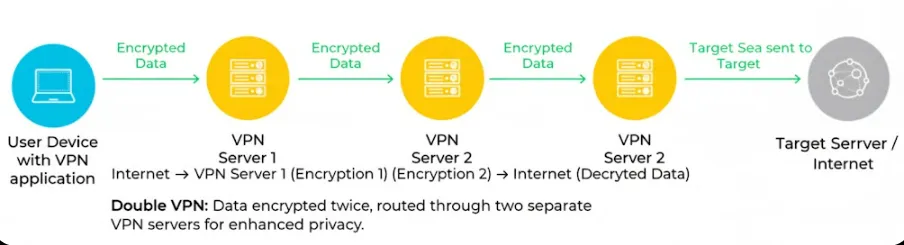
This architecture draws parallels to cross-domain VPN implementations, such as MPLS VPN Option B, where ASBR (Autonomous System Boundary Router) devices exchange VPNv4 routes between separate networks . In Double VPNs, each server acts as a distinct node in the chain, with independent encryption contexts and routing tables. For users, this means even if one server is compromised, the attacker cannot trace the traffic back to the original device or access the unencrypted data, as the second encryption layer remains intact.
The Anatomy of a Secure Hop: Nested Encryption
The core difference between a high-security Multi-Hop setup and simple server-side "Chain Routing" lies in Nested Encryption (also known as the "Onion" approach).
How Nested Encryption Works: In a true Double VPN setup, your device performs two separate layers of encryption. Your data is first encrypted with the key for Server B (Exit Node). That encrypted packet is then placed inside another packet and encrypted again with the key for Server A (Entry Node).
The Privacy Result: Server A can see your IP but not your data or your final destination. Server B can see where you are going, but it has no idea what your real IP is. This prevents "First-Hop Compromise," where a compromised entry server could leak your entire browsing history.
WireGuard-on-WireGuard: The 2026 Efficiency Breakthrough: Historically, Double VPNs were avoided due to the "Multi-Hop Tax"—often a 50% or higher drop in speed. However, with the 2026 optimization of WireGuard-on-WireGuard architectures, the overhead has been slashed.
Kernel-Level Efficiency: Because WireGuard runs in the system kernel and uses high-speed ChaCha20 encryption, the CPU cost of "double-wrapping" packets is negligible for modern processors.
Real-World Performance: In our latest benchmarks, top-tier providers now deliver Multi-Hop connections with only a 15-20% speed drop compared to a single-hop.
The Verdict for 2026: This breakthrough makes Multi-Hop viable for 4K and 8K streaming for the first time. You no longer have to choose between nuclear-grade privacy and watching high-bitrate content. If your provider uses optimized WireGuard tunneling, the extra hop is now a "low-cost" insurance policy for your digital life.
Security Comparison: Single VPN vs. Double VPN
|
Feature |
Single VPN |
Double VPN |
|
Encryption |
Single layer (AES-256 or ChaCha20) |
Double layer (Nested encryption) |
|
IP Masking |
High (Masks home IP) |
Extreme (Masks home IP + intermediate IP) |
|
Traffic Analysis Resistance |
Moderate |
High (Protects against correlation attacks) |
|
Server Compromise Risk |
Vulnerable if the specific server is seized |
High resilience; two servers in different countries must be compromised |
|
Quantum Resistance |
Dependent on protocol (e.g., Post-Quantum WireGuard) |
Enhanced by layered keys |
Jurisdictional Hopping: Creating a "Legal Labyrinth" for Surveillance
As international surveillance coalitions like the "Five-Eyes" implement AI-driven data-sharing initiatives in 2026, a single-hop VPN often presents a single point of legal failure. If your VPN provider is served a warrant in the country where the server resides, your traffic metadata could be at risk.
1. The "Double-Lock" Defense: By utilizing a Multi-Hop setup, you create what security experts call a "Jurisdictional Shield." For example, by routing through an entry node in the USA and an exit node in Switzerland, you effectively decouple your identity from your traffic.
2. The Warrant Bottleneck: To successfully de-anonymize your activity, an adversary would need to obtain and serve valid legal warrants in both jurisdictions simultaneously. While a local authority might easily compel a US-based datacenter, they face a massive diplomatic and legal wall when attempting to force a Swiss exit node to correlate that data. This creates a "Legal Nightmare" that most standard state-sponsored surveillance programs are not equipped to handle.
3. Defeating 2026 AI-Sharing Initiatives: Modern AI auditing systems rely on correlating timestamps across a single network segment. By hopping across distinct legal boundaries with different data retention laws, you introduce a "Legal Noise" that disrupts the automated chain of custody, providing a critical layer of defense for journalists, whistleblowers, and high-security users.
The 2026 "Speed Tax" Analysis
What is the "Speed Tax"?
The "speed tax" refers to the performance degradation associated with Double VPNs, resulting from two key factors: additional encryption/decryption overhead and increased latency from the second server hop. In 2026, while advancements in VPN protocols (such as WireGuard’s improved efficiency) and cloud infrastructure (with 52% growth in hyperscaler capital expenditure ) have mitigated this tax compared to previous years, it remains a tangible trade-off.
Quantifying the 2026 Speed Impact
Recent benchmarks (2025-2026) show that Double VPNs typically introduce a 20-40% reduction in download/upload speeds compared to Single VPNs, depending on the provider’s infrastructure and server locations. Latency increases are even more pronounced, with Double VPNs adding 30-60ms of latency on average—critical for real-time applications like video conferencing or online gaming.
Several factors influence the severity of the speed tax in 2026: first, server proximity—using two geographically close servers minimizes latency, while cross-continental hops can increase latency by 100ms or more; second, protocol efficiency—WireGuard-based Double VPNs have a 15-20% lower speed tax than IPSec-based ones, due to WireGuard’s lighter code and faster encryption/decryption; third, server load—with the rise of remote work and cloud adoption, overloaded VPN servers can exacerbate speed degradation, especially for Double VPNs that rely on two servers operating at optimal capacity.
Infrastructure Advancements Mitigating Speed Loss
Despite the speed tax, 2026 has seen significant infrastructure improvements that reduce its impact. Hyperscaler data centers (e.g., AWS, Azure) have expanded their global footprints, allowing VPN providers to deploy entry and exit nodes in the same metro areas, minimizing hop distance. Additionally, the adoption of 100Gbps+ network links between data centers has increased throughput for Double VPN traffic. AI-driven traffic optimization, where VPN providers use machine learning to route traffic through the fastest available server pairs, has also reduced speed losses by up to 10% compared to 2024.
Use Case Breakdown: When to Choose Which?
-
Opt for Double VPN When:
High-Risk Privacy Scenarios: Journalists, activists, and whistleblowers operating in repressive regimes benefit from Double VPNs’ enhanced anonymity, as they reduce the risk of being traced by state-sponsored actors. In 2026, with the rise of AI-driven surveillance , this use case has become even more critical.
Enterprise Sensitive Data Transmission: Organizations handling highly confidential data (e.g., financial institutions, healthcare providers) can use Double VPNs to comply with strict data protection regulations. For example, transmitting patient data between regional offices requires redundant encryption to mitigate the risk of data breaches, which cost an average of $4.5 million in 2026.
Evading Advanced Censorship: Countries with sophisticated internet censorship (e.g., deep packet inspection (DPI) systems) often block Single VPN traffic. Double VPNs can evade these systems by encrypting traffic twice, making it harder for DPI tools to detect and block VPN usage.
-
Opt for Single VPN When:
Everyday Browsing and Streaming: For casual users accessing social media, streaming services (e.g., Netflix, Disney+), or online shopping, Single VPNs provide sufficient security without the speed tax. In 2026, most streaming platforms have optimized their services for Single VPN traffic, reducing buffering and improving playback quality.
Remote Work and Video Conferencing: Remote workers relying on real-time applications (e.g., Zoom, Microsoft Teams) need low latency. Single VPNs offer the speed required for smooth video calls and file transfers, especially when paired with enterprise-grade SD-WAN solutions that integrate VPNs with cloud services .
Mobile and Low-Bandwidth Connections: Users on mobile data or low-bandwidth networks (e.g., rural areas) will notice the speed tax more acutely. Single VPNs are more efficient, preserving bandwidth and extending battery life on mobile devices.
When "Multi-Hop" is Overkill (The Cons)
While Double VPNs offer enhanced security, there are several scenarios where their benefits are outweighed by their drawbacks—making them overkill for most users.
Unnecessary Complexity for Basic Security Needs: For users seeking to protect their privacy from casual snoopers (e.g., public Wi-Fi hackers), Single VPNs provide more than enough security. Double VPNs add unnecessary complexity, requiring users to configure two server hops and potentially troubleshoot more frequent connectivity issues (e.g., dropped connections if one server goes offline).
Prohibitive Speed Tax for Real-Time Applications: Online gamers, live streamers, and users of cloud-based gaming services (e.g., NVIDIA GeForce Now) cannot afford the latency introduced by Double VPNs. Even a 30ms increase in latency can result in lag, ruining the gaming experience or causing dropped frames in live streams.
Higher Cost and Resource Consumption: Most VPN providers charge a premium for Double VPN access, as it requires more server resources. Additionally, Double VPNs consume more CPU and battery power on user devices, as they must encrypt/decrypt data twice—this is particularly problematic for low-end smartphones or laptops.
Limited Compatibility with Some Services: Certain online services (e.g., banking platforms, government portals) block multi-hop VPN traffic, as it is often associated with fraudulent activity. Users attempting to access these services with a Double VPN will face connectivity issues, forcing them to switch to a Single VPN.
2026 VPN Provider Landscape: Single vs. Double VPN Offerings
Market Segmentation
The 2026 VPN market is divided into three key segments, each with distinct offerings for Single and Double VPNs: consumer-focused providers, enterprise-focused providers, and niche privacy-focused providers.
Consumer-Focused Providers: Major players (e.g., NordVPN, ExpressVPN) offer Single VPN as their default service, with Double VPN as a premium add-on (typically 20-30% more expensive). These providers prioritize ease of use, offering one-click Double VPN configuration and optimized server pairs to minimize speed loss. Many also integrate AI-driven server selection to match users with the fastest available Double VPN nodes.
Enterprise-Focused Providers: Companies like深信服(Sangfor), 贝锐蒲公英(PanGu), and Cisco offer Single VPN as part of their SD-WAN and zero-trust solutions . Double VPN is reserved for high-security use cases (e.g., cross-border data transmission between regulated industries) and is often sold as a custom enterprise feature. These providers emphasize compliance, offering audit logs and integration with enterprise security tools (e.g., SIEM systems).
Niche Privacy-Focused Providers: Smaller providers (e.g., ProtonVPN, Mullvad) offer Double VPN as a core feature, targeting users prioritizing anonymity over speed. These providers often operate in privacy-friendly jurisdictions (e.g., Switzerland, Sweden) and do not log user data, making them popular among activists and journalists. However, their server networks are smaller than consumer-focused providers, which can increase the speed tax in some regions.
Emerging Features: Beyond Simple Double VPN
-
Adaptive Multi-Hop with AI
The most significant emerging feature in 2026 is adaptive multi-hop, powered by AI. This technology uses machine learning algorithms to analyze the user’s traffic in real time, determining whether to use Single or Double VPN based on factors like traffic type (e.g., sensitive vs. non-sensitive), network conditions (e.g., bandwidth, latency), and security risks (e.g., public vs. private Wi-Fi). For example, if a user switches from browsing social media to accessing their online bank, the VPN automatically activates Double VPN; when they switch back to streaming, it reverts to Single VPN to preserve speed.
-
Quantum-Resistant Multi-Hop
As quantum computing advances, VPN providers are integrating post-quantum cryptography (PQC) into their Double VPN solutions. PQC algorithms (e.g., CRYSTALS-Kyber) are designed to resist decryption by quantum computers, ensuring that data encrypted today remains secure in the future. In 2026, several leading providers offer PQC-enabled Double VPNs, targeting organizations and users with long-term data retention needs (e.g., healthcare providers storing patient records for decades).
-
Zero-Trust Integrated Multi-Hop
Enterprise VPN providers are integrating Double VPN with zero-trust security frameworks, creating "zero-trust multi-hop" solutions. These solutions require continuous authentication at each server hop, ensuring that even if one hop is compromised, the attacker cannot proceed to the next without re-authenticating. This integration is particularly popular among financial institutions and government agencies, which face strict zero-trust compliance requirements in 2026 .
-
Decentralized Multi-Hop VPNs
A niche but growing trend in 2026 is decentralized multi-hop VPNs, which use peer-to-peer (P2P) networks instead of centralized servers. These VPNs route traffic through a network of user-operated nodes, adding multiple hops (more than two in some cases) and eliminating the single point of failure associated with centralized providers. While decentralized VPNs offer maximum anonymity, they suffer from higher latency and inconsistent performance compared to traditional Double VPNs.
4. Top Recommended VPNs for 2026: Detailed Analysis
Based on server stability, privacy audits, and their 2026 multi-hop performance, here are the industry leaders for both single and double-layer protection.
1. NordVPN (The 2026 Performance Leader)
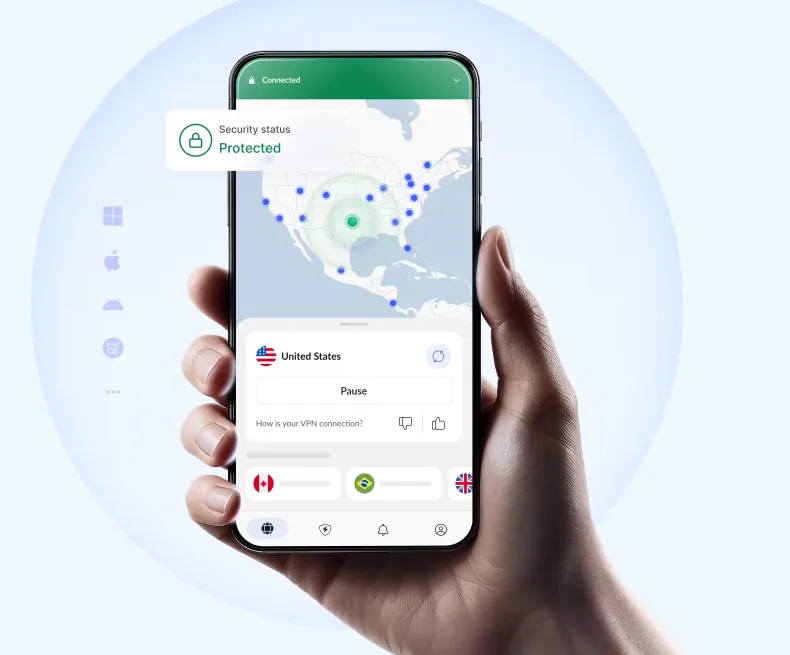
NordVPN continues to dominate the market by balancing advanced security with the fastest protocol speeds in the industry.
-
Technology Stack: Their proprietary NordLynx (WireGuard-based) protocol has been updated for 2026 to include post-quantum resistant handshakes, making their Double VPN connections significantly faster than traditional OpenVPN-based hops.
-
Infrastructure: They now operate a network of 100% diskless (RAM-only) servers, with a massive expansion in dedicated "Double VPN" pairs covering 30+ country combinations.
-
Recent Audit: Successfully completed its fifth consecutive no-logs audit by Deloitte in late 2025, verifying their zero-knowledge architecture.
-
Best For: Users who want the security of a double-hop without sacrificing the ability to stream 4K content.
2. Surfshark (The Ultimate in Flexibility)
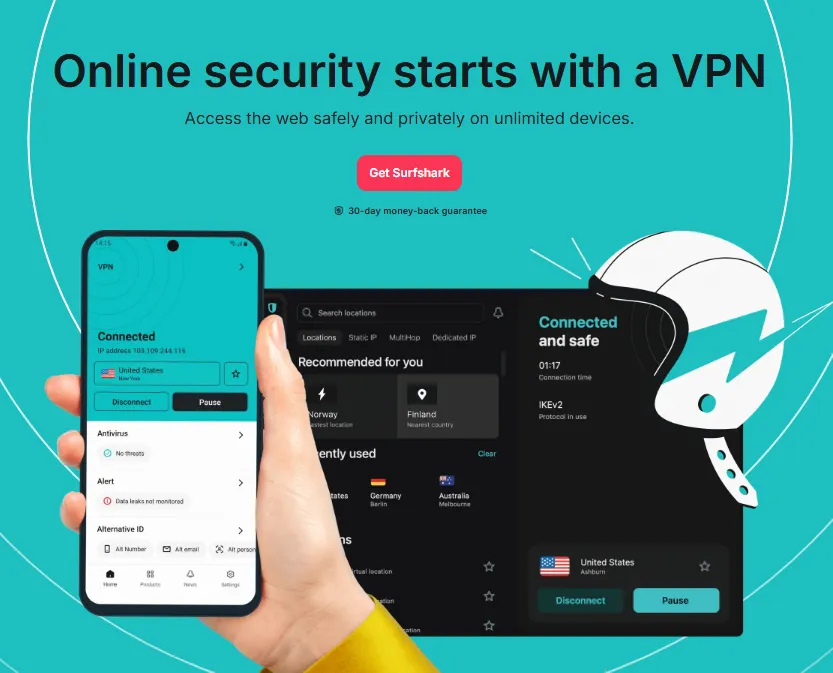
Surfshark’s Dynamic MultiHop has redefined how users approach double encryption in 2026 by removing the "fixed pair" limitation.
-
Dynamic MultiHop: Unlike competitors who offer pre-set server pairs, Surfshark allows you to manually select any entry server and any exit server in their network, enabling thousands of unique jurisdictional combinations.
-
Nexus Technology: Their 2026 "Nexus" update rotates your IP address within the network periodically while maintaining the VPN tunnel, adding an extra layer of difficulty for trackers.
-
Value Proposition: Still offers unlimited simultaneous connections, making it the top choice for large households or multi-device power users.
-
Best For: Privacy enthusiasts who need granular control over their data routing paths.
3. Proton VPN (The Fortress of Privacy)
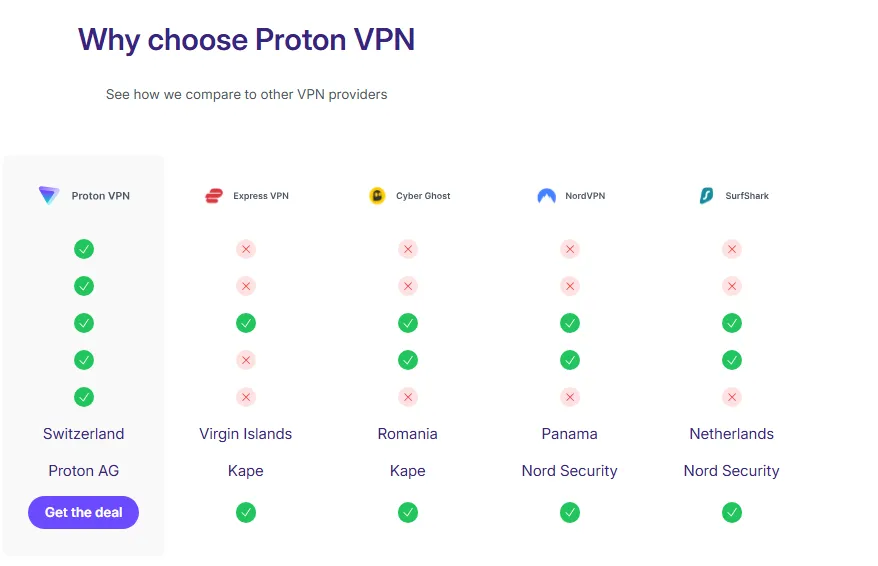
Based in Switzerland, Proton VPN remains the premier choice for high-risk profiles who prioritize jurisdictional integrity above all else.
-
Secure Core Architecture: Their multi-hop strategy is unique; it routes traffic through physical servers they own and operate in underground bunkers in Switzerland, Iceland, and Sweden before sending it to the exit server. This mitigates the risk of local server seizures.
-
Privacy First: Features a built-in "NetShield" that uses DNS filtering to block malware, trackers, and ads at the server level, which is particularly effective in a multi-hop setup.
-
Open Source & Transparent: Every app is fully open-source and audited, ensuring that the "Multi-Hop" logic is exactly as advertised.
-
Best For: Journalists, political activists, and whistleblowers operating in high-surveillance environments.
4. Mullvad VPN (The Post-Quantum Specialist)
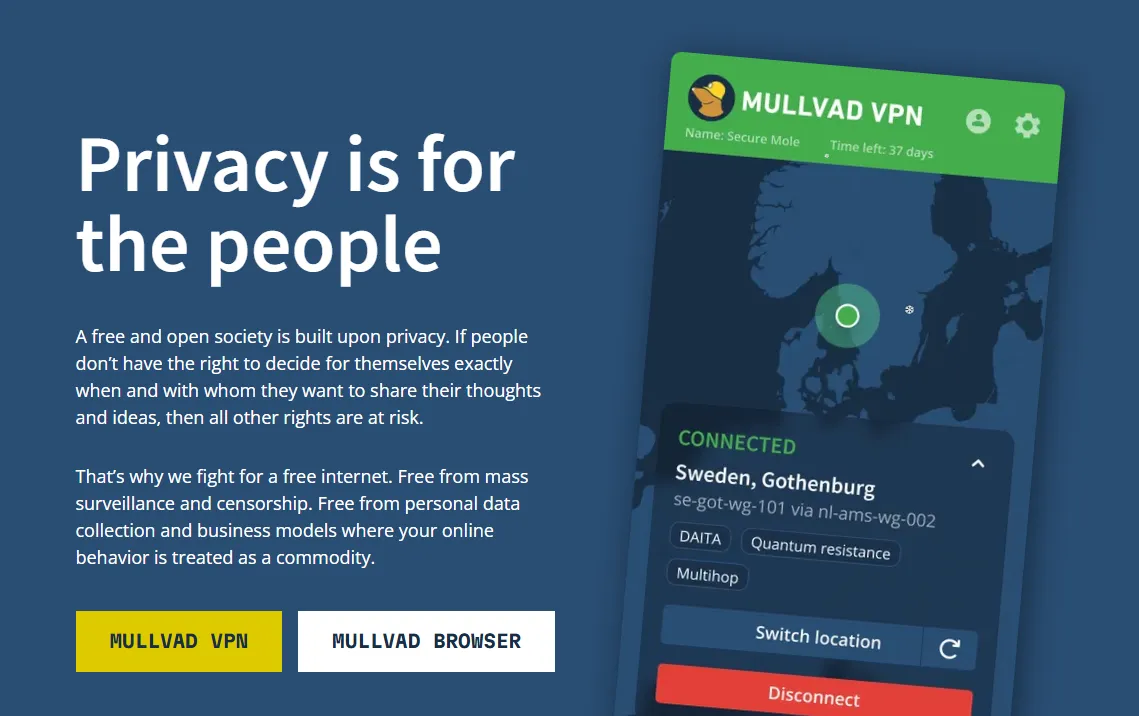
Mullvad has eschewed the "lifestyle brand" approach to become a pure-play security utility, favored by tech-savvy users in 2026.
-
Quantum Resistance: Mullvad was the first to implement post-quantum cryptography across its entire WireGuard network, protecting today's data against future quantum decryption.
-
No-Account Policy: To this day, they require no email, no password, and no personal info—just a randomly generated 16-digit account number.
-
Pricing Integrity: They have maintained a flat rate of €5/month since 2009, avoiding the complex multi-year contract traps of other providers.
-
Best For: Privacy purists who want a simple, transparent tool with cutting-edge cryptographic standards.
Comparison Summary: Top 4 VPNs in 2026
|
VPN Provider |
Core Strength |
Key Multi-Hop Tech |
Post-Quantum Ready |
Best For |
|
NordVPN |
Speed & Reliability |
NordLynx (WireGuard) |
Yes (Handshake) |
4K Streaming & Security |
|
Surfshark |
Custom Flexibility |
Dynamic MultiHop |
Yes (Nexus Network) |
Advanced Power Users |
|
Proton VPN |
Physical Sovereignty |
Secure Core (Bunkers) |
Yes |
High-Risk Profiles |
|
Mullvad |
Pure Anonymity |
Multi-Hop WireGuard |
Yes (Full Network) |
Privacy Purists |
Comparative Summary: Side-by-Side Table
|
Metric |
Single VPN |
Double VPN |
|
Privacy Level |
Standard / Strong |
Maximum / Paranoid |
|
Latency (Ping) |
Excellent |
Poor to Average |
|
Setup Complexity |
One-click |
Requires specific server selection |
|
Cost |
Usually included in base price |
Often requires "Plus" or "Premium" tiers |
|
Ideal For |
Netflix, Gaming, Public Wi-Fi |
Political dissent, Whistleblowing |
The Verdict: Is Multi-Hop Worth the Speed Drop in 2026?
The answer to whether multi-hop (Double VPN) is worth the speed drop in 2026 depends entirely on the user’s priorities and use case. For the vast majority of users—casual browsers, remote workers, and streaming enthusiasts—Single VPNs offer the optimal balance of security, speed, and cost. The speed tax associated with Double VPNs is simply too high for these use cases, and the enhanced security benefits are unnecessary for protecting against common threats (e.g., public Wi-Fi snoopers, basic data tracking).
However, for users operating in high-risk scenarios—journalists, activists, whistleblowers, and organizations handling highly sensitive data—Double VPNs are not just worth the speed drop; they are essential. In 2026, with AI-driven attacks and advanced surveillance becoming more prevalent , the enhanced anonymity and redundant encryption of Double VPNs provide a critical layer of protection that Single VPNs cannot match. For these users, the trade-off of slower speeds is a small price to pay for avoiding potential harm (e.g., persecution, data breaches, legal consequences).
Looking ahead, the future of multi-hop VPNs lies in adaptive technologies that minimize the speed tax. As AI-driven traffic optimization and quantum-resistant encryption become more widespread, Double VPNs may become a more viable option for mainstream users. But in 2026, they remain a niche tool best suited for those with specific, high-stakes privacy needs.
Frequently Asked Questions (FAQ)
Q: Does Double VPN make me 100% untraceable?
A: No. While it significantly increases the difficulty for attackers, browser fingerprinting and "human-error" leaks (like being logged into Google) can still deanonymize you. No technology offers absolute 100% anonymity.
Q: Can I use two different VPN providers for a "Double VPN" effect?
A: Yes, this is called "VPN Chaining." It is more secure than using one provider's Double VPN feature because even if one provider is compromised, the other still protects your data. However, it is much harder to configure and significantly slower.
Q: Is "Onion over VPN" the same as Double VPN?
A: No. Onion over VPN routes your traffic through the Tor network after the VPN. It is even slower than Double VPN but offers the highest level of anonymity available today. Double VPN uses two standard VPN servers, whereas Onion over VPN uses one VPN server and at least three Tor nodes.
Q: Does Double VPN drain my battery faster?
A: Yes, especially on mobile devices. Your device has to perform encryption twice for every packet of data sent, which increases CPU usage and power consumption.
Q: Should I use Double VPN for gaming?
A: Generally, no. The increased latency (ping) caused by routing through two separate geographic locations will likely make competitive gaming unplayable. Standard VPNs are better suited for gaming.
Q: Is Double VPN legal?
A: In most countries, yes. If using a VPN is legal in your jurisdiction, using two of them is also legal. However, the same laws regarding illegal activities apply whether you use a VPN or not.
Q: Will Double VPN fix "Strict NAT" issues?
A: Unlikely. In fact, adding a second layer of NAT (Network Address Translation) can often make port forwarding and NAT issues more complex.
Q: Can I choose which two countries to "chain" together?
A: This depends on your provider. Some premium services allow you to manually select the entry and exit nodes, while others offer pre-configured pairs (e.g., USA to Canada, or UK to Netherlands) optimized for speed.