Using a VPN is more than just flipping an "on" switch. The server location you choose is the single most important factor that dictates your speed, your level of privacy, and your ability to access content.
Choosing the wrong server can lead to buffer-filled streaming, high-lag gaming, or even accidentally connecting to a jurisdiction that doesn't respect your privacy. This guide teaches you the strategy—how to pick the perfect server for any task.
Part 1: The Privacy Strategy (Location & Jurisdiction)
When your primary goal is anonymity and ensuring your data is never logged or shared, the server's legal location (jurisdiction) is paramount.
1. Which VPN Server Locations Offer the Best Privacy?
The best server locations for privacy are countries that are not part of any major intelligence-sharing pacts and have strong domestic privacy laws. These are often referred to as "privacy havens":
-
Switzerland: Known for some of the strongest privacy laws in the world and independence from foreign alliances.
-
Panama & British Virgin Islands (BVI): Both lack mandatory data retention laws, meaning VPNs based or operating there cannot be legally forced to log user activity.
-
Iceland: Strong legal protections for journalists and citizen data.
2. Should I Avoid Servers in 5 Eyes & 14 Eyes Countries?
Yes, if privacy is your absolute priority. The Five Eyes (US, UK, Canada, Australia, NZ) and the expanded 14 Eyes alliances are intelligence-sharing groups. While using a quality VPN server in these countries still encrypts your connection, these governments have greater surveillance capabilities and can issue subpoenas for data.
The best strategy is to avoid connecting to servers in these countries unless you specifically need an IP address from one (e.g., for streaming US Netflix).
3. How Do RAM-Only Servers Minimize Risk?
RAM-Only servers (also known as diskless servers) are the new gold standard in VPN security and the ultimate failsafe. They never write any data to a permanent hard drive. Instead, all server operations run in temporary Random Access Memory (RAM).
-
If the server is seized by authorities, rebooted, or remotely shut down, all data is instantly and permanently wiped.
-
This technology makes the server's physical location less relevant for privacy, as the provider physically cannot store or hand over user activity logs, fulfilling the "No-Logs" promise regardless of the local government's legal pressure.
4. Shared IP vs. Dedicated IP
Users often struggle with "IP Reputation." A shared IP is great for privacy (hiding in a crowd) but can lead to the "bad neighbor" effect where one user's actions get the IP banned by a service like Netflix.
|
Feature |
Shared IP (Standard) |
Dedicated IP (Static) |
|
Best For |
Maximum Anonymity & P2P |
Banking, Gaming, & Consistent Streaming |
|
Privacy |
High. You "hide in a crowd" of other users. |
Medium. The IP is yours alone; easier to link to one person. |
|
IP Reputation |
Variable. Risky; one "bad neighbor" can get the IP blocked. |
Stable. Clean reputation; less likely to trigger Captchas. |
|
Bypassing Blocks |
Moderate success against streaming filters. |
Superior. Avoids the "VPN block" lists of sites like Gmail/Netflix. |
Part 2: The Performance Strategy (Speed & Gaming)
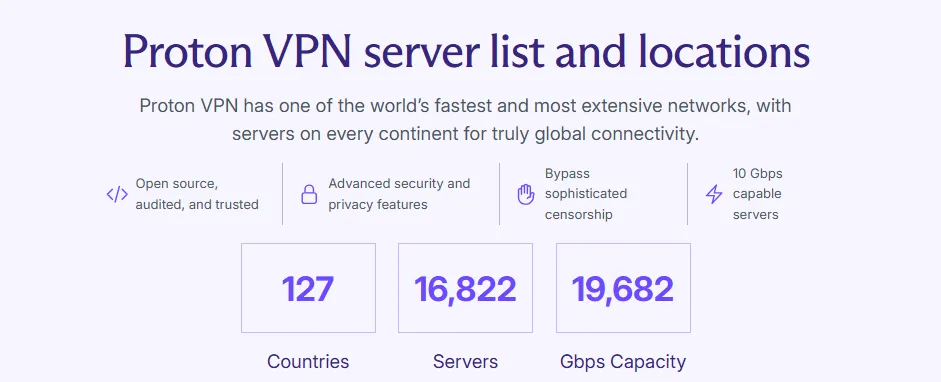
For daily browsing, downloading, and gaming, your priority shifts from jurisdiction to performance. This is all about minimizing latency and maximizing throughput.
4. How Do I Find the Fastest Server for My Download Speed?
The fastest server is almost always the one that is physically closest to your location.
This is due to the Golden Rule of Latency (Ping): the further your data has to travel, the slower your connection will be. If you are in New York, connect to a server in New York or Toronto for basic browsing and large file downloads, not one in Tokyo or Sydney.
5. What is the Best Server Location for Low-Latency (Ping) Gaming?
For gaming, the best server location is the one that is closest to the game host or server, not necessarily closest to you.
-
Goal: You want the lowest possible ping (latency) between your device and the location running the game.
-
Action: If you live in Europe but are playing a North American-hosted game, connecting to a VPN server on the East Coast US will usually provide a lower ping than using a server in your home country, as the VPN tunnel shortens the route to the game host.
-
Where is the best VPN Server location for Warzone?
- For low ping in Warzone, connect to VPN servers in low-population regions like Central Africa (Kenya, Ghana), North Africa (Egypt, Israel), or parts of Asia (India, Taiwan) to find easier lobbies, especially during off-peak hours (early morning/late night) in that time zone, ensuring your VPN has fast protocols like WireGuard. Connecting to locations geographically closer to the actual Warzone servers (e.g., Germany if you're in Europe) can also help, but the low-player-count trick often overrides pure distance for better matchmaking.
6. How Can I Tell If a Server Is Congested?
A slow connection, even to a close server, is often due to server congestion (too many users connected at once).
-
Indicator: Quality VPN apps provide a server load indicator (e.g., a green/yellow/red dot or a percentage) next to the server name.
-
Action: If your closest server is showing a high load (red/high percentage), choose a different server in the same city or region that shows a low load (green/low percentage). Major city hubs (e.g., Amsterdam, London, Singapore) typically have higher bandwidth (10Gbps ports) and handle traffic better.
Part 3: The Access Strategy (Streaming & Censorship)
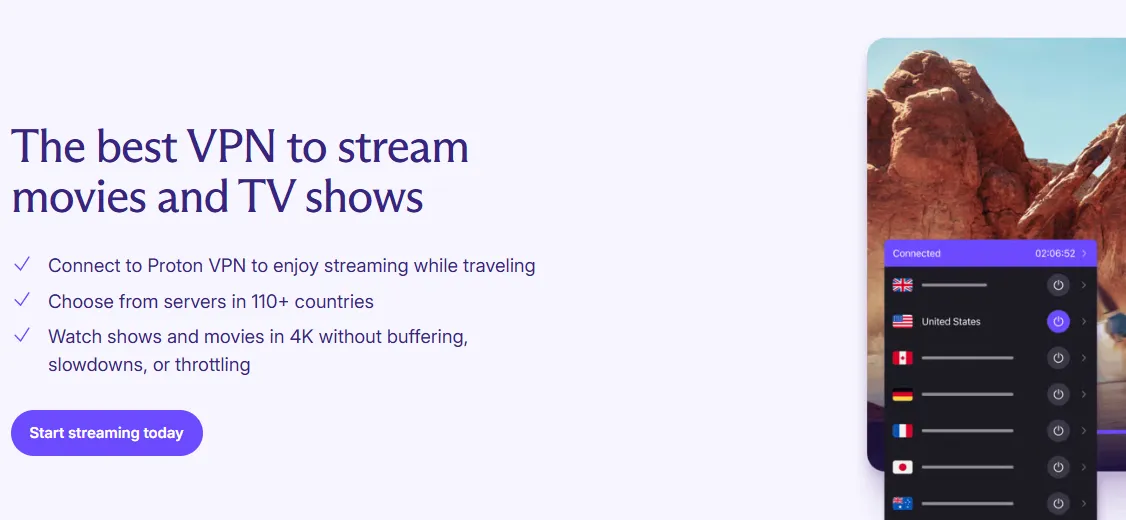
This is where you use your VPN to bypass geo-restrictions or censorship, making the server's IP address location the only thing that matters.
7. What Are the Best Servers for Unblocking US Netflix, Hulu, & BBC iPlayer?
You must connect to a high-quality server in the country whose content you want to access.
-
For US Netflix & Hulu: The required location is, simply, the United States. Due to aggressive VPN blocking, you need a provider that dedicates servers to streaming and constantly refreshes its IP addresses. Try a server in a major hub like New York, Chicago, or Los Angeles.
-
For BBC iPlayer: You must connect to a server located in the United Kingdom. BBC iPlayer is notoriously difficult to unblock, so you need a VPN with highly optimized servers in the UK (often in London or Manchester).
8. What is the "Neighbor Strategy" for Bypassing Censorship?
In highly restrictive countries like China, Turkey, or the UAE, trying to connect directly to the global internet is often blocked.
-
Neighbor Strategy: Instead of trying to connect to a distant, highly restricted server, connect to a server in a nearby, free country with robust internet infrastructure, such as Japan, Taiwan, or South Korea (for Asia), or Poland, Germany, or Switzerland (for the Middle East).
-
Crucial Step: You must activate Obfuscation or Camouflage Mode on your client to hide the fact that you are using a VPN, preventing your local ISP from blocking your connection entirely.
9. Physical vs. Virtual Servers: Does It Matter Where the Hardware Is?
When you connect to a server, it's either Physical (the hardware is in that country) or Virtual (the IP address is from that country, but the hardware is elsewhere).
|
Feature |
Physical Server (Preferred) |
Virtual Server (Alternative) |
|
Hardware Location |
Physically located in the country you selected (e.g., an Amsterdam IP is served by hardware in Amsterdam). |
Hardware is physically located elsewhere (e.g., in Germany), but is configured to assign an IP address from the selected country (e.g., Brazil). |
|
Pros |
Better Security, Lower Latency. Optimal speed and direct access to local services. |
Allows the VPN to offer coverage in unstable, high-risk, or hard-to-reach locations where dedicated hardware is impractical. |
|
Cons |
Limited to countries with stable, safe infrastructure. |
Higher Latency (Slower Speed). Your data must travel from your device to the real physical location first, increasing ping. |
Verdict: Physical servers are always better for speed and security. Virtual servers are a necessary alternative, primarily used for geo-spoofing in countries that would otherwise be inaccessible.
10. Best Countries for Accessing Cheaper Subscriptions?
Yes, you can save significant money. This strategy is known as geo-arbitrage. Many online services (like YouTube Premium, Spotify, and software subscriptions) use your IP address to set prices based on the local cost of living.
-
The Strategy: By connecting to a VPN server in a country with lower purchasing power, you can often access much cheaper subscription plans.
-
Best Server Locations to Try:
-
Turkey: Famously one of the cheapest locations for services like YouTube Premium and Netflix.
-
India: Offers extremely low prices for many digital subscriptions and software.
-
Argentina: Another popular choice for getting steep discounts on services.
-
Brazil & Mexico: Both are excellent locations to test for lower prices on streaming, software, and sometimes even airline tickets.
Pro Tip: Always use your browser's "Incognito" or "Private" mode after connecting to the VPN to ensure old tracking cookies don't reveal your real location.
11. What Countries Have No Data Retention Laws?
While truly zero data retention laws are rare as most nations have some security/law enforcement needs, countries like Switzerland, Panama, Romania, and Iceland are known for strong privacy & lack of mandated retention for general providers, offering better privacy, but the U.S. has complex federal/state laws, and data retention is often a security concern globally, making it hard to find countries with no rules at all.
- Switzerland: Strong constitutional privacy, but specific data retention laws exist, though less restrictive than some EU nations.
-
Iceland: Known for strict privacy laws, often compared to Switzerland for data protection.
-
Panama & Romania: Often cited for favorable conditions for privacy-focused VPNs due to weaker retention rules.
Key Considerations:
- No Mandate ≠ No Retention: A country might not have a general data retention law, but specific laws (e.g., for financial, health, or telecom data) or national security demands might still require retention for certain data types.
-
Privacy vs. Security: Countries often balance citizen privacy with national security; those strong on privacy (like Iceland, Switzerland) often don't force ISPs/VPNs to log, but government access is still possible.
Conclusion: Your 30-Second Server Strategy Cheat Sheet
-
FOR PRIVACY: Connect to a RAM-Only server in a "privacy haven" like Switzerland or Panama.
-
FOR SPEED/DOWNLOADS: Connect to the closest physical server with the lowest server load.
-
FOR GAMING: Connect to a server that is physically close to the game's server host.
-
FOR STREAMING: Connect to a high-quality, streaming-optimized server in the country's content you want to watch (e.g., US for Hulu, UK for iPlayer).
-
FOR CHEAPER PRICES: Connect to a server in Turkey, India, or Argentina before checking flight or subscription prices.
-
FOR CENSORSHIP: Connect to a server in a nearby, free country and enable obfuscation.
PS: All images in this article are sourced from the merchant's official website and are copyrighted by the merchant.