⚡ Quick Guide: How Do VPN Servers Impact Your Connection?
If you are choosing or configuring a VPN, keep these 3 essential server rules in mind:
-
Location Dictates Speed: Physical distance is the single largest factor in speed loss. Connecting to a server geographically close to you minimizes latency (Round-Trip Time), keeping speed loss minimal at only ≤5% to ≤15%
-
Network Size Prevents Bottlenecks: A higher server count (e.g., > 3,000 nodes) prevents bandwidth crowding. Dynamic load-balancing algorithms route your traffic away from congested servers, keeping your connection stable during peak hours.
-
Hardware Muscle Equals Security: Sheer numbers are meaningless without security infrastructure. Prioritize providers using RAM-only (diskless) servers, which physically wipe all operational data upon reboot, and those utilizing high-performance protocols like WireGuard running on $10 Gbps networks.
Read our detailed guide below to explore the physics of latency, the security risks of virtual servers, and how to select the best specialized servers for streaming and torrenting.
VPN servers are the absolute backbone of any secure connection—they're what actually makes a VPN work. They handle the heavy lifting, using specialized technology to route all of your data safely to a website and then deliver that website's response right back to you.
You've probably noticed that VPN companies love to brag about the sheer number of servers they operate and all the different countries they cover. For most users, however, all that boasting leaves them scratching their heads, wondering what the actual significance of these components is.
That's why we're here to explain the crucial role servers play in the VPN ecosystem, why the number and location of these servers truly matter, and how choosing different server locations can impact the speed and quality of your overall connection.
How Does a VPN Actually Work?
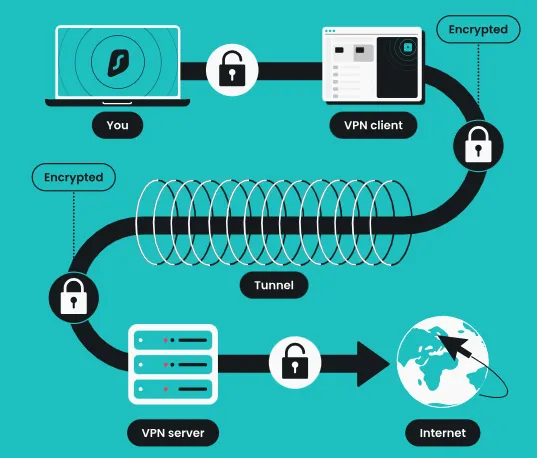
To really grasp why virtual private network servers are so important, we have to start by looking at the entire VPN network structure. Let's break down the key components that come together to establish a VPN connection when you use your provider's dedicated software:
-
Your Device: This is whatever you're using to connect to the internet—a PC, laptop, tablet, router, or smartphone.
-
VPN Protocol: Think of this as the rulebook. It's the set of rules that dictates exactly how your data is routed from your device to the VPN server. Protocols like OpenVPN or WireGuard determine how fast and secure your connection will be by defining things like packet size and encryption methods.
-
VPN Tunnel: This is the encrypted pathway created between your device and the VPN server. While the protocol sets the rules, the tunnel is the actual secure road your data travels on to reach the server, and from there, the internet.
The whole process kicks off when you fire up your VPN app or connect manually. Once you pick a server location and a protocol (say, WireGuard), that secure, encrypted tunnel is instantly formed between your device and the designated VPN server.
So, what exactly is a VPN Server?
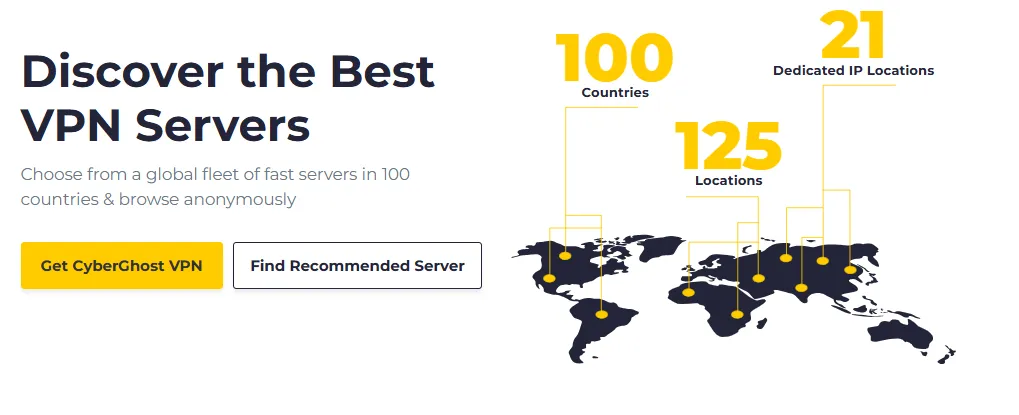
To fully understand how does a VPN server work, we have to look at its role as an encrypted, physical decryption gateway.
Simply put, a VPN server is a dedicated computer that's configured to handle all of your incoming and outgoing VPN traffic. It acts as the intermediary, or "middleman," between your device and the wider internet.
Here's the cool part: when you connect to a VPN server, it masks your actual location and IP address with its own. So, to every website, app, or service you access, it looks like your request is coming from that server's location, not your home, coffee shop, or office.
Think of it like this:
-
Your device sends encrypted data to the VPN server through the secure tunnel.
-
The VPN server decrypts your data packet.
-
The server then sends the request onward to the final destination (like a news website or a streaming service) using the server's own IP address.
-
The website sends its response back to the VPN server.
-
The VPN server immediately encrypts that response and sends it back to your device through the secure tunnel, where your VPN software decrypts it for you to see.
This entire process happens in fractions of a second, providing you with both privacy and the ability to geo-shift your virtual location!
How the Number of VPN Servers Became Central to Industry Competition?

The boom in Virtual Private Network (VPN) services spurred companies to rapidly inflate their digital footprints by acquiring vast numbers of servers. This massive scaling was immediately positioned by brands as the primary proof of their commitment to performance and stability, a narrative that resonated strongly with consumers and quickly became the industry standard. Consequently, the raw server tally quickly evolved into the default—and arguably simplistic—yardstick by which many users judged a VPN's overall value.
It was a predictable outcome: the public began conflating extensive server infrastructure with desirable traits like worldwide access, lightning-fast speeds, consistent uptime, and enhanced anonymity. Yet, the truth remains: having an impressive arsenal of servers, while looking good on paper, doesn't automatically translate into a superior user experience. For that enormous network to genuinely deliver high-quality service, the provider must demonstrate sophisticated skills in infrastructure maintenance and traffic routing.
What is the benefit of a high VPN server count?
Why do VPN operators bother maintaining a vast array of global connection points? The simple answer is to deliver on the core promise of a VPN: access and performance.
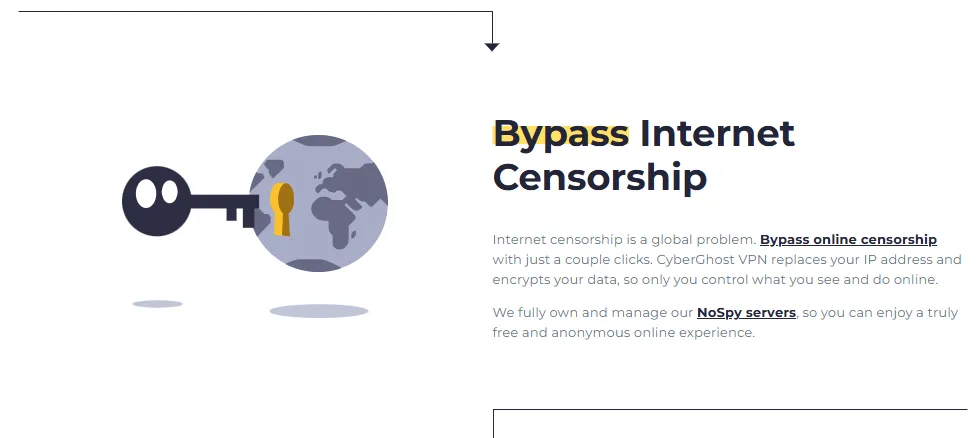
Firstly, a massive network is essential for granting true global coverage and accessibility. For any user, this means having plenty of choices to connect from diverse international regions, allowing them to bypass geographic restrictions, access local content while traveling abroad, or simply evade state-imposed censorship.
Secondly, multiple servers are crucial for traffic management and preventing network bottlenecks. By intelligently spreading the user load across hundreds or thousands of connection points, providers can mitigate the dreaded issue of server congestion, which in turn significantly reduces latency and ensures a more reliable, stable connection for everyone.
However, it is vital to remember that the sheer quantity of these endpoints is just the starting line; it’s the effective, continuous management of this distributed infrastructure that determines whether the user actually benefits from those promised features.
Why VPN Server Location Matters: Minimizing Latency and Unlocking Content
 `
`
When you choose a server, you're not just picking a name on a list; you're determining two fundamental aspects of your VPN experience: speed and access.
1. The Need for Speed (Minimizing Latency)
While a premium service minimizes lag, the average VPN speed loss percentage on high-performance close-range nodes is typically between 5% and 15%.
The physical distance between your device and the VPN server is the single biggest factor affecting your connection speed, specifically what we call latency (or lag).
Imagine driving across the country versus driving across town. The shorter the distance, the faster your data packets can make the round trip.
-
Rule of Thumb: Always connect to the server closest to your actual physical location for the best possible speeds. If you're in New York and connect to a server in New Jersey, you'll see far better performance than if you connected to one in Japan.
2. Unlocking Content (Geo-Shifting)
Server location is also how you bypass geographical content restrictions.
-
The Power of Proxy: Since the VPN server replaces your true IP address with its own, any website or streaming service sees the server's location as your location.
-
Access Example: If you’re traveling outside the US but want to watch a show only available on American Netflix, you simply connect to a VPN server in Miami, Seattle, or any other US city. As far as Netflix is concerned, you're right there on American soil, and access is instantly granted.
In short, a provider with a large number of global server locations gives you more options for faster connections and a broader reach when accessing region-locked content.
⚠️ Hardware Alert: Physical Servers vs. Virtual (Geolocated) Servers
When browsing a provider's server list, not all locations represent physical hardware inside that country. Some providers utilize Virtual Servers (also known as geolocated servers).
-
Physical Server: The server hardware is physically located in the designated country (e.g., a server labeled "Japan" is physically bolted to a rack in a Tokyo data center).
-
Virtual Server: The physical hardware is located in a centralized country (like the Netherlands), but the server is programmed to broadcast an IP address registered to a different country (like Turkey or India).
Are virtual VPN servers safe? Yes, the encryption protocols remain secure. However, they can severely impact speed. If you connect to a virtual "India" server thinking it is close to you, but the physical hardware is actually in London, your data packet must travel across the ocean and back, resulting in a sudden, unexpected spike in latency of over $150\text{ ms}$ and a massive speed reduction of up to 50%. Always check your provider's transparency documentation to confirm which locations use physical hardware.
The Real Factors Determining VPN Quality
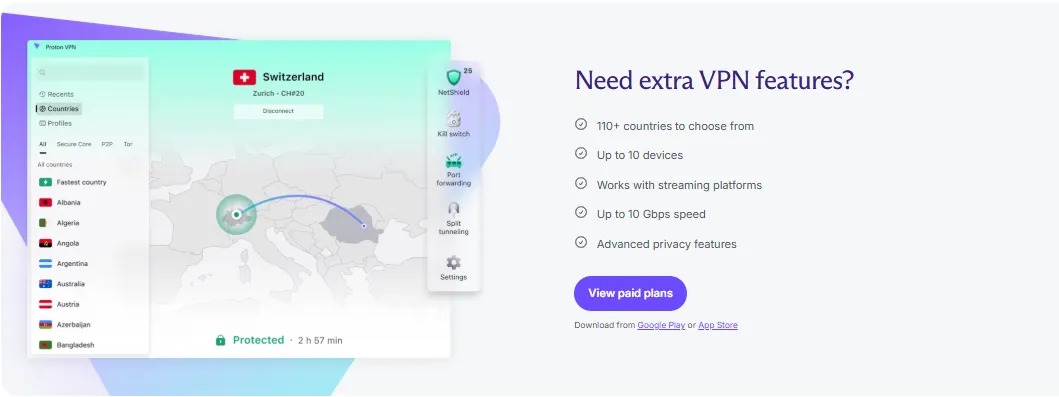
When evaluating a VPN service, smart consumers should look past the headline number of servers and focus on the technical factors that truly impact their daily use.
1. Hardware Muscle and Network Capacity
A server is only as good as the hardware it runs on. High-quality VPN services invest heavily in robust physical infrastructure with high-performance processors and high-gigabit-per-second network links. This capacity ensures that even if a server handles a large user base, the connection quality won't degrade—it’s the size of the pipe, not just the number of faucets, that matters.
2. Intelligent Load Distribution
Top-tier providers use sophisticated algorithms to dynamically route users to the least crowded or fastest connection points available. Instead of forcing you to guess which server location is best, the system automatically handles the heavy lifting, guaranteeing you the optimal connection speed every time you click "Connect."
3. Unwavering Security and Privacy Features
At the end of the day, a VPN's primary job is protection. The key differentiators are high-grade encryption protocols (like WireGuard or OpenVPN), an audited No-Logs policy, and innovative features like diskless (RAM-only) servers, which wipe all data upon reboot, offering an absolute guarantee against data retention.
4. Consistency of the User Experience
Ultimately, the only metric that truly counts is whether the service works for you, consistently and without fail. A technically brilliant setup that is glitchy, slow during peak hours, or difficult to use is a failed product. A truly great VPN is one you can rely on for smooth streaming, gaming, and secure browsing, regardless of your location or time of day.
Specialty Servers: Built for Performance

Not all VPN servers are created equal. Many top-tier providers designate specific servers optimized for high-bandwidth activities. If your main goal is to stream high-definition video or engage in Peer-to-Peer (P2P) file sharing, you'll want to look for providers who offer these specialized options.
Optimized for P2P (Torrenting)
P2P networks, primarily used for file sharing like torrenting, often require stable connections capable of handling large data transfers. Some providers explicitly tag certain servers as P2P-optimized or torrent-friendly.
-
Why this matters: These servers are designed to manage the high volume of incoming and outgoing traffic generated by P2P protocols without throttling. They ensure you maintain fast, uninterrupted download and upload speeds while keeping your activity private.
Optimized for Streaming
Streaming servers are carefully managed to consistently beat the detection systems used by major streaming services (like Netflix, Hulu, or BBC iPlayer) that try to block VPN connections.
-
Why this matters: When a VPN server's IP address gets blacklisted by a streaming platform, the provider moves their streaming traffic to a different, fresh server. Dedicated streaming servers are constantly monitored and managed to ensure you get reliable access to geo-restricted libraries around the clock, offering a smooth, buffer-free viewing experience every time.
By utilizing these specialty servers, you can ensure that your VPN connection is perfectly tuned for the exact activity you need, offering a huge boost in reliability and speed.
Top 5 VPN Services: An Overview
Here is a breakdown of five leading Virtual Private Network (VPN) providers, highlighting their key features and strengths, all presented in idiomatic American English.
1. ExpressVPN

ExpressVPN is often considered the gold standard in the consumer VPN market, known for its exceptional speed and streamlined user experience. It's the go-to choice for users who prioritize performance and ease of use.
-
Key Strength: Blazing-fast connection speeds across its entire network, making it ideal for 4K streaming and large downloads.
-
Technology: They run their own security technology, TrustedServer, which ensures all VPN servers operate solely on volatile RAM, meaning no data is ever permanently written to a hard drive. This provides an extra layer of privacy.
-
Pricing and Plans: ExpressVPN occupies the premium segment of the market. While its pricing is higher than many competitors, it is widely accepted due to its proven, reliable performance and consistent service quality.
-
Servers and Country Coverage: Operates a vast and optimized network, boasting thousands of servers spread across an industry-leading 105 countries, ensuring excellent global connectivity.
-
Best For: Users who need a fast, reliable, and straightforward service for general privacy and bypassing geographical restrictions.
- ExpressVPN Review
2. NordVPN
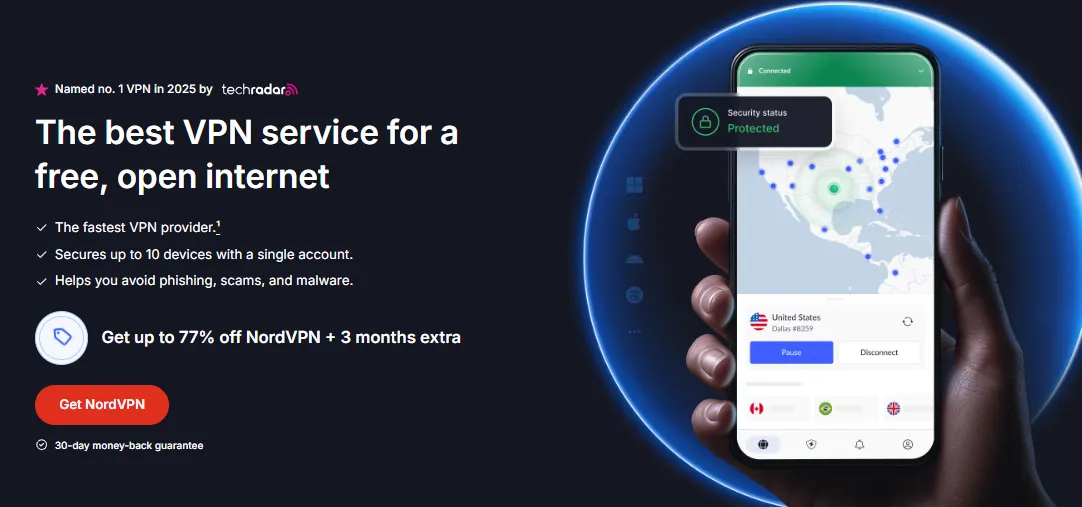
NordVPN stands out with its powerful security focus and massive global server count. It has heavily marketed its suite of privacy tools, making it one of the most recognized brands worldwide.
-
Key Strength: Rock-solid security features, including "Threat Protection" to block malware and trackers, and "Double VPN," which routes your traffic through two separate VPN servers for enhanced encryption.
-
Server Network: They operate one of the largest server networks globally, ensuring you can always find a low-latency connection.
-
Privacy: NordVPN adheres to a strictly audited no-logs policy, confirming they don't track your online activities.
-
Pricing and Plans: Offers mid-range pricing tiers, with the most significant savings offered on their multi-year subscription plans, providing a great balance of features and cost.
-
Servers and Country Coverage: Features an extensive global footprint with over 6,000 servers across 111 countries, making it easy to access content worldwide.
-
Best For: Security-conscious users and those who appreciate a wide array of advanced privacy features.
- NordVPN Review
3. CyberGhost

CyberGhost is the perfect choice for VPN newcomers. It offers a highly intuitive and graphical user interface that makes connecting and finding the right server painless.
-
Key Strength: Specialty servers optimized and clearly labeled for specific tasks, such as high-definition streaming on popular platforms or secure torrenting.
-
Usability: Its apps are extremely beginner-friendly, and the service offers a generous 45-day money-back guarantee, allowing users plenty of time to test the service.
-
Location: Based in Romania, which is outside the jurisdiction of major surveillance alliances (like the 5/9/14 Eyes).
-
Pricing and Plans: CyberGhost is highly competitive and generally more budget-friendly, especially when users commit to their two or three-year plans, making long-term protection very affordable.
-
Servers and Country Coverage: Boasts one of the industry's largest server fleets, operating over 11,000 servers in 100 countries, catering heavily to streaming and specific geographic needs.
-
Best For: First-time VPN users and anyone whose primary goal is reliable, hassle-free streaming access.
- CyberGhost VPN Review
4. Surfshark

Surfshark offers unparalleled value for money, distinguishing itself by offering unlimited device connections under a single subscription. It's quickly become a favorite for families or individuals with many gadgets.
-
Key Strength: Unlimited simultaneous connections. You can protect every device you own, plus those belonging to your family or roommates, all at once.
-
Features: It includes "CleanWeb," a feature that acts as an ad-blocker and malware filter, and "Camouflage Mode" to disguise your VPN use from your Internet Service Provider.
-
Affordability: Highly competitive pricing, especially on longer subscription plans, making it a fantastic bang for your buck.
-
Pricing and Plans: Known for its extremely aggressive and low pricing, especially on extended subscriptions, positioning it as a top choice for budget-conscious consumers.
-
Servers and Country Coverage: Maintains a solid network of approximately 3,200 servers spread across 100 countries, offering wide-ranging coverage despite its low price point.
-
Best For: Large families, heavy users with numerous devices, or anyone looking for premium features on a budget.
- Surfshark VPN Review
5. Proton VPN
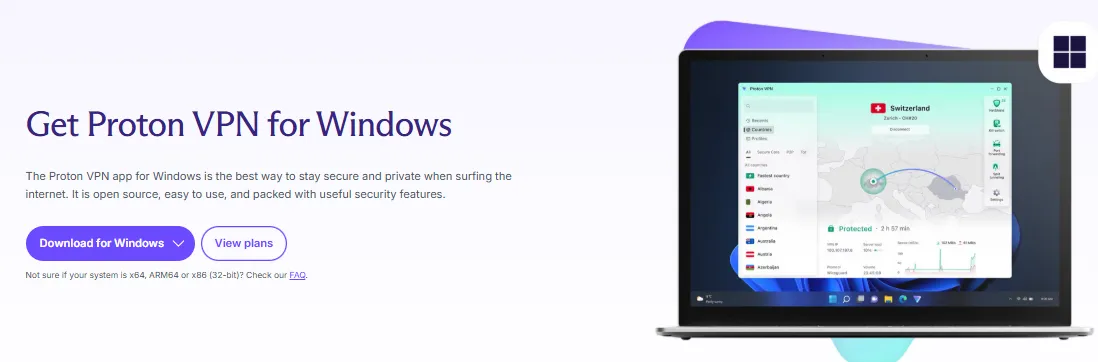
Developed by the same team behind the secure email service Proton Mail, Proton VPN is founded on an uncompromising commitment to privacy and transparency.
-
Key Strength: A privacy-first approach and a generous free tier that offers unlimited data (though with speed limitations and fewer server locations). All apps are open-source and independently audited.
-
Security Architecture: Utilizes "Secure Core" servers, which route user traffic through privacy-friendly countries (like Switzerland or Iceland) before connecting to the final destination server, shielding against network-based attacks.
-
Jurisdiction: Headquartered in Switzerland, known for its strong privacy laws and neutrality.
-
Pricing and Plans: Offers a unique model featuring a robust, data-unlimited free tier, alongside highly secure, competitively priced premium plans that unlock top speeds and full server access.
-
Servers and Country Coverage: Features a focused network of over 5,200 servers in 91 countries, prioritizing speed and security over sheer server count.
-
Best For: Journalists, activists, or users whose primary concern is top-level privacy and verifiable security due to its open-source and transparency standards.
- Proton VPN Review